Is Nigeria considered a rich or poor country? After months of research and years covering Nigeria's economic landscape, the answer is far more nuanced than a simple binary classification. This question matters deeply to every Nigerian, whether you are planning your future, considering business investments, or simply trying to understand where the nation stands on the global stage.
The short answer is that Nigeria exists in what economists call a paradox: it is simultaneously one of Africa's largest economies by total GDP while also housing one of the world's largest concentrations of people living in poverty. This is like owning a magnificent mansion but lacking the income to maintain it properly.
Is Nigeria a Wealthy or Poor Country?
Nigeria's wealth status depends entirely on which lens you are looking through. By some measurements, the country appears impressively wealthy; by others, devastatingly poor. Nigeria boasts Africa's largest economy when measured by nominal GDP, with the National Bureau of Statistics reporting GDP at over 70 trillion Naira in recent quarters. The country produces oil, possesses vast agricultural resources, and maintains a population of over 200 million people contributing to economic activity. On paper, these figures suggest considerable wealth.

However, that same impressive GDP, when divided among the massive population, tells a completely different story. GDP per capita sits at approximately $824 as of 2024, down from over $3,000 just a decade ago. This means the average Nigerian has access to far less wealth than citizens in countries with smaller total economies. The 2022 Multidimensional Poverty Index revealed that 63% of Nigerians, or 133 million people, experience multidimensional poverty, capturing deprivations in health, education, and living standards.
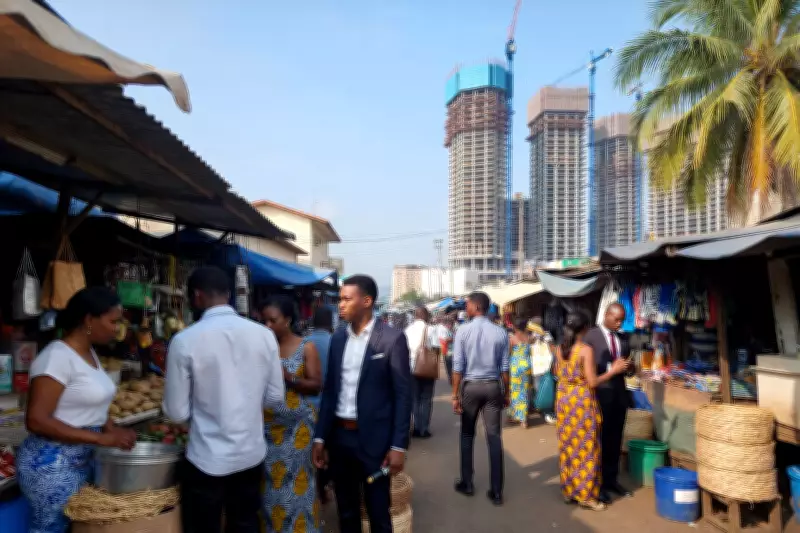
Interviews with market traders in Onitsha perfectly embody this paradox. They conducted businesses worth millions of Naira monthly, contributing to Nigeria's impressive GDP figures, yet they lacked reliable electricity, sent children to under-resourced schools, and could not afford quality healthcare when emergencies struck. Were they wealthy business owners or struggling citizens? Both.
This duality extends across the nation. Nigeria produces billionaires while simultaneously seeing poverty rates climb. Wealth has become increasingly concentrated among a tiny elite, while the majority experience declining living standards. The World Bank's classification system places Nigeria in the lower-middle-income category, though recent economic pressures have pushed the country closer to low-income territory.
What Is the Richest Country in the World 2026?
The United States maintains its position as the world's largest economy with a GDP exceeding $28 trillion, and its GDP per capita sits around $85,000, meaning the average American commands economic resources roughly 100 times greater than the average Nigerian. China follows with the world's second-largest economy at approximately $18 trillion GDP, achieving a GDP per capita around $13,000. European nations like Germany, the United Kingdom, and France complete the top tier of wealthy economies, sharing not just large GDPs but high GDP per capita, indicating substantial purchasing power and quality of life.
Wealthy nations exhibit characteristics that Nigeria struggles to replicate: successful industrialization, reliable infrastructure, robust educational systems, effective governance structures, and access to quality healthcare and social safety nets. Small nations like Luxembourg, Ireland, and Singapore often top rankings when measuring national wealth by GDP per capita, achieved through financial services, strategic positioning, and efficient governance.
Nigeria possesses resources that these wealthy nations lack: more oil than Ireland, more land than Luxembourg, and more people than most European countries combined. Yet the country has not translated these advantages into broadly distributed prosperity. True national wealth manifests in citizens' daily lives, not merely on economic spreadsheets.

Understanding Economic Classifications and Measurements
The World Bank divides nations into four income categories: low-income, lower-middle-income, upper-middle-income, and high-income. Nigeria sits in the lower-middle-income bracket, alongside countries like India, Kenya, and Bangladesh. This classification suggests the country has moved beyond the poorest nations but remains far from economic comfort.
Key economic indicators for Nigeria compared to select nations include: Nigeria's GDP of $415 billion with a GDP per capita of $824 and a poverty rate of 63%; India's GDP of $3.7 trillion with a GDP per capita of $2,612 and a poverty rate of 16.4%; the United States' GDP of $28.7 trillion with a GDP per capita of $85,370 and a poverty rate of 11.4%; South Africa's GDP of $380 billion with a GDP per capita of $6,485 and a poverty rate of 55.5%; Ghana's GDP of $75 billion with a GDP per capita of $2,363 and a poverty rate of 24.2%; and Kenya's GDP of $113 billion with a GDP per capita of $2,130 and a poverty rate of 36.1%.
The Human Development Index ranks Nigeria 161st out of 191 countries, placing it in the low human development category. Multidimensional poverty measurements reveal that 65% of Nigeria's poor live in the North while 35% inhabit the South. The Gini coefficient indicates severe income inequality, with a handful of billionaires controlling resources equivalent to what millions of ordinary Nigerians collectively possess.
What Is the No. 1 Poorest Country?
The title of world's poorest country typically goes to Burundi, South Sudan, or the Central African Republic. Burundi frequently ranks as the poorest by GDP per capita, with figures around $280 annually. South Sudan struggles with ongoing violence and a GDP per capita around $300, with over 80% of the population living below the international poverty line. The Central African Republic battles similar challenges with a GDP per capita below $500.
What separates these nations from Nigeria is primarily scale and potential. Nigeria possesses functioning institutions, a large educated population, diverse economic sectors, and international recognition. However, Nigeria accounts for nearly 20% of Africa's extremely poor population, with approximately 113 million citizens living in extreme poverty. This creates a peculiar situation: Nigeria is not the poorest country but houses more poor people than most nations house people in total.
Who Is Poorer, India or Nigeria?
By most meaningful metrics, India has pulled ahead of Nigeria economically. India's total GDP exceeds $3.7 trillion, while Nigeria's GDP sits around $415 billion. India's GDP per capita reaches approximately $2,612, over three times Nigeria's $824. India's national poverty rate sits around 16.4%, while Nigeria's multidimensional poverty rate exceeds 63%. India's Human Development Index ranking of 134th surpasses Nigeria's 161st, and Indian life expectancy exceeds 70 years compared to Nigeria's approximately 55 years.
India lifts millions from poverty annually through economic growth that creates jobs, particularly in manufacturing and services. Nigeria's poverty rates have actually increased in recent years. Both nations struggle with income inequality, though Nigeria's wealth concentration appears more extreme. India demonstrates that large, diverse, post-colonial nations can chart paths out of poverty, showing what becomes possible with sustained commitment to development, education, and industrialization.
Seven Steps to Understanding Nigeria's Economic Reality
First, examine GDP per capita, not just total GDP. Nigeria's impressive total GDP of over 70 trillion Naira misleads without context; dividing that among 220 million people reveals that most Nigerians access minimal wealth. Second, consider multidimensional poverty measurements, as 63% of Nigerians lack basic necessities beyond just money. Third, compare within context, as Nigeria underperforms peers like Vietnam or Bangladesh on human development indicators. Fourth, understand resource curse dynamics, as oil wealth has not translated into widespread prosperity. Fifth, track inequality metrics alongside poverty rates, as severe wealth concentration explains why economic growth does not improve most people's lives. Sixth, monitor inflation and currency strength, as the Naira's declining value erodes purchasing power. Seventh, assess infrastructure and service delivery, as wealthy nations provide reliable electricity, clean water, quality schools, and functioning hospitals, while Nigeria struggles in these areas.
Is Nigeria Considered a Rich or Poor Country? The Direct Answer
Nigeria is classified as a lower-middle-income country that experiences high poverty rates despite possessing significant economic resources. It is neither among the world's poorest nations nor approaching wealthy status. The Federal Ministry of Finance and international organizations consistently place Nigeria in the lower-middle-income bracket based on GNI per capita. Nigeria is considered economically poor when measured by how wealth impacts ordinary citizens' lives, with a poverty rate of 63% placing it among nations with the highest proportions of poor people globally.
Yet Nigeria is simultaneously rich in several respects: it possesses Africa's largest economy by nominal GDP, produces significant oil and gas reserves, maintains vast agricultural potential, houses innovative and entrepreneurial populations, and sits on enormous untapped mineral resources. The cruel paradox is that these riches have not translated into prosperity for most citizens.
Factors Contributing to Nigeria's Economic Classification
Oil dependency tops the list, creating Dutch disease where resource exports strengthen currency while undermining other economic sectors. Governance failures compound challenges, with corruption, policy inconsistency, and short-term thinking preventing effective development planning. Infrastructure deficits severely constrain economic activity, making Nigerian manufacturing uncompetitive globally. Population growth outpaces economic development, requiring the economy to grow significantly faster just to maintain current per capita income levels. Educational deficiencies limit human capital development, as millions of children never attend school or drop out early. Security challenges increasingly constrain economic activity, from Boko Haram in the Northeast to banditry in the Northwest and separatist agitation in the Southeast. Exchange rate management has consistently failed, with the resulting Naira weakness importing inflation.
The Path Forward: Can Nigeria Escape Poverty?
Economic diversification must become reality, with development of competitive manufacturing sectors, modernization of agriculture, building of service industries, and creation of value-added industries. Infrastructure investment must become priority number one, with every naira spent on reliable electricity, quality roads, efficient ports, and modern rail generating multiplier effects. Education reform needs urgent attention, emphasizing skills employers need and expanding vocational training. Governance improvements remain fundamental, with meritocratic civil service, accountable institutions, transparent budgeting, and consequences for corruption. Population management deserves frank discussion, with investment in family planning, girls' education, and women's empowerment. Regional cooperation through the African Continental Free Trade Area offers opportunities for Nigeria to manufacture goods for African consumers. Security stabilization is non-negotiable, requiring both military responses and tackling underlying grievances.
Conclusion: Understanding Nigeria's Economic Reality for a Better Future
Nigeria is officially classified as a lower-middle-income nation experiencing severe poverty despite possessing significant natural resources and economic potential. It houses Africa's largest economy by total GDP while simultaneously containing one of the world's largest populations of poor people. The gap between resources and citizens' lived experiences represents perhaps the greatest tragedy of post-independence Nigeria. This is not fate or bad luck but the result of choices, policies, corruption, and governance failures that can potentially be reversed through concerted effort.
Key takeaways include: Nigeria is classified as a lower-middle-income country with a GDP per capita of $824, approximately 100 times smaller than wealthy nations like the United States; over 63% of Nigerians experience multidimensional poverty; and Nigeria's economic potential remains largely untapped due to oil dependency, governance failures, infrastructure deficits, and severe income inequality, but transformation remains possible through diversification, improved governance, and strategic infrastructure investment.