In a decisive move to reshape Nigeria's economic future, the National Economic Council (NEC) has committed to intensifying efforts to boost earnings outside the oil sector. The council, which held its first meeting of 2026, also established a high-powered, bipartisan committee to drive the completion of President Bola Ahmed Tinubu's key legacy infrastructure projects.
Deepening Non-Oil Revenue and Economic Diversification
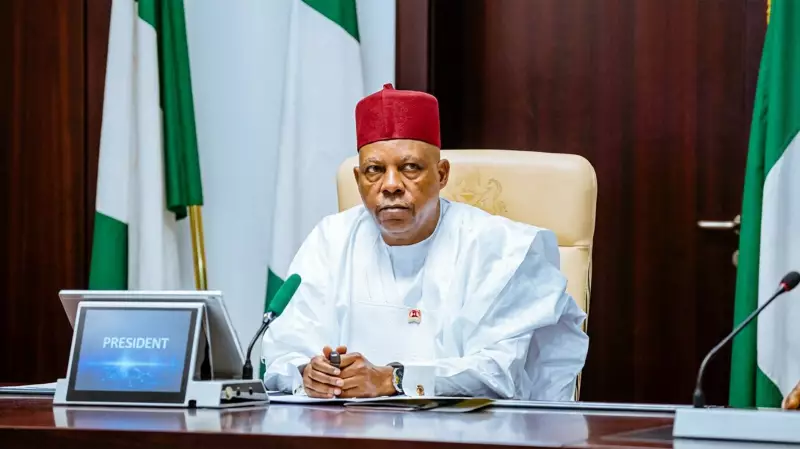
Chaired by Vice President Kashim Shettima, the NEC held its 156th meeting virtually on Thursday, January 15, 2026. The council's primary resolution centred on accelerating non-oil revenue mobilisation, a core pillar of President Tinubu's economic blueprint. Members stressed the urgent need to move faster from reliance on oil towards a diversified economy built on competitive manufacturing, varied exports, and sustained private investment.
Finance Minister Wale Edun, who presented the nation's 2026 economic priorities, highlighted that non-oil revenues now account for nearly 75% of total government collections. "This marks a significant, if gradual, departure from our historic dependence on volatile oil receipts," Edun stated. He emphasised that services, agriculture, and other non-oil sectors are increasingly bearing the economy's weight.

Legacy Projects Committee and Fiscal Updates
In a significant step, NEC approved the formation of a special committee to implement the President's directive on actualising legacy projects. The committee will be chaired by the Governor of Cross River State and will include one governor from each of Nigeria's six geo-political zones: Sokoto (North-West), Gombe (North-East), Niger (North-Central), Abia (South-East), and Lagos (South-West).
The Permanent Secretary of the Ministry of Budget and Economic Planning, Deborah Odoh, will serve as secretary. The Ministers of Works and Transportation will also be members. The council received updates on the progress of the Lagos-Calabar and Sokoto-Badagry Super Highways, noting oversight by the Office of the Secretary to the Government of the Federation.
The council also reviewed the nation's fiscal buffers as of January 14, 2026:
- Excess Crude Account: $535,823.39
- Stabilisation Account: N64.65 billion
- Natural Resources Account: N97.37 billion
Pathway to Sustained Growth and Reforms
Minister Edun outlined the administration's reforms, which he said have removed systemic distortions and set Nigeria on a path to sustained recovery. He reported a growth trajectory from 3.13% in Q1 to 4.23% in Q2, moderating to 3.98% in Q3, with a 2026 projection of 4.68%. "The Nigerian economy has travelled a difficult road, but it has not done so without progress," Edun remarked, calling for perspective over triumphalism or despair.
NEC identified key 2026 priorities, including strengthening economic governance, improving food security, advancing human capital, expanding social protection, and ensuring timely debt, salary, and pension payments. The council pledged support for Federal Government plans to unlock job-rich growth and entrepreneurship.
A special NEC session will be dedicated to addressing pressing food security challenges. Furthermore, the council endorsed the World Bank's proposed framework focusing on state-level programmes and human capital investment. It also directed the Presidential Fiscal Policy and Tax Reforms Committee to present a comprehensive brief in February to prepare states for implementing new tax laws aimed at simplifying the system and promoting equity.
The NEC concluded that while geopolitical tensions and volatile commodity markets continue to test policy frameworks, managing fiscal risks and reducing exposure to oil revenues remains an urgent national imperative.