Nigeria's FDI Drops to $2.15bn Amid $44.76bn Capital Inflow Over Four Years
Nigeria has managed to attract a mere $2.15 billion in foreign direct investment (FDI) out of a total capital importation of $44.76 billion that flowed into the country over the last four years, spanning from 2022 to 2025. This figure represents just 4.8 per cent of the overall capital inflow, starkly contrasting with the $31.7 billion drawn through portfolio investments, which many experts label as hot money due to its volatile nature.
Dominance of Portfolio Investments and Economic Risks
In recent years, Nigeria's economy has been heavily influenced by portfolio investment, which, while boosting financial markets like the capital market, poses significant risks as investors can swiftly withdraw funds at any hint of instability. FDI, in contrast, involves cross-border investments where entities establish lasting interests and management control in enterprises, such as through subsidiaries, mergers, or joint ventures, making it crucial for long-term economic stability.
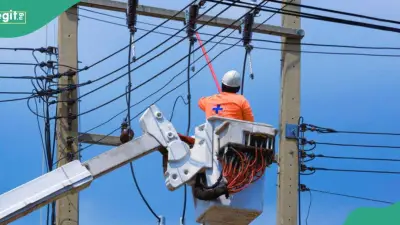
Prof. Godwin Oyedokun of Lead City University highlighted that low investor confidence is a key factor behind Nigeria's poor FDI inflows. He cited the country's volatile economy, unstable foreign exchange issues, widespread insecurity, and poor infrastructure, particularly epileptic power supply, as major deterrents. According to the Manufacturers Association of Nigeria (MAN), power accounts for 30-40 per cent of production costs, with manufacturers spending over N1.5 trillion on alternative sources like diesel and generators in 2025 alone due to unreliable grid supply.

Surge in Capital Importation Driven by Short-Term Flows
Data from the National Bureau of Statistics (NBS) reveals that total capital importation surged by 88.45 per cent year-on-year to $23.22 billion in 2025, up from $12.32 billion in 2024. This increase was fueled by heightened investor appetite for Nigerian financial assets, supported by exchange rate stability, high interest rates, and easing inflation. Portfolio investments dominated, rising to $19.75 billion in 2025 from $8.38 billion the previous year, accounting for about 85 per cent of total inflows.
A breakdown shows money market instruments led with $13.83 billion, over 80 per cent of portfolio inflows, followed by bonds and other fixed income securities at $4.89 billion, while equities contributed a modest $1.02 billion. Analysts at Cowry Asset Management Limited warn that this heavy reliance on short-term portfolio flows, sensitive to global financial conditions, exposes the economy to potential volatility, with risks of quick reversals due to shifts in global risk appetite or geopolitical tensions.
Call for Policy Reforms to Boost Long-Term Investment
Oyedokun emphasized that addressing barriers such as streamlining regulations through the Nigerian Investment Promotion Council (NIPC), combating corruption, ensuring policy consistency, and treating foreign and local firms equally could build investor confidence. Strengthening the legal system and prioritizing critical infrastructure like power and road networks are also vital to making Nigeria more attractive for stable, long-term investments.
Other investment inflows accounted for 11 per cent of the total, totalling $2.55 billion, though this marked a 22.5 per cent decline from 2024. The report stressed that sectors like oil and gas, transport infrastructure, construction, and real estate continue to attract limited foreign investment, indicating capital is being channelled into financial assets rather than productive areas that drive sustainable growth and job creation.
While improved macroeconomic stability and policy adjustments by the Central Bank of Nigeria (CBN) have restored some investor confidence, Cowry Asset cautioned that the current inflow structure leaves the economy vulnerable to external shocks, underscoring the urgent need to attract more stable, long-term capital to ensure resilient economic development.