Oil Prices Plunge and Global Stock Markets Rebound Following Trump's Comments on Ending Middle East Conflict
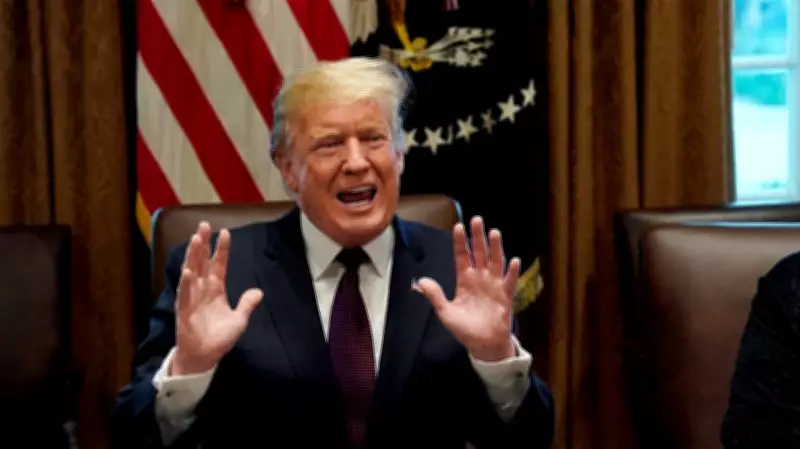
In a dramatic shift in global financial markets, oil prices experienced a significant plunge while stock markets rebounded after United States President Donald Trump stated that the U.S. and Iran had engaged in discussions aimed at halting the ongoing conflict in the Middle East. The announcement, made via Trump's Truth Social platform, triggered immediate reactions across commodity and equity markets worldwide.
Market Reactions to Presidential Statements
Following President Trump's declaration, the price of Brent crude oil initially sank, reflecting reduced geopolitical risk premiums. Concurrently, European stock indexes rose as investor sentiment improved. Trump elaborated that the talks focused on achieving a complete resolution to the hostilities, and he announced a five-day postponement of planned strikes against Iranian power plants. However, this claim was contradicted by Iranian state-affiliated media, which asserted that Tehran had not communicated with the U.S., highlighting ongoing tensions.
This development comes after a weekend of heightened anxiety, during which Trump threatened to obliterate Iranian power plants if the Strait of Hormuz—a critical global oil shipping route—was not reopened within 48 hours. Iran had previously warned it would retaliate by targeting key regional infrastructure, exacerbating fears of a prolonged U.S.-Israeli war with Iran that has rattled financial markets since its inception on February 28.

Impact on Global Energy Supplies and Prices
The conflict has severely disrupted global energy supplies, with Iran effectively blocking the Strait of Hormuz, a channel that typically handles about 20 percent of the world's oil and liquefied natural gas. This blockade has sent global fuel prices soaring, contributing to what International Energy Agency (IEA) head Fatih Birol described as potentially the world's worst energy crisis in decades. Speaking at an event in Australia, Birol compared the current situation to the oil crises of the 1970s and the impact of Russia's 2022 invasion of Ukraine, labeling it "two oil crises and one gas crash put all together."
Yesterday, Brent crude prices hit a peak of $113 per barrel before tumbling to a low of $97.47 in response to Trump's latest comments, eventually rebounding to $104. Prior to the conflict, prices had stood at approximately $72, underscoring the volatility induced by geopolitical instability.
Stock Market Fluctuations and Regional Effects
As oil prices fell, stock markets showed signs of recovery. London's FTSE 100 index initially jumped 0.5 percent before settling down 0.3 percent for the day. Germany's Dax index rose 1.5 percent, and France's Cac increased by 1 percent, both reversing earlier losses of about 2 percent. In contrast, Asian markets, which closed before Trump's announcement, experienced heavy declines: Japan's Nikkei index fell 3.5 percent, and South Korea's Kospi sank 6.5 percent. These nations are particularly vulnerable due to their heavy reliance on oil and gas shipments through the Strait of Hormuz.
Broader Economic and Political Implications
The surge in oil and gas prices since the conflict began has raised concerns about sharp increases in domestic energy bills, notably in the UK. UK Prime Minister Sir Keir Starmer discussed the need to reopen the Strait of Hormuz with Trump and is set to chair a meeting of the government's emergency Cobra committee, attended by Bank of England governor Andrew Bailey. This meeting, arranged prior to Trump's comments, will focus on energy security, supply chain resilience, and the war's impact on the cost of living.
Additionally, UK government borrowing costs have risen rapidly, hitting their highest level since the 2008 financial crisis on Friday. Yesterday, the 10-year government bond yield peaked at 5.12 percent before dropping to about 4.88 percent after Trump's remarks, illustrating the sensitivity of financial markets to geopolitical developments.
The ongoing situation underscores the interconnectedness of global politics, energy markets, and financial stability, with further volatility likely as diplomatic efforts unfold.