Peter Obi, the presidential candidate of the Nigeria Democratic Congress (NDC), has expressed concern over the declining effectiveness of the Igbo Apprenticeship System, warning that the once-celebrated model of wealth creation is gradually losing its core values.
Decline of the Igbo Apprenticeship System
Obi said the system, which traditionally thrived on successful business owners mentoring and empowering apprentices to establish their own enterprises, is increasingly being distorted by greed and exploitation. According to him, the focus has shifted from raising future entrepreneurs to keeping apprentices in conditions that leave them impoverished and unable to attain economic independence.
He stressed that unless the original spirit of the arrangement—anchored on selflessness, mentorship, and shared prosperity—is restored, the Igbo Apprenticeship System risks losing its status as one of Africa's most successful indigenous mechanisms for economic empowerment and social mobility.

Obi's Speech at the Conference
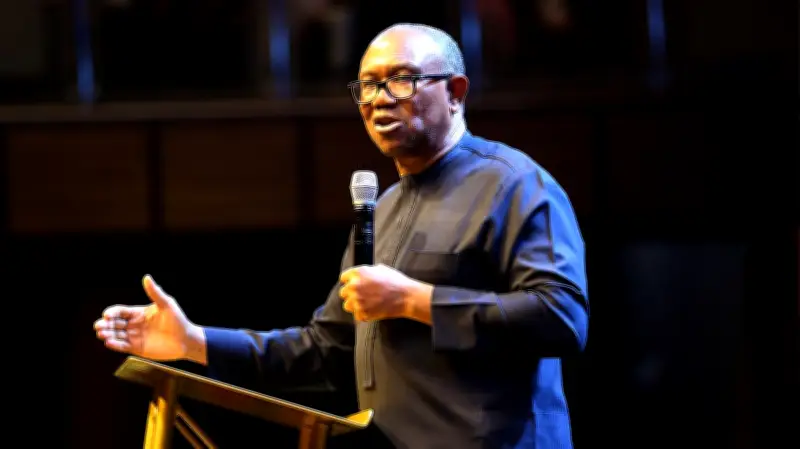
Obi spoke at the This Generation Conference 2026, a yearly event organised by Summit Bible Church, Abuja. Widely regarded as one of Africa's most successful indigenous business incubation models and popularly known as 'Igba Boi,' the system gained prominence after the Nigerian Civil War as a mechanism for rebuilding livelihoods in the South-East. Under the arrangement, established traders (Master or Oga) took in young apprentices, trained them for several years, and upon completion, settled them with start-up capital or goods to launch their own businesses.
The Guardian reports that a 2024 study published in the African Journal of Management and Business Research found that 98 per cent of surveyed Igbo business owners had participated in the apprenticeship system, highlighting its central role in entrepreneurship development.
Call for Reform
Delivering the special keynote address at the conference, Obi stressed the importance of reforming the apprenticeship system to ensure that trainees are equipped with the skills, support, and resources needed to establish their own businesses after completing their learning period. Drawing from his personal experiences, he recounted how assisting others to achieve success had not only transformed lives but had also strengthened his reputation, expanded his network, and fostered lasting relationships built on trust and goodwill.
His words: “It used to work but not working well today. The reason why it’s not working well today is that people don’t know that as a businessman, you have failed when those under you don’t succeed. If you bring a houseboy to your house, a gateman to your house, God did not create him a gateman. If he remains a gateman and fails, you have failed and failed God. You must pull people out of poverty for you to be successful. If they remain poor, you’re finished. So the apprenticeship is not working.”
The session, moderated by Pastor Kingsley Bangwell, and featured questions and answers, also gave participants the opportunity to share perspectives on restoring the original ethos of the Igbo Apprenticeship System as a tool for economic empowerment.