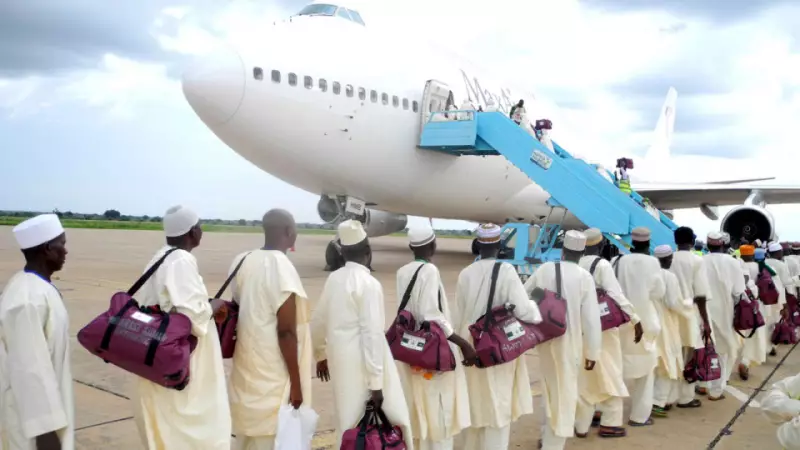
On October 12, 2026, the National Hajj Commission of Nigeria (NAHCON) will celebrate a significant milestone: two full decades of overseeing the nation's sacred pilgrimages. This anniversary offers a moment not just for celebration, but for a crucial assessment of the immense, yet largely unrealized, economic potential within Nigeria's Hajj and Umrah sector.
From Crisis to Stability: NAHCON's Two-Decade Journey
Established by an Act of the National Assembly in 2006, NAHCON began its official operations in 2007. Its creation was a direct response to decades of administrative disarray, where Nigeria frequently struggled to successfully airlift its citizens to the Holy Lands. The Commission inherited a system riddled with corruption, poor service delivery, and systemic failures.
Over the past twenty years, NAHCON has fundamentally reshaped Nigeria's Hajj operations. The pioneering boards, led by Mal Muhammad Musa Bello, instilled much-needed stability and accountability. Subsequent leadership under Barrister Abdullahi Mukhtar Muhammad entrenched vital administrative and fiscal reforms, transforming NAHCON into a self-reliant institution that commands respect both locally and internationally.

The fourth Board, chaired by Barr Zikrullah Kunle Hassan, launched two transformative initiatives: the Hajj Savings Scheme (HSS) and the Hajj Institute of Nigeria (HIN). These were later retained and expanded by the fifth Board under Mal Jalal Arabi and Prof Abdullahi Usman, who increased the number of participating banks in the HSS from one to four.
The Untapped Goldmine: Nigeria's Halal Economy Potential
With a stabilized pilgrimage sector, Nigeria now stands before a monumental economic opportunity, powered by one of the world's largest Muslim populations. The country is already the world's eighth-largest domestic halal economy market. Global spending on halal products and services is projected to soar from $107 billion in 2022 to $180 billion by 2027.
Despite this, Nigeria captures only a tiny fraction of this value. Currently, Nigerian exports account for a mere 5.7% of Africa's $4.2 billion halal product exports to Organisation of Islamic Cooperation (OIC) countries. The Federal Government aims to change this, with a strategy to position Nigeria as a key global player and add $1.5 billion to the nation's GDP by 2027.
A key to unlocking this potential is the Hajj Savings Scheme. Since its 2020 launch, the HSS has shown impressive growth, with its turnover jumping from ₦10.9 billion in 2022 to ₦17.7 billion in 2025. In December 2025, NAHCON signed an MoU with four Islamic banks—Alternative Bank, Jaiz Bank, Lotus Bank, and TAJ Bank—to broaden participation. This is seen as a step toward emulating the phenomenal success of models like Malaysia's Tabung Haji, a multi-billion dollar Islamic investment giant established in 1963.
The projections for Nigeria are staggering. With an estimated 120 million Muslims, if just 1% saved ₦10,000 monthly, the HSS could generate ₦144 billion ($100 million) in annual deposits, with a potential fund size exceeding ₦1 trillion within seven years. Such funds could subsidize pilgrimage costs, build critical infrastructure, and create thousands of jobs.
A Five-Point Roadmap for the Next Decade
To realize this vision, experts call for urgent action in five critical areas:
First, develop a comprehensive 10-year National Hajj and Umrah Policy to position the sector as a major GDP contributor.
Second, refocus NAHCON on robust regulation while leaving operations to a strengthened, professional private sector.
Third, professionalize the sector through the Hajj Institute of Nigeria, enforce minimum service standards, and aggressively integrate AI and technology for pilgrim management.
Fourth, transform the HSS into Nigeria's premier Islamic investment vehicle, revisiting the Special Purpose Vehicle (SPV) model proposed by the Alh Bashir Bugaje-led Technical Committee.
Fifth, strengthen global partnerships, formalize ties with Saudi authorities, and position Nigeria to lead the AfCFTA halal economy agenda.

A Vision for 2036: From Regulator to Economic Powerhouse
The ambitious targets are clear. By 2030, Nigeria should achieve full digital integration of Hajj operations, have 5 million Nigerians enrolled in the HSS with ₦1 trillion under management, create 50,000 direct jobs, and rank among the top 5 halal exporters to OIC countries.
By 2036, the vision expands further: halal export revenues of $5 billion, self-financing Hajj operations with zero government subsidy, and Nigeria serving as the regional training hub for West and Central Africa.
A historic call to action has been made, urging the Federal Government to convene a Presidential Summit, establish a Steering Committee, secure ₦50 billion in seed funding from the Islamic Development Bank, and champion Nigeria's bid to host the OIC Halal Economy Summit by 2030.
The nexus of Vice President Kashim Shettima's role as Chairman of the National Economic Council and supervisor of NAHCON presents a unique opportunity. Twenty years ago, NAHCON was born to solve a crisis. Today, it holds the key to unlocking prosperity for millions. The next two decades must be defined not by what it regulates, but by the thriving halal economy, massive job creation, and global Islamic economic leadership it enables.
Ishaq Ibrahim Jae is Head, Department of Hajj, Hospitality and Tourism, Hajj Institute of Nigeria, Abuja.