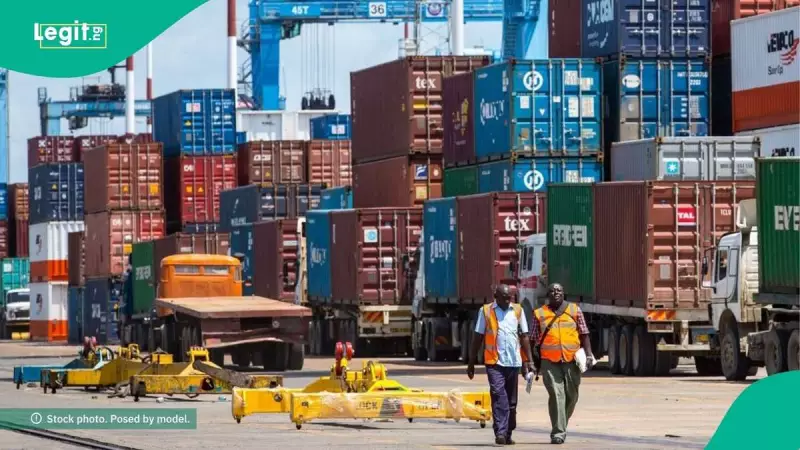
Operations at the Mediterranean Shipping Company (MSC) office in Apapa, Lagos, were brought to a standstill on Monday, January 12, 2026, as a coalition of licensed clearing agents launched a vigorous protest against a recent hike in shipping charges.
Agents Vow Daily Shutdown Until Tariffs Are Reversed
The protesters, comprising members of the Association of Nigeria Licensed Customs Agents (ANLCA), Western Zone, and other freight forwarding groups, stormed the MSC Apapa facility at approximately 1:35 p.m. Their action effectively halted business activities. The agents issued a stern ultimatum, demanding that the shipping line cease operations from 6 a.m. on Tuesday, January 13, and continue the daily shutdown until it reverts to the previous tariff structure.
According to the aggrieved agents, the new charges, which took effect from January 1, 2026, are unjustified and will have a devastating ripple effect on Nigeria's economy. They argue that the increase will further fuel inflation in an already fragile economic climate, as the higher port costs will inevitably be passed on to the final consumer.

Details of the Controversial New Shipping Tariffs
The revised MSC tariffs, as reported, show significant jumps across key fee categories:
- Import documentation fees for a 20-foot container have risen from N45,000 to N58,500.
- Charges for a 40-foot container increased from N72,000 to N93,600.
- Port additional charges for a 20-foot container are set to move from N50,000 to N80,000.
- Fees for a 40-foot container would rise sharply from N100,000 to N160,000.
The agents strongly contest the basis for this increase. They point out that it comes barely three years after shipping companies implemented tariff hikes of over 400%. Furthermore, they argue that key cost drivers like foreign exchange rates and diesel prices have shown relative stability recently, weakening the justification for another round of increases.
Industry Leaders Condemn Hike, Warn of Economic Fallout
Speaking during the protest, Femi Anifowose, the ANLCA Western Zone Coordinator, highlighted the broader economic implications. He warned that unchecked increases in shipping fees, coupled with persistent port inefficiencies, are disrupting trade and intensifying inflation in Nigeria's import-dependent economy.
Anifowose also criticized shipping firms in Apapa for failing to give back adequately to their host communities despite earning substantial revenue from Nigeria's international trade.
In a similar vein, Frank Ogunojemite, the National President of the African Association of Professional Freight Forwarders and Logistics of Nigeria (APFFLON), lambasted the shipping companies for implementing the hike without meaningful engagement with critical industry stakeholders. He also took issue with the Nigerian Shippers' Council for approving the increase, vowing that freight forwarding associations would resist any tariff hike that adds undue pressure on port users.
The protesting groups have pledged to sustain their action until the shipping lines not only reverse the planned increases but also commit to a more transparent and consultative pricing framework with stakeholders.
This protest occurs against a backdrop where the Central Bank of Nigeria (CBN) recently reduced the customs duty exchange rate to N1,421.23 per dollar, a move intended to lower the cost of importing goods. The agents argue that the gains from this CBN policy are being immediately erased by the arbitrary increases from shipping lines.