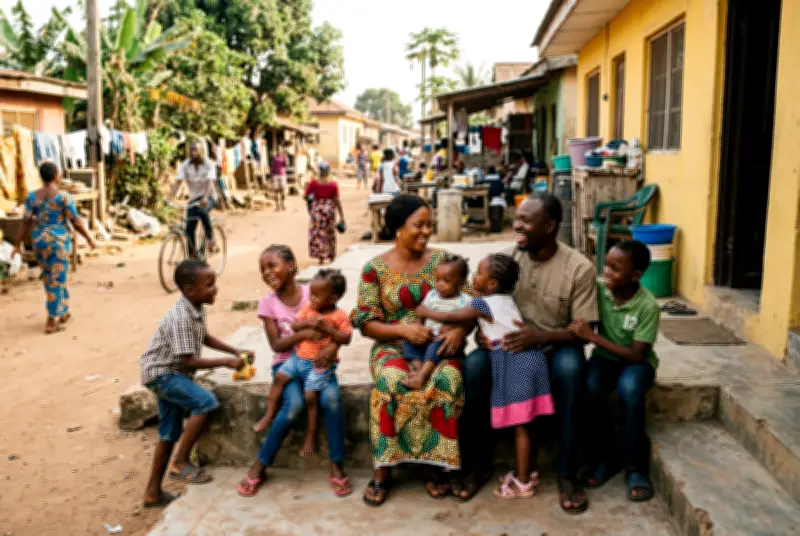
How many children does the average Nigerian have? This question, explored through months of demographic research, reveals a nation in transition. According to the Nigeria Demographic and Health Survey (NDHS) 2024, the average Nigerian woman has approximately 4.8 children over her lifetime. This figure has declined from 5.3 in 2018 and from over 6 children per woman in previous decades. However, this national average masks significant variations across Nigeria's 36 states and the Federal Capital Territory.
Regional Variations in Fertility
Nigeria's fertility landscape is sharply divided. In northern states like Sokoto, Yobe, and Jigawa, women average 6.4 to 6.8 children. In contrast, Lagos state records a fertility rate of 2.8 to 3.2 children per woman. This north-south divide reflects differences in education levels, urbanization, contraceptive access, and economic conditions. For instance, a woman in Sokoto with no formal education may have over six children, while a university graduate in Lagos might plan for two or three.
Key Factors Shaping Family Size
- Education: Women with no education average 6.5 children; those with secondary education average 4.2; tertiary education reduces this to around 3.0. Each additional year of schooling correlates with smaller family size.
- Urban-Rural Divide: Urban women average 3.6 children, while rural women average 5.8. Higher living costs and better access to family planning in cities drive this gap.
- Contraceptive Access: Modern contraceptive use among married women is only 15%, limiting reproductive choice.
- Economic Pressure: Rising costs of education, healthcare, and housing push urban families toward smaller sizes.
- Generational Shifts: Young Nigerians under 35 increasingly view two to three children as ideal, a change from their parents' generation.
- Child Survival: Improved under-5 mortality (from 132 to 104 per 1,000 live births between 2018 and 2024) reduces the need for large families as insurance.
Global Context
Nigeria's fertility rate is high but not extreme for sub-Saharan Africa. Chad leads globally with 5.94 children per woman, followed by Somalia (5.91) and the Democratic Republic of Congo (5.90). The global average is 2.2, while the UK and US average 1.6 and 1.7 respectively. Nigeria's rate is declining, and projections indicate continued reduction as education and urbanization expand.

Consumer Market Implications
Nigeria's demographic structure drives demand for staple foods, baby products, school supplies, and affordable smartphones. Households with four to six children ensure constant demand for these goods. The fast-moving consumer goods market thrives on this youthful, family-oriented population.
Frequently Asked Questions
How many children does the average Nigerian have in 2024? 4.8 children per woman, according to NDHS 2024.
Is Nigeria's fertility rate declining? Yes, from 6.5 in earlier decades to 4.8 in 2024.
Which state has the highest fertility? Sokoto, with 6.4 to 6.8 children per woman.
Which state has the lowest fertility? Lagos, with 2.8 to 3.2 children per woman.
Why do northern Nigerians have more children? Lower female education, limited contraceptive use, early marriage, and agricultural economies.
How does education affect family size? Women with tertiary education average 3.0 children; those with no education average 6.5.
How does Nigeria compare to Africa? Nigeria's 4.8 is above the African average of 3.95 but typical for West Africa.
Which country has the most children per woman? Chad, with 5.94.
How many children for retirement support? Two to three economically active adult children are often needed, though formal pensions are expanding.
What products sell fastest due to high birth rate? Staple foods, baby products, school supplies, and affordable electronics.
Will Nigeria's population continue growing? Yes, due to population momentum; projections suggest over 400 million by 2050.

What can families do to plan effectively? Budget for education and healthcare costs, consider family planning options, and invest in girls' education for long-term benefits.