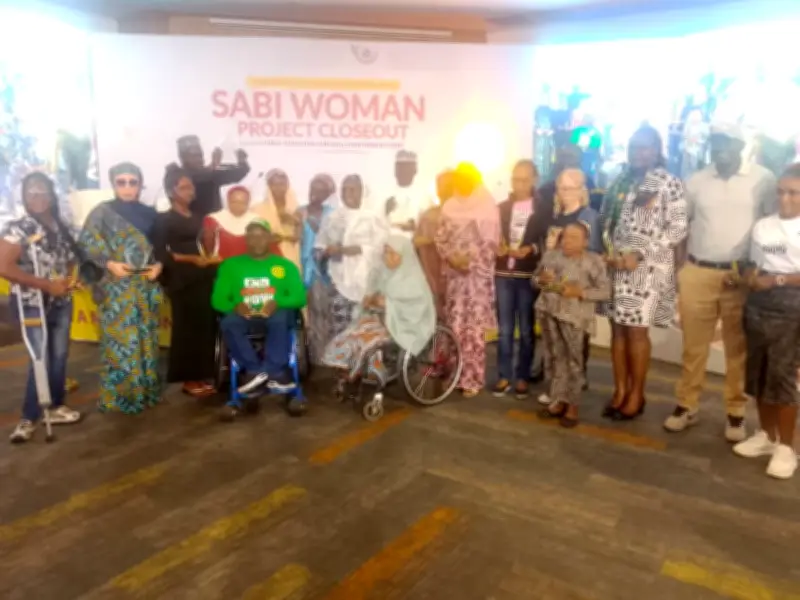
Sightsavers Nigeria has empowered 2,878 adolescent girls and young women with disabilities in Kano and Lagos States through its Girls Education and Skills Partnership (GESP) program, providing business education, entrepreneurship training, and career development support. This was disclosed at the close-out ceremony of the Strengthening Access to Business Education and Inclusion for Women (SABI-Woman) project held in Abuja.
Project Implementation and Partners
The project was implemented in collaboration with organisations of persons with disabilities, Project Enable Africa, the Kanawa Educational Foundation for the Disabled, private sector partners, and development institutions. Speaking at the event, the Country Director of Sightsavers Nigeria, Prof. Joy Shuaibu, said the initiative was designed to inspire adolescent girls with disabilities and equip women with sustainable livelihood skills.
Education and Entrepreneurship Components
According to Shuaibu, the education component focused on helping girls with disabilities realise their potential through mentorship and life coaching. The entrepreneurship aspect provided training in business literacy, bookkeeping, and product costing, while also linking participants with manufacturers willing to supply goods on credit for resale. “We linked them to producers and manufacturers like Unilever that were willing to give them goods that they could sell so that they can make profit,” she said. The Country Director added that the project aimed to ensure that adolescent girls and women with disabilities had access to quality education and sustainable sources of livelihood, impacting not only beneficiaries but also their families and communities. She noted that stigma remained one of the greatest challenges faced by persons with disabilities.

Technical Training and Financial Access
Participants also received technical business management training and were connected to financial institutions to improve access to loans, grants, and other opportunities for enterprise expansion. The Country Advocacy Coordinator of Sightsavers Nigeria, Mrs Esther Bature, said the project supported 1,512 young women with disabilities with employability and entrepreneurship skills to enhance their economic independence. Bature stated that 1,366 adolescent girls with disabilities benefited from life skills and career guidance, while 1,647 employees were trained on workplace disability inclusion and equal opportunity practices.
Training for Coaches and Facilitators
Additionally, 217 life coaches received training on disability inclusion to provide career guidance, and 202 technical and vocational education facilitators were supported with inclusive teaching methods. According to her, 127 business advisors were trained to sustain enterprise growth, while 670 women received starter kits valued at more than N40 million to support their businesses. Beneficiaries have repaid 88 per cent of the starter-kit funds, demonstrating the sustainability and viability of disability-inclusive entrepreneurship initiatives.
Partners' Perspectives
Representing the Gates Foundation, Dr. Avuwa Oteri said the project had demonstrated practical pathways for advancing women’s economic empowerment and disability inclusion through partnerships and community engagement. “It has also shown the value of working across communities, institutions and systems to create lasting change,” Oteri said. Similarly, UNICEF Education Specialist, Mrs. Nneka Ogbansiegbe, called for stronger collaboration to promote disability inclusion and empowerment, especially for children and young persons living with disabilities. Mr. Richard Grubb, Education Adviser at the Foreign, Commonwealth and Development Office (FCDO), said the project had shown how inclusive systems could enable girls and women to realise their full potential.

Beneficiary Testimonials
One of the beneficiaries, Miss Aisha Morenikeji-Ogunkoya, a visually impaired final-year student of Yaba College of Technology, recounted experiences of discrimination and urged persons with disabilities to maximise their potential. Another beneficiary, Miss Aisha Usman, who is physically challenged, said the training improved her business management skills and enabled her to expand her henna business. The event featured panel discussions on disability inclusion and the presentation of awards to outstanding beneficiaries, individuals, and institutions that contributed to the successful implementation of the project.