536 Blind Candidates Participate in 2026 UTME, Highlighting Nigeria's Inclusive Education Progress
In a significant step toward educational inclusivity, no fewer than 536 blind candidates and others with special needs are taking part in the 2026 Unified Tertiary Matriculation Examination (UTME) across Nigeria. This development underscores the nation's ongoing commitment to ensuring equal access to higher education for all qualified individuals, regardless of physical limitations.
JAMB Leadership Praised for Sustaining Equal Opportunity Initiatives
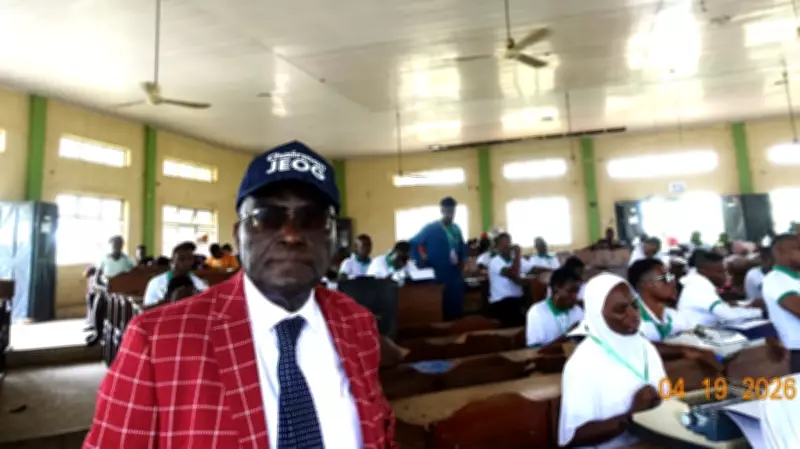
Chairman of the JAMB Equal Opportunity Group (JEOG), Peter Okebukola, commended the Registrar of the Joint Admissions and Matriculation Board, Is-haq Oloyede, for maintaining a system that promotes fairness and accessibility. Speaking at the start of the special UTME sessions on Monday, Okebukola emphasized that the current JAMB leadership has consistently worked to remove barriers that previously hindered participation for persons with disabilities.
He stressed that the examination body's policy is firmly rooted in the principle of fairness, asserting that every qualified candidate deserves a realistic opportunity to pursue tertiary education. This approach has been instrumental in creating a more inclusive environment for candidates with special needs.

Nationwide Examination Centers and Comprehensive Support Systems
The 536 candidates are being examined across 11 designated centers nationwide, with conditions specifically tailored to meet their unique requirements. Since 2017, JAMB, through JEOG, has provided extensive support, including free accommodation for candidates and their guides, feeding, transportation, and customized examination materials.
Okebukola highlighted the continued use of a bimodal examination system, which allows candidates to choose between Fully-Braille or Fully Read-Aloud formats. Now in its third year, this approach has significantly enhanced accessibility and improved the overall examination experience for participants.
Regional Participation and Admission Success Rates
A breakdown of participation reveals Kano with the highest number of candidates at 136, followed by Lagos with 95 and Abuja with 46. Other centers include Ado-Ekiti, Bauchi, Benin, Enugu, Kebbi, Oyo, Jos, and Yola.
Beyond access, admission outcomes for candidates with disabilities are showing notable improvement. In the 2025 admission cycle, 483 candidates applied for tertiary education, with 252 securing admission, representing a 52.2 percent success rate. Candidates with visual impairment accounted for the largest share, with 429 applications and over half gaining admission.
Other categories, including those with Down Syndrome, Autism Spectrum Disorder, and Dyslexia, also recorded significant success, with Dyslexia candidates achieving a 100 percent admission rate.
Growing Interest in STEM Fields and Future Challenges
Okebukola noted a growing interest among candidates in science, technology, engineering, and mathematics (STEM) courses, describing it as a positive shift. However, he acknowledged ongoing challenges faced by visually impaired students in science-related disciplines.
Efforts to address these challenges have been underway since 2018, aimed at expanding access and improving outcomes in STEM fields. Since its establishment, JEOG has facilitated UTME participation for approximately 3,200 candidates with disabilities, with more than one-third gaining admission into tertiary institutions.
Recognition as a Model for Inclusive Education in Africa
Okebukola stated that this initiative is increasingly being recognized across Africa as a model for inclusive education. As he prepares to step down in August 2026 after a decade of service, he praised Oloyede's leadership, noting that the achievements reflect a strong institutional commitment to equity and opportunity in Nigeria's education system.
This progress marks a pivotal moment in Nigeria's journey toward creating a more inclusive and accessible educational landscape for all citizens.