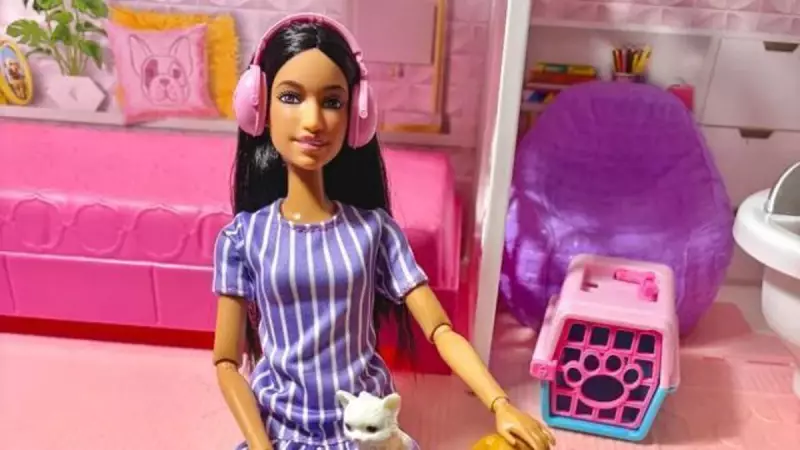
In a landmark move for inclusivity in the toy industry, American multinational Mattel has unveiled its first-ever Barbie doll representing an autistic individual. This new addition significantly expands the company's popular and diverse Fashionistas line, which already features dolls with Down syndrome, visual impairment, and vitiligo.
Collaboration and Thoughtful Design Process
The development of the autistic Barbie was a meticulous process spanning over 18 months. Mattel partnered closely with the Autistic Self Advocacy Network (ASAN), a non-profit organization dedicated to advancing the rights and media portrayal of autistic people. The core objective was to craft a doll that mirrors some of the unique ways autistic individuals might perceive and interact with their environment.
Designers faced a significant challenge, as autism encompasses a broad spectrum of traits, many of which are not outwardly visible. Consultants from ASAN stressed that autism manifests differently in everyone. However, the team aimed to incorporate some common expressions respectfully and accurately into the doll's design.

Specific Features Promoting Representation
The doll's design includes several carefully considered elements. Its eyes are crafted to gaze slightly away, reflecting how some autistic people may find direct eye contact uncomfortable. It also has articulated elbows and wrists, allowing for poses that represent stimming behaviors like hand flapping. These repetitive movements can be crucial for sensory regulation or expressing joy.
The clothing selection involved deep thought about sensory preferences. The team balanced choices between loose garments preferred by some for fabric sensitivity and tighter clothes favored by others for body awareness. The final outfit is an A-line dress with a flowy skirt and short sleeves to minimize skin contact, paired with comfortable flat shoes for stability.
Each doll comes with meaningful accessories:
- A pink fidget spinner that clips on a finger.
- Noise-canceling headphones.
- A pink tablet, modeled after communication devices used by some non-speaking autistic individuals.
Broadening the Scope of Inclusion
This launch also enabled Mattel to highlight a part of the autistic community often overlooked in media. The doll's facial features are inspired by women of Indian descent, a choice informed by employee feedback and visual references, adding another layer of cultural representation.
Mattel's Fashionistas line has seen consistent growth in representing human diversity. Recent introductions have included dolls depicting Type 1 diabetes, prosthetic limbs, hearing aids, and a vast array of body types, skin tones, and hair textures.
According to the U.S. Centers for Disease Control and Prevention, autism impacts approximately 1 in 31 eight-year-old children in the United States. Diagnosis rates are notably higher among boys and children who are Black, Hispanic, Asian, or Pacific Islander compared to their white peers.
This release marks another step in Mattel's ongoing mission to ensure children from all walks of life can find a doll they relate to, fostering a greater sense of belonging and understanding through play.