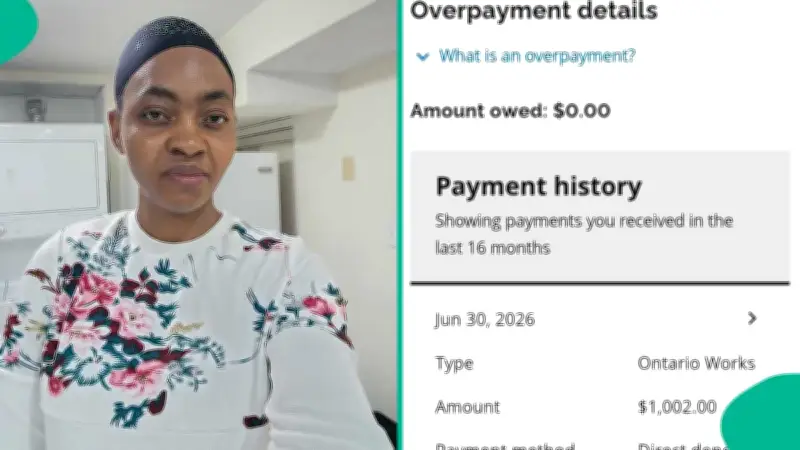
A Nigerian mother of three residing in Canada has ignited a storm of criticism on social media after publicly displaying the housing benefit she received from Ontario Works (OW). Ezinne Frank Nwanorue shared a screenshot on Facebook on June 30, 2026, showing a credit of $1,002 (over N1.3 million) as housing support, accompanied by a message celebrating her faith and expressing gratitude for what she termed a 'good life in God.'
Details of the Housing Benefit Post
In her Facebook post, Nwanorue wrote: 'I received another housing benefit today, 30th June 2026, from another source: Ontario Works. $1,002.00. Guys, I am enjoying a good life in God. Come to Jesus and enjoy real life filled with peace, joy, safety and security. Thank you, Jesus. In all, grace in God is better !!!!! Jesus is THE WAY, THE TRUTH AND THE LIFE.' The post quickly drew reactions from social media users, many of whom condemned her for making the benefit public and for what they perceived as boasting about receiving taxpayer-funded assistance.
What Is Ontario Works?
Ontario Works is a social assistance program administered by the provincial government and local municipalities. According to EBSource, it provides temporary financial and employment assistance to Ontario residents who lack sufficient funds to cover basic living costs such as food and shelter, while they actively seek employment. The program is funded by taxpayers and is intended as a safety net for those in genuine need.

Public Backlash and Criticism
Many commenters expressed outrage at Nwanorue's decision to share the benefit publicly. Hope Chinelo wrote: 'Imagine working hard and paying thousands of dollars in taxes every year, only to come on Facebook and see someone proudly celebrating living off those same tax dollars as if it's an achievement. Social assistance is there to help people through difficult times. It shouldn't be turned into social media content or worn like a badge of honour. If you're able to work, then work. Stop glorifying dependence on taxpayers while calling it a testimony. Jesus never taught people to boast about living on public assistance. He taught honesty, responsibility, and compassion. Please stop making a mockery of taxpayers and of the people who genuinely need these benefits to get through difficult seasons. Some of us wake up every day, go to work, and pay huge amounts in taxes, only to see social media posts celebrating money that comes from those taxes. It's nothing to be proud of. Go get a job! Mumu!!'
Other users urged caution about sharing sensitive information. Okoye Chinenye said: 'I understand that you are overexcited, but pls mind how you share confidential news to the public. Thank you.' Deborah Olufunke Ogungbeni-Akinsolugba commented: 'Not everyone has to become a content creator. If you don't know or have what to post, it's totally okay.' Okeke Vivian added: 'No please stop this. This has been ongoing for years nobody says it online. It's not everything you bring to the public as content. Please let's learn and know what to bring to the public. Chei.' Bamidele Adesope Adeleye even threatened: 'Would you like to be reported to Ontario Works? Just asking. I can give them a call if you don't take down this post.'
Broader Context of Social Assistance in Canada
This incident is not isolated. In a related story, Legit.ng reported that another Nigerian woman in Canada, Nkechi Bianze, had shared the amount she received as child support from the Canadian government. Bianze revealed that the government calculated arrears owed to her family after discontinuing child benefit payments in early 2023, resulting in a payment of CAD 5,577.75 (over N6 million) on March 20. She humorously questioned whether she was entitled to the funds. These cases highlight the tension between public assistance recipients and taxpayers in Canada, particularly within diaspora communities.

Impact and Reactions
The backlash against Nwanorue underscores a broader debate about the ethics of publicizing welfare benefits on social media. Critics argue that such posts can stigmatize genuine recipients and undermine public support for social programs. Nwanorue has not publicly responded to the criticism as of the time of reporting. The incident serves as a cautionary tale about the potential consequences of sharing personal financial information online, especially when it involves government assistance.