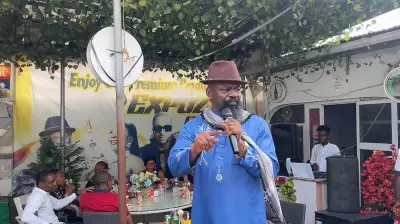
Apostle Harrison Ayintete, the founder and lead pastor of The Goodness Nation Ministries, has publicly criticised Nigerian singer Skales over a testimony the artist shared in church. The cleric argued that the testimony, which centred on the renewed viral success of Skales' song Shake Body, does not inspire godliness or spiritual growth.
The Viral Testimony That Sparked Debate
The controversy began after Skales shared how his prayers were answered in a single day. His song Shake Body experienced a massive revival after Barcelona football star Lamine Yamal posted a video of himself dancing to the track, causing it to go viral globally. Skales presented this event as a testimony of divine favour in a church setting.
On January 4, 2026, Pastor Ayintete took to his Instagram page to address the issue in a lengthy post. He clarified that he holds no personal grievance against the singer but strongly questioned the spiritual merit of celebrating such secular success within a church. "Your testimony does not inspire Godliness," Ayintete wrote directly to Skales.

The pastor emphasised that his concern was not about Skales enjoying the fruits of his labour on his own platform. Instead, he focused on the message it sends when a local church chooses to spotlight such an achievement. Ayintete accompanied his statement with a screenshot of a private chat with the singer, which he made public.
Ayintete's Core Argument: Protecting Church Integrity
Pastor Ayintete's primary criticism shifted from Skales to the church that hosted the testimony. He expressed deep worry about the potential impact on young believers.
He stated that projecting success linked to secular music—which he described as promoting immorality—could encourage younger people to pursue ungodly careers while still expecting God's blessings. "It will only make more younger people do immoral music and immoral things whilst seeking God’s blessings on it. It is the very wrong example," he wrote.
His comments reveal a firm belief that testimonies shared in church should primarily promote spiritual growth, devotion, and maturity. By distancing his remarks from personal animosity, Ayintete framed his criticism as a necessary measure to protect the integrity of the Christian community and ensure that public examples encourage godly values.
Mixed Reactions Flood Social Media
The pastor's strong stance triggered a wave of mixed reactions across social media platforms. Netizens were divided, with some supporting his position and others accusing him of being judgmental.
Supporters, like user @ajlmuzic, commended Ayintete, calling it "a clear example that the Gospel is offensive to religion." They saw his remarks as a defence of spiritual purity.
However, many critics challenged his viewpoint. User @kardinal_beku pointed out perceived hypocrisy, referencing another cleric who engaged with content creators. He argued, "You have no moral right to dictate who comes before God. Your duty is to accept all that comes before him the way they are."
Other users, such as @mrclassical01, viewed the incident as a missed opportunity for evangelism. "Worldly artiste coming to church should even be a big win for the church because at the end of the day the gospel centers on winning souls," the user wrote.
The debate highlights a ongoing tension within some religious circles regarding the intersection of secular success, celebrity culture, and spiritual testimony.