Group supports girls in Lagos correctional centre with hygiene kits
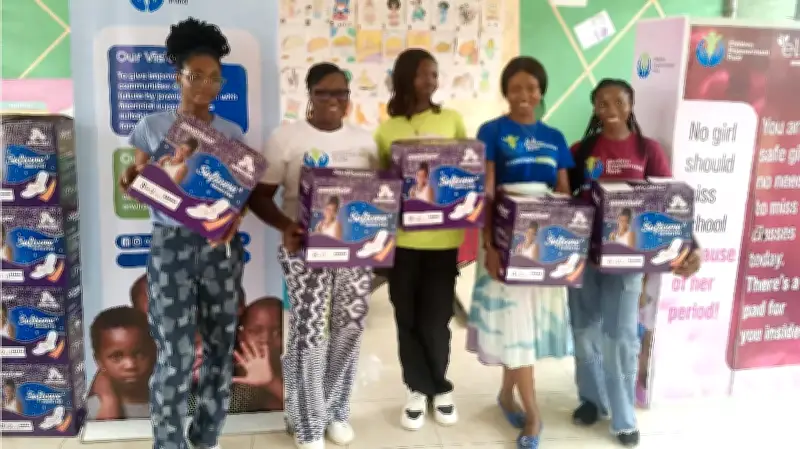
The Child Empowerment Fund (CEF) has distributed a six-month supply of sanitary pads to 100 girls at the Children’s Correctional Centre for Girls in Idi Araba, Lagos. The outreach, titled “Project Red Bloom Box: Restoring Dignity, One Girl at a Time,” also provided menstrual health education to ensure no girl is left behind due to period poverty.
The programme featured interactive health sessions led by medical experts who educated the girls on menstrual cycle tracking, management of symptoms such as cramps, and misconceptions surrounding puberty. Speaking at the event, CEF Programme Manager Temitope Akinrotimi said the initiative was organised in line with this year’s Menstrual Hygiene Day theme, “Together for a Friendly Period World.” She explained that the choice of the correctional facility was deliberate to include vulnerable girls in conversations about menstrual health and dignity.
“We desire to see that a girl’s menstrual period is never a barrier to her dignity. We chose this correctional facility to ensure vulnerable girls are actively included in conversations around menstrual health,” she said. Akinrotimi highlighted challenges encountered by the organisation in states such as Borno, Niger, and Nasarawa, where poverty forces some girls to rely on unsafe alternatives like rags, newspapers, and cotton wool during menstruation. According to her, the organisation once encountered a girl in Nasarawa State who suffered complications after using cotton wool, which became lodged internally.

“These are dangerous and unhealthy practices that can lead to infections and trauma. No girl should face health risks or miss school simply because she cannot afford sanitary pads,” she said. She also noted that lack of access to menstrual products contributes to absenteeism among schoolgirls, as many stay away from school during menstruation for fear of embarrassment. “Girls should not miss school because they do not have pads. We have had situations where girls simply go home repeatedly to change clothes because they lack sanitary supplies,” Akinrotimi added.
She explained that the Project Red Bloom Box initiative, launched five years ago, was designed to provide long-term support rather than one-off donations. While acknowledging support from the Ministries of Health and Education, Akinrotimi called for structured nationwide partnerships to institutionalise free sanitary products for girls. “A woman’s menstrual journey spans between 30 and 40 years. Given current economic realities, many girls simply cannot afford this monthly expense. We need a collective and institutional push to end period poverty,” she said.
CEF’s Global Communication Executive, Praise Okwuchi, disclosed that each beneficiary at the Idi-Araba facility received six packs of sanitary pads expected to last for six months. She added that the organisation has intensified advocacy through social media campaigns and community engagements to raise awareness on the dangers of poor menstrual hygiene and the importance of menstrual dignity for girls. Okwuchi called on individuals, corporate organisations, and government agencies to support efforts aimed at ending period poverty and ensuring that no girl loses access to education or dignity because of menstruation.