The Africa Centres for Disease Control and Prevention (Africa CDC) has reported that the ongoing Ebola outbreak in the Democratic Republic of the Congo (DRC) has reached 1,274 confirmed cases. The agency also noted that infections among healthcare workers have risen to 96.
New Cases and Deaths Reported
Wazih Cho, Data Analyst and Epidemic Intelligence Officer at Africa CDC, disclosed this during a webinar on Monday. “In the past 24 hours, 47 new confirmed Ebola cases and 12 deaths were reported in the DRC, 96 per cent of which originated in Équateur Province,” he said. Cho added, “Cumulative figures now stand at 1,274 confirmed cases with 360 deaths, indicating sustained transmission at the provincial level.”
Healthcare Worker Infections Rise
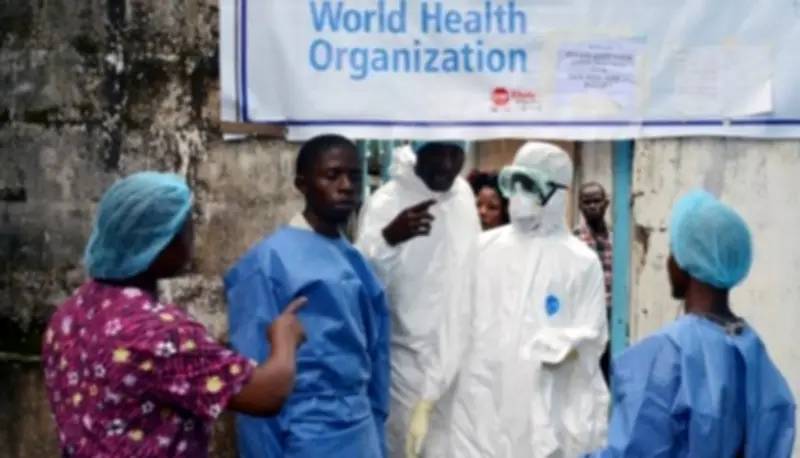
Cho attributed the spread partly to exposure in health facilities. He noted that 92 healthcare workers had been infected in the DRC and four in Uganda, bringing the total to 96. Confirmed cases have now been reported in 35 health zones across the DRC, indicating widespread transmission beyond the initial epicentre.

Uganda's Situation
For Uganda, Cho reported 20 confirmed cases, mostly spillover from the DRC. This includes 15 imported cases, four healthcare worker infections, and two fatalities. “All Uganda cases are classified under Kampala. Contact follow-up in Uganda stands at 100 per cent, with only nine contacts still under active monitoring. Case fatality in Uganda as of day 27 is 10 per cent,” he said. Cho added that Uganda had recorded no new Ebola case since 21 June, although active surveillance remained in place.
Transmission Hotspots
Cho said 23 of the 36 health areas in Équateur Province had confirmed cases, confirming sustained community transmission. North Kivu, which borders Équateur and Uganda, is also reporting cases, while South Kivu has recorded no new infections for at least 30 days after reporting three cases. Africa CDC also received alerts on 28 June from Tshopo Province, which borders Ituri Province and South Sudan. Two confirmed male cases recorded between 9 June and 23 June suggested the outbreak had spread into a previously unaffected province.
Outbreak Dynamics
According to Cho, the epidemic curve indicates that the first positive case was detected late, after community transmission had already begun. Seven-day and three-day moving averages showed the outbreak remained at or near peak transmission, with modelling projecting additional case increases over the next three weeks. Cho added that a small number of health zones accounted for about 80 per cent of confirmed cases, while several treatment centres were operating above capacity. More than 20,000 community health workers had been mobilised to strengthen case detection, contact tracing and community sensitisation efforts.
Expert Commentary
Oyewale Tomori, former President of the Nigeria Academy of Science, commended Africa CDC and the World Health Organisation (WHO) for working collaboratively. Tomori described the One Health approach as an integrated strategy recognising the close links between human, animal and environmental health. He said about 70 per cent of emerging infectious diseases were zoonotic, spreading from animals to humans. “Ebola, SARS, and other viruses reflect this animal-human interface, with diverse modes of transmission and host species,” he said.
Tomori identified deforestation, urban expansion, mining, conflict-driven migration, bushmeat trade, climate change and weak public health systems as major drivers of emerging infectious diseases. He emphasised that stronger surveillance, early detection and coordinated response systems were essential to preventing and containing outbreaks before they escalated. Tomori said One Health required veterinarians, physicians, social scientists, engineers and economists to work together to achieve effective outbreak prevention and response.