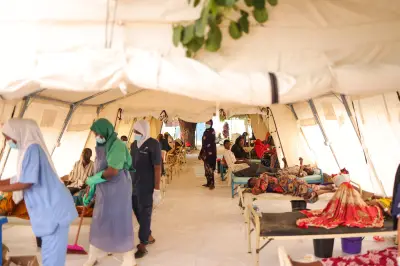
The Lagos University Teaching Hospital (LUTH) has launched an automated IH500 Immuno-haematology screening system aimed at enhancing blood safety and improving turnaround times in transfusion services. This new system automates ABO/Rh grouping, antibody screening, and cross-matching using column agglutination technology, significantly reducing human error and cutting turnaround time from over 180 minutes to less than 50 minutes.
World Blood Donor Day 2026
The development was announced during the commemoration of World Blood Donor Day 2026, themed “One Drop of Humanity. Give Blood. Save Lives.” The event was organized by the Department of Haematology and Blood Transfusion to promote awareness and honor regular donors.
Chief Medical Director’s Remarks
Prof. Wasiu Adeyemo, the Chief Medical Director of LUTH, represented by the Chairman of the Medical Advisory Committee (CMAC), Prof. Ayodeji Oluwole, emphasized that voluntary blood donors are the “silent heartbeat” sustaining surgeries, emergency care, and survival outcomes for mothers and children. He noted that despite Nigeria having over 100 million eligible blood donors, supply remains critically low, with many hospitals operating on blood stocks that barely last 24 hours. LUTH, a major referral center receiving cases from all 36 states and the Federal Capital Territory, manages over 1,050 inpatients daily and performs about 100 surgeries weekly.

Blood Demand and Supply
Adeyemo stated that the hospital requires between 20,000 and 25,000 units of blood and blood components annually to meet demand from trauma cases, cancer treatment, obstetric emergencies, sickle cell complications, and chronic anemia. He acknowledged that reliance on family replacement donation systems has made blood supply unpredictable, stressing the need to transition fully to a voluntary donor-driven system.
Donor Mobilization and Retention
LUTH has strengthened donor mobilization through expanded voluntary donor recruitment desks, dedicated mobilization zones, and partnerships with corporate organizations, faith-based groups, and tertiary institutions. More than 2,500 new voluntary donors have been recruited since January 2025. The hospital aims to increase donor retention from 10% to 60% within the next 24 months through structured follow-up and engagement strategies. To encourage repeat donations, LUTH has introduced a donor loyalty recognition program offering health screening benefits, certificates, and annual awards for regular donors.
Clinical Efficiency and Safety
On clinical efficiency, Adeyemo said the hospital has established a Hospital Transfusion Committee focused on Patient Blood Management (PBM), aiming to reduce unnecessary transfusions by about 15% while ensuring optimal patient outcomes. Major safety upgrades include a mandatory quality management system aligned with African Society of Blood Transfusion standards and enhanced screening for HIV, Hepatitis B, Hepatitis C, and syphilis using ELISA-based automation. The new transfusion technology places LUTH among the most advanced transfusion centers in West Africa, ensuring patients receive safe, compatible, and accurately matched blood.
Persistent Challenges
Despite these gains, Adeyemo identified persistent challenges, including low repeat donation rates, intermittent shortages of O-negative blood, funding gaps for donor mobilization activities, and widespread misconceptions about blood donation. He called for stronger government and partner support, stressing that “patient safety is not negotiable,” while urging Nigerians aged 17 to 65 years and weighing more than 50 kilograms to embrace regular voluntary blood donation.

Department Head’s Warning
The Head of the Department of Haematology and Blood Transfusion, Dr. Titilope Adeyemo, warned that blood shortages continue to threaten patient care nationwide. Many hospitals operate with blood stocks that last only 24 hours, far below the recommended 10-day reserve capacity. She noted that inadequate voluntary donation often fuels unsafe commercial donation practices, where donors may conceal health conditions. She urged Nigerians to donate regularly, stressing that eligible individuals can safely donate every four months. She reaffirmed the importance of repeat voluntary donation, as it ensures a predictable blood supply, safer donor history tracking, and improved emergency preparedness.
Coordinator’s Insights
The Coordinator of the Voluntary Blood Donor Recruitment Unit, Adeyinka Adewale, said voluntary donors helped save an estimated 3,000 lives in the past year. Only about 3% of eligible Nigerians donate blood regularly, while LUTH’s voluntary donation rate stands at approximately 12%. Youth participation has improved, with a 10% increase in first-time donors since 2025. However, the system still relies heavily on repeat donors to maintain stability. Adewale urged Nigerians to support blood drives in workplaces, schools, and religious centers, while helping to dispel myths that blood donation weakens the body or causes illness. A single blood donation can save up to three lives, underscoring the need to build a culture of sustained, non-remunerated voluntary blood donation across the country.