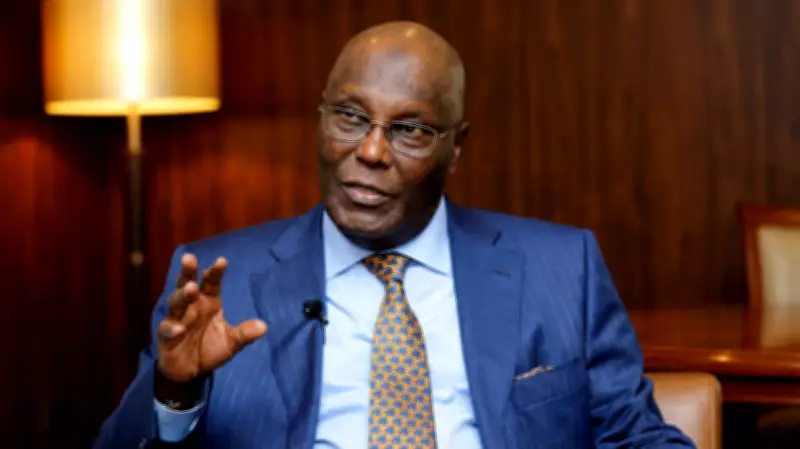
Former Vice President Atiku Abubakar and the African Democratic Congress (ADC) Legislators' Forum have raised serious concerns over the proposed $516 million foreign loan for the Sokoto–Badagry superhighway project. The Senate on Wednesday received a formal request from President Bola Tinubu seeking legislative approval for the financing arrangement.
Senate Debate on Loan Request
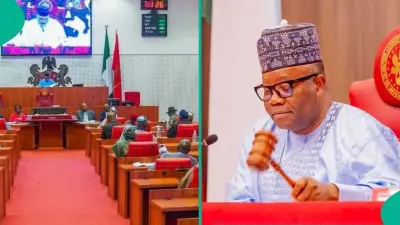
Senate President Godswill Akpabio anchored the debate on the foreign loan request on a blunt admission of Nigeria's fiscal strain, but insisted that national development cannot stall because of revenue shortages. The request, read during plenary, aligns with Sections 16 and 21 of the Debt Management Office (Establishment) Act, 2011, and seeks approval for a syndicated loan facility to fund Sections 1, 1A, and 1B of the project.
Financing Structure and Counterpart Funding
According to the presidential communication, the facility is to be arranged through Deutsche Bank AG, with support from the Islamic Corporation for the Insurance of Investment and Export Credit (ICIEC), the insurance arm of the Islamic Development Bank (IsDB), which will provide a partial risk guarantee. The Federal Government will also provide counterpart funding of N265.5 billion, earmarked for land acquisition, compensation, and ancillary infrastructure. The loan is structured with a nine-year tenure, including a grace period of up to three years, and carries an interest rate not exceeding the Chicago Mercantile Exchange (CME) SOFR plus 5.3 per cent yearly.

Project Scope and Objectives
Tinubu noted that the financing had already received approval from the Federal Executive Council (FEC) and is part of the administration's Renewed Hope infrastructure agenda. The proposed Sokoto–Badagry Superhighway is a flagship national project designed to connect Sokoto, Kebbi, Niger, Kwara, Oyo, Ogun and Lagos states, stretching from Illela to Badagry. The project, spanning approximately 1,000 kilometres, is expected to enhance north–south connectivity, improve road safety, reduce travel time and logistics costs, facilitate trade and strengthen food security. It also includes provisions for future rail integration and utility corridors.
Senate Committee Referral
Following the presentation, Akpabio referred the request to the Committee on Local and Foreign Debts, directing it to report back within one week. Akpabio stressed that borrowing for critical infrastructure is justified where such investments generate long-term economic value and development impact. The Senate leadership subsequently urged the committee to expedite its review process to enable the timely consideration of the financing request.
Atiku's Criticism
In a statement released by his Senior Special Assistant on Public Communication, Phrank Shaibu, the former Vice President acknowledged the necessity of infrastructure development — particularly a project connecting the North-West to the South-West — but drew a sharp distinction between noble intentions and reckless fiscal decisions. "At a time Nigeria is already groaning under the weight of unsustainable debt, the resort to yet another foreign loan — without transparent terms, clear cost-benefit analysis and a credible repayment framework — raises profound questions about prudence and accountability," Atiku stated. He was emphatic that the matter should not be reduced to a regional debate. The people of Northern Nigeria, he argued, like their counterparts across the country, deserve development that is sustainable and transparent — not one mortgaged against their future.

ADC Forum's Concerns
The ADC forum described the request as troubling, warning that it reflects a growing pattern of dependence on borrowing without sufficient transparency on repayment plans and long-term fiscal sustainability. Chairman of the forum, Uko Nkole, stated that while the lawmakers do not oppose infrastructure development, the Federal Government must provide clear justification for the loan, including detailed cost-benefit analysis, procurement processes and a credible repayment strategy. The group argued that Nigeria's debt profile already poses significant risks, noting that a substantial portion of government revenue is being spent on debt servicing. It warned that further accumulation of external debt could exacerbate fiscal pressures and constrain future economic growth.