The House of Representatives Spouses Association (HORSA) has expressed strong support for the proposed Special Seats for Women Bill, pledging to utilize its influence and networks to bolster advocacy efforts aimed at increasing women's representation in governance and decision-making roles.
Commitment to Inclusive Democracy
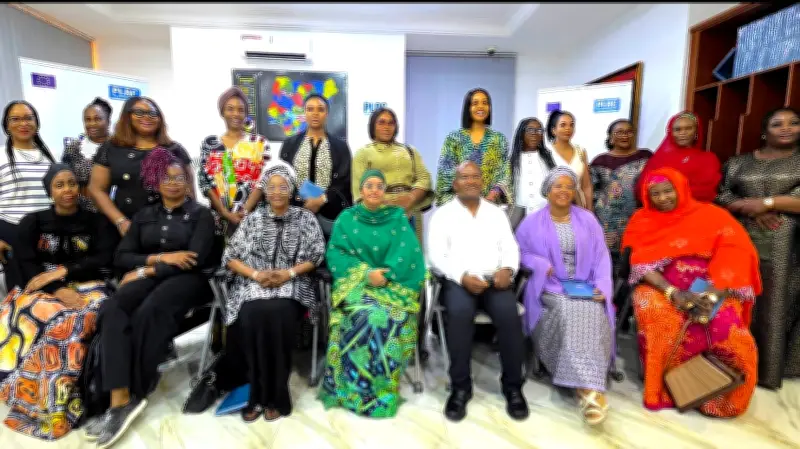
Dr. Fatima Tajudeen Abbas, leader of HORSA and wife of the Speaker of the House of Representatives, Rt. Hon. Tajudeen Abbas, made this commitment during a courtesy visit to the Policy and Legal Advocacy Centre (PLAC) in Abuja. She described the bill as a strategic pathway toward a more inclusive, representative, and equitable democracy, emphasizing that greater female participation in governance is crucial for national development.
Dr. Abbas commended PLAC for its sustained advocacy and technical support for the legislation, stressing that HORSA is ready to collaborate with stakeholders to mobilize support for the bill both within and outside the National Assembly. She noted that the passage of the bill would require strategic partnerships, sustained advocacy, and deliberate stakeholder engagement.

“We are particularly delighted by PLAC’s unwavering commitment to advancing women’s political participation and representation through your sustained advocacy for the passage of the Special Seats Bill,” she said. “This important legislative initiative represents not merely a constitutional amendment, but a strategic pathway toward achieving a more inclusive, representative and equitable democracy where women have greater opportunities to contribute to governance and national development.”
HORSA's Influence and Proposed Partnership
Dr. Abbas highlighted that as spouses of lawmakers, HORSA members occupy a position of influence and engagement. Through constructive conversations, advocacy, and relationship-building, the association can contribute meaningfully to efforts aimed at garnering greater support for women among members of the House of Representatives.
She further proposed a stronger partnership between HORSA and PLAC, including the possibility of jointly convening a high-level strategic workshop involving legislators, advocates, development partners, and other stakeholders to develop coordinated strategies for advancing the legislation. “It is our proposal that HORSA and PLAC explore the possibility of jointly convening a high-level strategic workshop that brings together key stakeholders to critically examine practical approaches for strengthening advocacy, influence and lobbying efforts in support of the Special Seats Bill,” she stated.
She expressed confidence that collaboration between both organizations would accelerate progress toward achieving greater inclusion of women in governance. “We are confident that by combining PLAC’s technical expertise and advocacy experience with HORSA’s unique access, network and influence, we can make meaningful contributions towards advancing this historic cause and ensuring that more women have a seat at the table where critical decisions affecting our nation are made,” she added.
Empowerment Initiatives
Dr. Abbas also highlighted some of HORSA’s interventions aimed at empowering women, including a recent partnership with the National Information Technology Development Agency (NITDA), which resulted in a Women’s Digital Literacy and Leadership Conference designed to equip women with digital and leadership skills.
Support from HORSA Members
Mrs. Anne Hassanou, a HORSA member, described the Special Seats Bill as an important starting point in addressing women’s under-representation in governance. She emphasized that women must support one another to secure greater participation in politics and public leadership, noting that the bill would provide opportunities for women to contribute more meaningfully to policy discussions affecting women and children. “Any nation where women have a voice is a nation where opportunity is great,” she said.

Another member from Edo State, Mrs. Ann Osaware, argued that increasing women’s representation in leadership positions would strengthen democracy and ensure broader inclusion in governance. She stated that Nigeria could not achieve its full potential while women remained under-represented in decision-making structures, describing the bill as a practical solution for expanding women’s participation in governance. “The Special Seats Bill offers a practical solution to increase women’s participation in governance and strengthen our democracy,” she said.
Mrs. Hadiza Alao-Akala from Oyo State maintained that the legislation is not about giving women an undue advantage over men but about creating fair opportunities for competent and qualified women to contribute to national development.
Legislative Support
Chairman of the House Committee on Humanitarian Affairs, Hon. Tolulope Akande-Sadipe, called on the spouses of lawmakers to continue supporting advocacy efforts for the bill. She described spouses as critical stakeholders with significant influence on legislators and urged them to rally support for initiatives that promote women’s advancement. “There is really nothing our men can do without you. Once you tell them that this is what you want and it is in your interest, then they will definitely support,” she said.
PLAC's Perspective
Earlier in his welcome address, the Executive Director of PLAC, Mr. Clement Nwankwo, clarified that the legislation is officially known as the Special Seats for Women Bill, although it has undergone several modifications and may still evolve before its eventual passage. He noted that the advocacy visit by the lawmakers’ spouses sends a strong signal of support for the bill and demonstrates that influential stakeholders are committed to its passage. “Their husbands will hear them speaking from here and the public will also see that behind the scenes they are talking to their husbands to pass the bill,” he said.
Nwankwo expressed optimism that the visit would boost endorsement for the bill and strengthen ongoing advocacy efforts. “Our expectation is that the advocacy visit will lead to more endorsement of the bill and that we’ll see the bill passed in the House of Representatives and National Assembly,” he added.