Former Minister Dalung Questions Tinubu's Legacy, ADC Sets Sights on 2027 Presidency
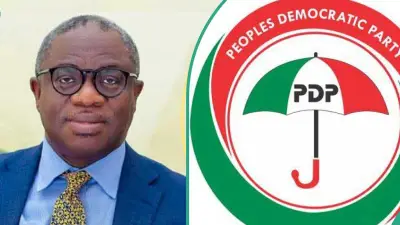
President Bola Tinubu has faced sharp criticism from Solomon Dalung, a former minister of sports under the late President Muhammadu Buhari's administration, over what he describes as a failure to build a lasting political legacy. In a recent interview, Dalung argued that Tinubu's performance at the national level has not matched his achievements as governor of Lagos State.
Dalung's Critique of Tinubu's Governance
Speaking on Channels TV on Sunday, February 8, Dalung was asked whether Tinubu could be defeated in the 2027 general elections, given his reputation as a political heavyweight and strategist. The former minister responded by questioning Tinubu's legacy, stating that great leaders typically leave behind transformative changes for their people.
Dalung emphasized that if Tinubu is truly a master strategist, his strategies should have translated into tangible improvements in Nigeria's security and economic challenges. He pointed out that the president has not been able to replicate his Lagos success on a national scale, suggesting a gap between political maneuvering and effective governance.

ADC's Challenge to APC in 2027
In a significant political declaration, Dalung announced that the African Democratic Congress (ADC) is poised to challenge President Tinubu and the ruling All Progressives Congress (APC) for the presidency in 2027. This move signals growing opposition and could reshape the electoral landscape as parties gear up for the next election cycle.
The former minister's comments come at a time when political alignments are shifting, with various factions assessing Tinubu's administration and its impact on national issues. Dalung's alignment with ADC highlights efforts to consolidate opposition forces ahead of the 2027 polls.
Mixed Public Reactions to Dalung's Remarks
Nigerians have reacted diversely to Dalung's interview, with some questioning his own legacy as a former minister. On social media and other platforms, critics have pointed out perceived shortcomings during his tenure in office.
- One user, Wonsebolatan, challenged Dalung to outline his own achievements as sports minister, asking what legacy he left behind.
- Hon. Aina Olushola Olaoluwa Esq. criticized media outlets for interviewing what he called "failures in our political system," suggesting that more intellectual voices should be highlighted instead.
- Another commenter, Omo Yewa, acknowledged governance issues under Tinubu but dismissed Dalung as an unsuitable critic due to his past performance as a minister.
- Bankole Makinde, DBA, defended Tinubu's political acumen, noting his historical influence in Nigerian politics and the current alignment of governors and parties around him.
These reactions underscore a broader debate about accountability and credibility among political figures, with many Nigerians scrutinizing both the critic and the subject of criticism.
Context of Tinubu's Recent Actions
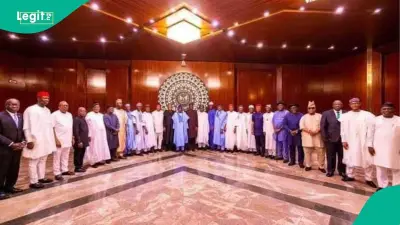
This criticism emerges against the backdrop of Tinubu's recent calls for governors to implement the Supreme Court judgment on local government autonomy. At the 14th APC national caucus meeting in Abuja, the president urged compliance with the ruling, highlighting ongoing efforts to address governance structures.
Tinubu's push for LG autonomy reflects his administration's focus on decentralization and reform, though critics like Dalung argue that such measures have not sufficiently addressed core national challenges. The interplay between these policy moves and political criticism will likely influence public perception as the 2027 election approaches.
As Nigeria navigates complex political dynamics, the exchange between Dalung and Tinubu's supporters illustrates the intense scrutiny facing leaders and the evolving strategies of opposition parties. The ADC's planned challenge adds a new dimension to the political arena, setting the stage for a contentious election season.