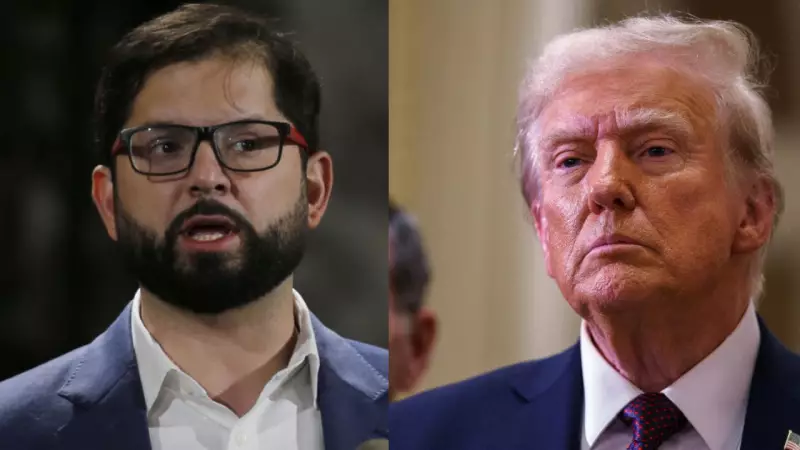
Chile has issued a strong condemnation of a major United States military operation in Venezuela, calling for a peaceful resolution to the escalating crisis. The intervention, which occurred on January 3, 2026, resulted in the capture of Venezuelan President Nicolás Maduro and his wife, Cilia Flores.
Chile's Firm Stance Against Intervention
In a clear and direct statement posted on the social media platform X, Chilean President Gabriel Boric expressed his government's deep concern. He explicitly condemned the military actions taken by the United States. President Boric emphasized that the path forward must be built on dialogue and peaceful dispute settlement, not violence.
He reaffirmed Chile's unwavering commitment to fundamental principles of international law. These principles include non-intervention, the prohibition on the use of force, and respect for state sovereignty and territorial integrity. This position places Chile among nations advocating for de-escalation in the volatile region.

The US Operation and Regional Fallout
The triggering event was a large-scale US military operation involving airstrikes on multiple locations in and around Caracas and other parts of Venezuela. US President Donald Trump announced that his forces had successfully captured Maduro and his wife. He stated they were being transported to the United States to face prosecution under American law.
Washington described the operation as part of a campaign against alleged drug trafficking and narco-terrorism. This marks one of the most direct US military engagements in Latin America in decades. In response, Venezuelan authorities declared a national state of emergency, denouncing the intervention as a blatant violation of international law.
International Reactions and Rising Tensions
The dramatic incident has sent shockwaves across the globe, with regional governments expressing alarm.
- Mexico criticized the US actions, warning that any military intervention would "seriously jeopardise regional stability" and urging respect for international law.
- In neighbouring Colombia, the government expressed alarm and announced stepped-up border security measures, closely monitoring for potential spill-over effects.
- The European Union reiterated calls for restraint and adherence to the United Nations Charter, underscoring that any resolution must respect human rights and sovereign principles.
This event represents a major escalation of tensions that have been building for months. In late 2025, the US intensified its pressure campaign by designating the Venezuelan "Cartel of the Suns" as a terrorist organisation. The Trump administration had also recently increased bounties for Maduro's capture to $50 million while deploying warships to the Caribbean.
Maduro had long accused Washington of attempting to impose a "puppet government" to control Venezuela's natural resources and had warned of armed resistance against any direct foreign engagement.
In his statement, President Boric concluded that the solution to Venezuela's profound crisis must lie in dialogue, multilateral support, and peaceful engagement, firmly rejecting violence and foreign interference as viable paths forward.