The United States has announced a drastic overhaul of its foreign aid strategy, a move set to severely impact Nigeria. Washington's pledge of just $2 billion for United Nations humanitarian operations in 2026 marks a sharp decline from previous years and forms part of a broader policy shift under President Donald Trump.
A New Era of "Efficiency" and Reduced Funding
On Monday, December 29, 2025, the US made its reduced commitment official in Geneva. This new framework will channel American humanitarian funding through the UN Office for the Coordination of Humanitarian Affairs (OCHA), instead of giving money directly to individual UN agencies like before. US Secretary of State Marco Rubio stated on X that this approach is designed to improve efficiency, reduce duplication, and demand stricter accountability.
Rubio emphasized that UN agencies must now reform or scale down, with future US funding dependent on clear, measurable results and strong oversight. The initial countries set to receive aid under this new system are the Democratic Republic of Congo, Myanmar, and Sudan, with the possibility of others like Nigeria being added later.

Nigeria Among the Hardest Hit by Cuts
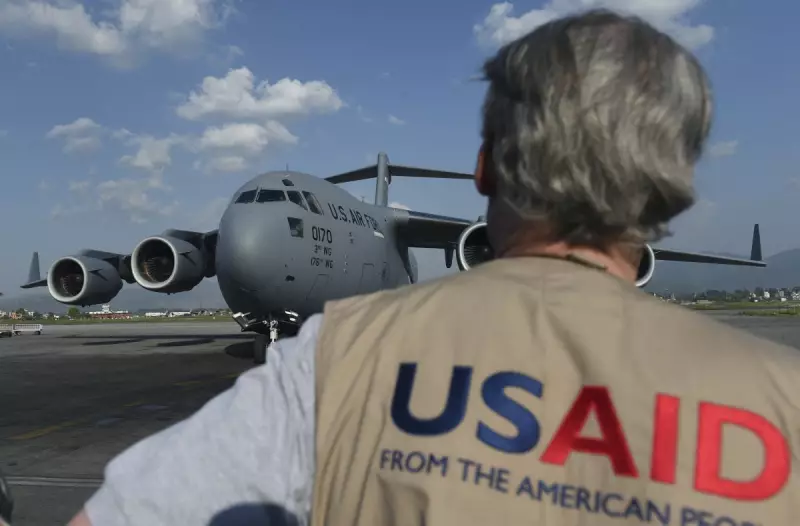
The consequences of this US policy shift are already being felt deeply in Nigeria. An investigation by the Centre for Collaborative Investigative Journalism (CCIJ) revealed that Nigeria has lost more than N250 billion (approximately $142.6 million) in unspent grants and contracts. This followed abrupt cuts to programs run by the United States Agency for International Development (USAID) after President Trump took office.
Nigeria ranks among the top nations most affected globally, alongside Kenya, Tanzania, and Ghana. The losses stem from the suspension or outright cancellation of major USAID-funded projects in critical sectors like health, governance, and general development. Key initiatives implemented by firms such as Tetra Tech and Chemonics International were halted.
Health Sector Suffers Severe Blows
The impact on Nigeria's health system has been particularly devastating. Programs under the President’s Emergency Plan for AIDS Relief (PEPFAR), a global lifesaver for over 26 million people, faced major disruptions. In Nigeria, where more than two million people live with HIV, health facilities began reporting dangerous drug shortages.
This forced the rationing of antiretroviral medicines. Both healthcare workers and patients have reported alarming interruptions in treatment. Health professionals warn that this setback could increase the risk of HIV transmission and undo years of hard-won progress in controlling the epidemic.
A Global Funding Crisis
The broader context shows a dramatic reduction in US humanitarian spending. UN data indicates that while the US remained the world's largest donor in 2025, its contribution plummeted to about $2.7 billion. This is a stark drop from roughly $11 billion in both 2023 and 2024, and more than $14 billion in 2022.
UN humanitarian chief Tom Fletcher acknowledged the $2 billion pledge for 2026 as a major commitment, despite the lower figure. He pointed to ongoing UN reforms under a "Humanitarian Reset" aimed at delivering aid more effectively in a time of constrained funding. Earlier in December 2025, the UN launched its Global Humanitarian Appeal for 2026, seeking $23 billion to help 87 million people—a significant decrease from past appeals. The UN estimates that around 240 million people worldwide need emergency aid due to conflict, climate shocks, and disease.
President Trump has consistently defended cuts to foreign aid, arguing in forums like the UN General Assembly that American taxpayers should not fund what he describes as inefficient international systems. For Nigeria, a nation heavily reliant on external support for development and humanitarian crises, this new reality poses a formidable challenge to stability and public health.