Putin Reportedly Moves Nuclear Weapons Closer to EU Border with Belarus Deployment
Russian President Vladimir Putin has reportedly escalated military tensions in Eastern Europe by deploying advanced hypersonic missile systems to Belarus, a move described by analysts as positioning nuclear-capable weapons dangerously close to European Union borders. The development has triggered fresh warnings from Belarusian exiled opposition leader Sviatlana Tsikhanouskaya, who urged Europe to pay closer attention to the strategic shift in her homeland.
Hypersonic Threat Capable of Reaching London in Minutes
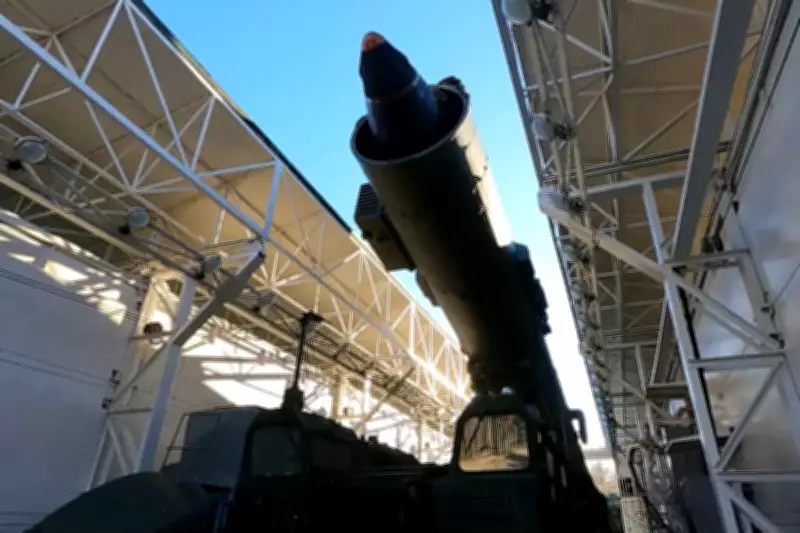
The deployed weapon system, known as Oreshnik, represents one of Russia's deadliest military assets—a mobile intermediate-range missile platform capable of carrying nuclear warheads. While current deployments reportedly involve conventional payloads, the system's hypersonic capabilities mean it could theoretically reach targets in the United Kingdom within approximately eight minutes of launch.
"We see how on Belarusian territory, Alexander Lukashenko's regime has intensified the presence of Russia," Tsikhanouskaya told The Telegraph in an exclusive interview. "They are about to deploy nuclear weapons to Belarus, Russian missiles. So it looks like they're preparing for escalation."

Satellite Evidence Reveals Rapid Military Buildup
Recent satellite imagery analysis has identified significant activity at a potential deployment site near Krychau in eastern Belarus, close to the Russian border. What was previously an abandoned airfield now features newly constructed buildings and rebuilt railway infrastructure, suggesting accelerated military preparations.
Nuclear weapons and deterrence analyst Decker Eveleth from CNA examined the imagery and noted: "I believe probably at least two objects that are likely launchers, maybe three. Also, placing the possible launchers or support vehicles in plain view before the garages are even up should suggest how fast they are moving forward with this."
In December, Russia's defense ministry released footage purportedly showing an Oreshnik system being placed on combat duty in Belarus, with President Alexander Lukashenko confirming plans to station ten such systems within the country.
Mixed Analyst Reactions to Strategic Implications
While the deployment has raised alarm bells among some security experts, others have downplayed its strategic significance. Kurt Volker, former U.S. special envoy to Ukraine, emphasized that command and control of Russian nuclear weapons remains firmly in Moscow's hands regardless of their physical location.
"First off, the command and control of Russian nuclear weapons remains Russian command and control," Volker explained. "If they're in Russia, or if they're a few hundred kilometers further forward in Belarus, it doesn't really matter—they're nuclear weapons, and they're under Russian command and control, and they're pointed at all of us. Let's not get too alarmed that this is now some kind of new threat."
Broader Context of Regional Military Escalation
The missile deployment occurs against a backdrop of heightened military activity in Belarus, including comprehensive combat readiness checks and missile exercises involving advanced systems like Iskander ballistic and cruise missiles. Lukashenko was recently photographed inspecting armed forces as military drills continued across multiple training grounds.
Tsikhanouskaya's warning connects to broader tensions stemming from Russia's ongoing war in Ukraine. The opposition leader noted that Ukrainian President Volodymyr Zelensky, whom she recently met, is acutely aware of the risks posed by the Belarus deployment. "This escalation might affect not only Ukraine but also European countries," she cautioned, adding, "So we have to put more attention on what is happening in Belarus."
The situation further complicates international security dynamics, with reports indicating that countries like North Korea are facing domestic consequences after providing troop support to Moscow's campaign in Ukraine. As military assets continue to shift positions in Eastern Europe, the international community watches closely for signs of further escalation in this volatile region.