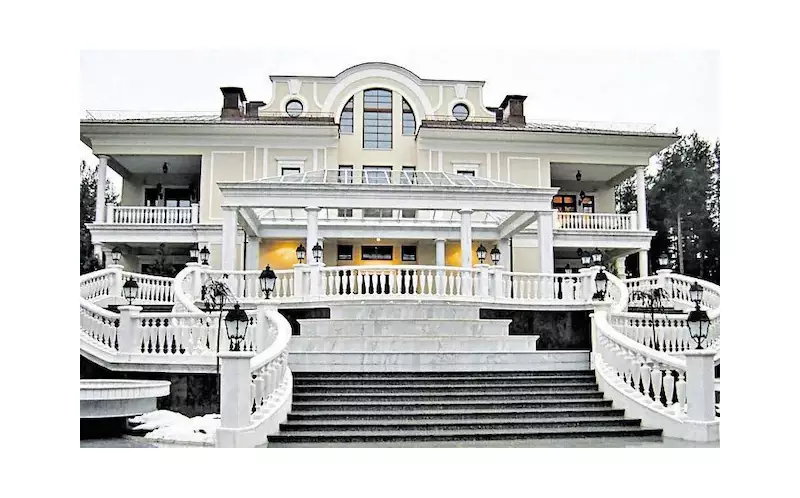
Russia has once more accused Ukraine of launching a drone attack on one of President Vladimir Putin's official residences. However, the Kremlin has not provided any physical evidence to support this serious claim, leading to growing doubts from Ukraine, Western governments, and independent observers.
Conflicting Claims and Missing Evidence
On Tuesday, December 30, Kremlin officials stated that dozens of drones targeted a presidential estate in the Novgorod region, located south of St. Petersburg. They dismissed Ukrainian denials as "insane assertions." Despite repeated calls, Russian authorities have refused to present any proof, such as debris, photographs, or air defense footage, of the alleged incident.
U.S. President Donald Trump revealed that Putin informed him about the attack during a phone call early Monday. Trump first seemed to accept the Russian leader's account but later admitted he was uncertain if the event actually occurred. The U.S. President has been advocating for renewed peace negotiations between Moscow and Kyiv, although significant disagreements persist.

Kremlin spokesperson Dmitry Peskov labeled the alleged drone operation a "terrorist attack" meant to sabotage Trump's peace efforts. Yet, no corroborating information has surfaced to back Russia's story.
Analysts and Local Reports Cast Doubt
Multiple factors contribute to the skepticism surrounding Russia's accusation. Residents in the Novgorod region reported no drone activity at the time of the supposed attack. The targeted Valdai presidential residence is a heavily fortified complex on Lake Valdai, situated far from the Ukrainian border.
Analysts also pointed out the complete absence of social media videos or images, which are typically widespread after major drone incidents in Russia. The independent Russian news outlet Agentstvo reported that the head of the Valdai district made no mention of an attack during a live broadcast around the time of the event. Their search of public social media channels in the town of Valdai, about 20 kilometers from the residence, found no reports of drone activity.
Ukrainian President Volodymyr Zelensky rejected the claim outright, calling it a complete fabrication. He accused Moscow of using provocative statements to undermine diplomatic efforts to end the war. Ukraine's Foreign Minister, Andrii Sybiha, noted that Russia had still not produced any credible evidence nearly a full day after making the accusation.
International Reaction and Potential Consequences
The international response has been largely skeptical. Lithuania, a NATO member, suggested the allegation might be a false-flag operation designed to justify further Russian strikes on Ukraine. The Washington-based Institute for the Study of War also questioned the claim, citing the lack of evidence.
There were inconsistencies even within Russian statements. Foreign Minister Sergey Lavrov first claimed 91 drones were intercepted. Later, Russia's Defense Ministry said only 41 drones were shot down in the Novgorod region during the same period. Lavrov warned that Russia would revise its negotiating position in peace talks and that the military had already selected targets for potential retaliation.
When questioned about the lack of evidence, spokesperson Peskov insisted proof was unnecessary because the drones were neutralized by air defenses. He accused Ukraine and Western media of deliberately denying what he called a large-scale attack.
President Zelensky, after speaking with European leaders, stated that Russia was spreading false narratives to justify continued attacks and prolong the war, adding that global intelligence agencies would know the truth. According to Russian state media, Putin told Trump that Moscow was reassessing its stance on peace negotiations because of the alleged attack.