In a dramatic escalation of his long-standing ambition, former U.S. President Donald Trump has intensified his push to acquire Greenland, issuing a stark warning to several European nations. He stated they could face severe trade penalties unless the United States secures ownership of the Danish-controlled Arctic territory.
Tariffs as a Tool for Acquisition
Trump declared that tariffs as high as 25 percent would be slapped on goods from multiple European countries. This list includes Denmark, the nation that currently governs Greenland. The threat is directly tied to their opposition to Washington's designs on the vast island.
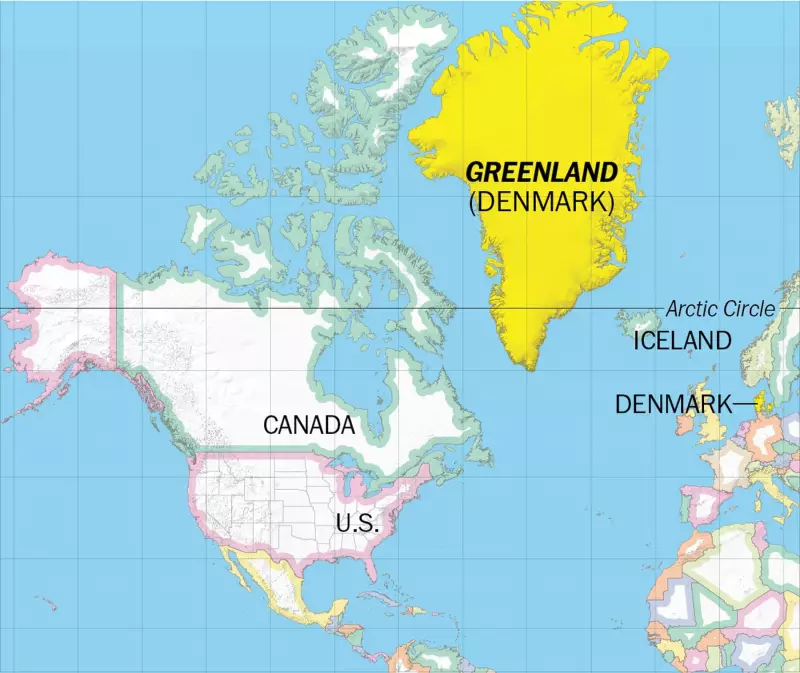
The strategic Arctic island is home to roughly 57,000 people. Its value is not just in its significant mineral resources but also its crucial location along emerging Arctic trade and security routes, making it a geopolitical prize.

Criticism of NATO Allies and Military Buildup
Trump specifically took aim at Denmark and other NATO partners who have recently increased their military presence in Greenland. He labeled their actions as provocative and destabilizing, arguing that such moves heighten global security risks.
He justified his proposed tariff strategy as "strong countermeasures" necessary to force a resolution to the territorial dispute. According to his outlined plan, countries including Denmark, Norway, Sweden, France, Germany, the United Kingdom, the Netherlands, and Finland would first see a 10 percent tariff on all their exports to the United States starting February 1.
This levy would then jump to 25 percent by June 1, and would remain in place until a deal is finalized for what Trump termed the "complete and total purchase" of Greenland.
Unprecedented Tensions Within NATO
"These nations are playing a very dangerous game," Trump asserted, claiming their actions have created an unsustainable level of risk. He framed the proposed tariffs as a move essential for protecting global peace and bringing the situation to a swift conclusion.
However, it is unclear what legal authority a U.S. president would have to impose such punitive trade measures on allied nations, especially fellow members of the NATO alliance. If these measures were ever enacted, they would represent an extraordinary and severe escalation of tensions within the Western military bloc.
Since his return to office, Trump has pursued an aggressive trade policy, imposing wide-ranging tariffs on numerous countries. His administration's consistent argument is that such measures are needed to correct unfair trade practices and to pressure foreign governments to align with U.S. strategic interests, a category into which the acquisition of Greenland now firmly falls.