UN Chief Urges Decolonization of Western Sahara and 16 Other Territories
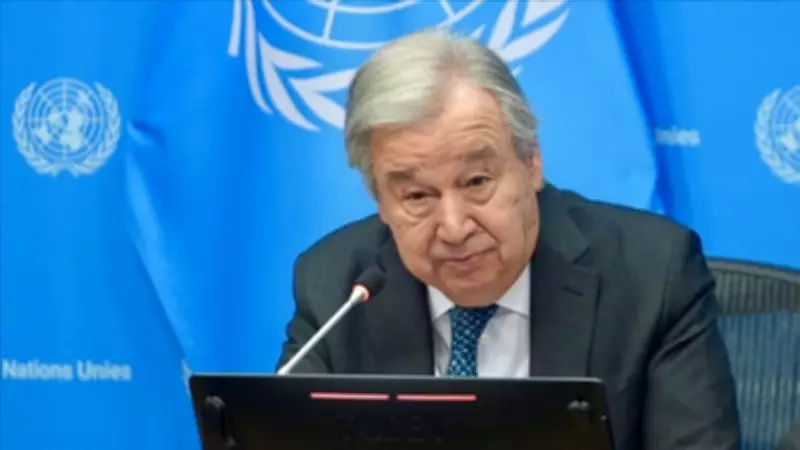
UN Secretary-General António Guterres has issued renewed calls for the complete decolonization of Western Sahara and 16 other territories that remain under colonial administration. Addressing the 2026 session of the Special Committee on Decolonisation, known as C-24, Guterres emphasized that the global body must recommit to finishing the work of ending colonial rule. This effort comes more than six decades after the United Nations formally launched its decolonisation agenda.
Historical Context and UN Mission
Guterres highlighted that the United Nations was established as a forum where nations meet as equals, not as rulers and the ruled. He stressed that decolonisation has been a central mission of the UN since its inception. The legacy of colonialism, he warned, continues to influence modern societies, resulting in deep economic exploitation, entrenched inequality, racism, and the marginalisation of affected populations from decision-making processes.
The C-24 committee was created by the UN General Assembly in 1961 to monitor progress toward granting independence to territories that have not yet achieved full self-governance under Chapter XI of the UN Charter. Its mandate is rooted in the landmark 1960 Declaration on the Granting of Independence to Colonial Countries and Peoples.

Key Priorities for Decolonisation Efforts
Guterres outlined several key priorities to advance the remaining decolonisation efforts. He urged for inclusive dialogue that involves non-self-governing territories, administering powers, UN member states, and other relevant stakeholders. Additionally, he emphasized that each territory's situation should be handled on an individual basis, guided by the UN Charter, the 1960 Declaration, and relevant General Assembly resolutions.
Since 1945, over 80 former colonies, representing approximately 750 million people, have gained independence. However, Western Sahara and 16 other Non-Self-Governing Territories, most of which are small island territories in the Caribbean and Pacific, remain on the UN list. These territories have a combined population of nearly two million people.
Western Sahara: Africa's Last Colony
Western Sahara is widely regarded as Africa's last colony yet to achieve independence. Spain administered the territory, then known as Spanish Sahara, until 1976. Following Spain's withdrawal, a prolonged dispute emerged involving Algeria, Morocco, and Mauritania.
Since Spain's departure, control of Western Sahara has been divided. The Sahrawi Arab Democratic Republic, which operates a government-in-exile from Tindouf, Algeria, controls about 30 percent of the land. Meanwhile, Morocco administers roughly 70 percent of the territory. Reports indicate that Morocco has plans to resolve the long-running conflict following talks brokered by former U.S. President Donald Trump.
The ongoing situation underscores the complexities and challenges in achieving full decolonisation for these remaining territories. Guterres's call serves as a reminder of the UN's enduring commitment to this cause, aiming to address historical injustices and promote self-determination for all peoples.