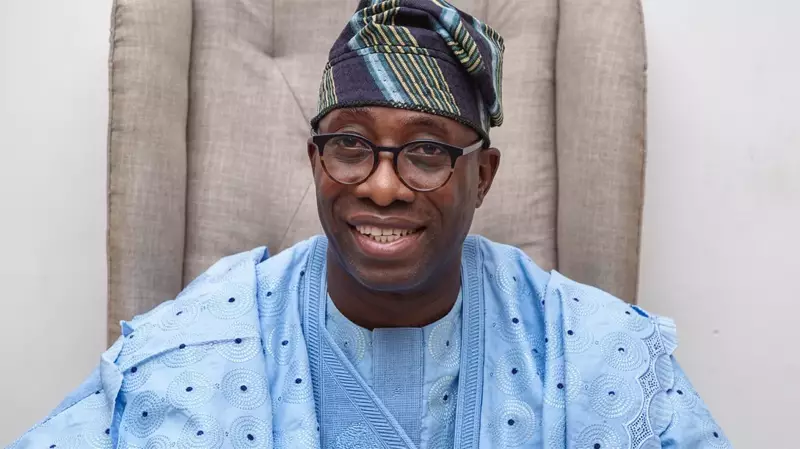
In a significant intervention, former Peoples Democratic Party (PDP) chieftain, Otunba Segun Showunmi, has publicly appealed to the Nigerian Court of Appeal to prioritise the swift resolution of numerous pending appeals concerning the leadership of political parties across the country.
A Call for Judicial Expediency
In an open letter addressed to the court and shared via his X (formerly Twitter) handle on 13 January 2026, Showunmi urged the appellate justices to employ established legal mechanisms to clear the backlog. He specifically called for the use of consolidation, accelerated hearing, and firm case-management powers already recognised in appellate practice.
Showunmi, a seasoned political actor, argued that this proactive judicial intervention is urgently needed. He stated it would reinforce the principle that courts are not substitutes for internal party governance and would discourage vexatious, tactical litigation. "No constitutional democracy can function where the basic vehicles of political participation are perpetually unsettled by litigation," he declared.

The Systemic Risk to Nigeria's Democracy
The former PDP stalwart framed his appeal as a matter of constitutional necessity. He expressed deep concern over the current situation where virtually all major political parties are entangled in leadership and legitimacy disputes at various appellate stages.
He warned that this poses a severe systemic risk, threatening to replace genuine democratic competition with procedural gamesmanship. "Political advantage is sought through interlocutory reliefs, conflicting orders and serial appeals rather than through persuasion and lawful party processes," Showunmi noted, echoing the Court of Appeal's own past criticisms of such forum-shopping and abuse of judicial process.
Showunmi highlighted the direct constitutional consequences, referencing Section 221 of the Nigerian Constitution, which stipulates that only political parties can canvass for votes or sponsor candidates. He pointed out that prolonged instability within parties therefore destabilises the entire electoral framework.
Safeguarding the 2027 Electoral Cycle
A core part of Showunmi's argument focused on the impending electoral calendar. He cautioned that allowing these unresolved appeals to spill into the pre-election period for the 2027 general elections would have profound consequences.
"Experience shows that when leadership legitimacy remains unsettled close to an election cycle, the consequences are profound – candidate nominations are destabilised, electoral timelines are disrupted and courts are forced into emergency adjudication under extreme political pressure," he stated.
He emphasised that his letter was written from a place of civic concern, not partisan interest, and with full appreciation for the court's heavy workload. His ultimate goal, he said, is to see decisive appellate clarity that will help safeguard the integrity of the 2027 electoral process and preserve public confidence in Nigeria's democratic institutions.
Showunmi concluded with a stark reminder: "Equally, no judiciary benefits when its processes are repeatedly weaponised to delay rather than determine lawful outcomes." His call presents the judiciary with a critical challenge to assert its role as a stabilising force in Nigeria's often turbulent political landscape.