President Bola Ahmed Tinubu has declined to assent to the National Identity Management Commission (NIMC) Establishment Bill, 2026, citing legal inconsistencies, drafting lapses, and structural defects in the proposed legislation. The President invoked Section 58(4) of the 1999 Constitution (as amended) to convey his decision.
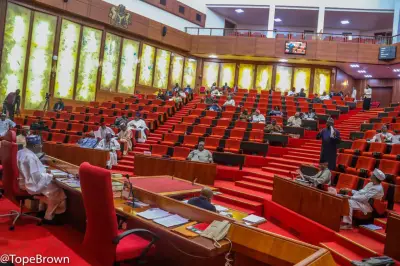
Deputy Speaker Benjamin Kalu read the President's letter during Tuesday's plenary, quoting Tinubu as saying that although the Bill was correctly drafted in parts, it contained several structural defects and omitted critical provisions necessary for clarity and effective implementation.
Key Issues Raised
One of the key issues raised by the President relates to the Long Title of the Bill, which references the repeal of the existing NIMC Act but fails to indicate that the legislation also seeks to reenact it. Tinubu noted that legislative drafting standards require such dual intent to be clearly reflected.

The President also identified discrepancies in provisions relating to the composition and appointment of the Commission's governing board. He pointed out that Section 4(2) incorrectly classifies certain institutional representatives as presidential appointees, despite their status as ex-officio members who serve by virtue of their offices.
Further Concerns
Further concerns were raised over Section 4(1)(b), which provides for four Executive Commissioners but does not specify the appointing authority or the qualifications required for such strategic positions. Tinubu faulted Section 4(3), which subjects the appointment of the Chairman and Executive Commissioners to Senate confirmation, describing it as inconsistent with Sections 171(1) and (2) of the Constitution. He noted that the Constitution empowers the President to appoint heads of extra-ministerial departments without legislative confirmation.
“The provision would have the policy implication of tying the hands of the President in exercising his constitutional powers,” the letter stated.
The President highlighted ambiguity in Section 4(1)(d) regarding the role of the Director-General, questioning whether the office holder is intended to serve as a member of the Board, Secretary to the Board, or both.
Regulatory Powers and Definitions
On regulatory powers, Tinubu criticised the separation of provisions relating to the Commission's ability to make regulations and issue guidelines, describing it as unnecessary and restrictive. He noted that the current wording suggests guidelines can only be issued pursuant to regulations and not directly under the Act. He also faulted the Bill's definition of a “supervising authority,” describing it as vague and unnecessary, particularly as no substantive provision assigns such a role within the legislation.
The President described Section 37 of the Bill as incomplete and legally ineffective, noting that it fails to clearly establish the intended supremacy of the Act in cases of conflict with other laws. Tinubu expressed concern over the removal of the definition of a “Minister,” which exists in the current NIMC Act, warning that its absence creates uncertainty regarding policy direction and oversight responsibilities for the Commission.
He urged the House to address the identified issues to ensure the Bill aligns with constitutional provisions and meets acceptable legislative standards.