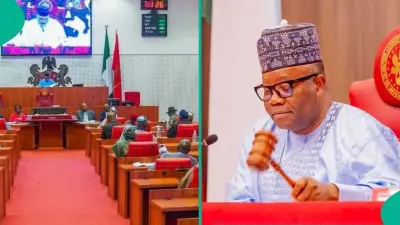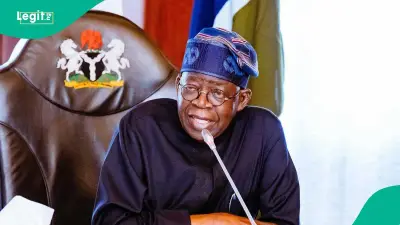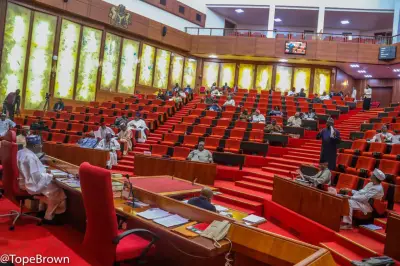
Ogun State Governor, Prince Dapo Abiodun, is among second-term governors eyeing a seat in the National Assembly as the 2027 general election approaches. He aims to replace incumbent Senator Otunba Gbenga Daniel in Ogun East. However, the question remains: does executive experience automatically translate into legislative competence? Evidently, it does not.
Executive vs. Legislative Governance
Governance at the executive level involves control over budgets, projects, and administrative machinery. The legislature, however, requires influence without direct control, effectiveness without execution, and results shaped through lawmaking, oversight, and negotiation. The transition is not automatic; it must be earned.
Ogun State's Fiscal Priorities
On paper, Ogun State's budgets highlight infrastructure and healthcare, with allocations running into hundreds of billions of naira. But budgets are declarations; governance is delivery. Across Ogun East, especially in rural and semi-urban areas, outcomes tell a more complicated story. Road networks remain uneven, limiting mobility, slowing emergency response, and constraining economic activity. Infrastructure is the backbone of every other system; where it is weak, everything falters.

Emergency Healthcare Logistics
The state's use of tricycles as emergency response vehicles has been presented as innovation. In reality, it reflects an adjustment to limitations rather than a resolution. Emergency response depends on speed, coordination, and capacity. Improvisation may be necessary in the short term, but when it becomes a sustained approach, it signals a deeper policy problem and questions leadership capacity.
Policy Direction and Competence
The issue is not the presence of interim solutions but their normalization. For a state with consistent capital allocations to infrastructure, progress toward durable, scalable systems is expected. When progress is replaced by adaptation, questions about policy direction become unavoidable. Policy direction reflects policy thinking, the one competency that meaningfully connects executive governance with legislative responsibility. Where governance consistently adapts to constraints instead of eliminating them, it suggests a leadership model focused on coping rather than solving.
The People of Ogun East Deserve Better
The senatorial district has shown it understands this distinction. The election of Gbenga Daniel in 2023 was rooted in his tangible record as governor, setting a precedent that executive performance must provide credible evidence for legislative trust. That precedent now demands consistency. After seven years in office, the questions are straightforward: Has infrastructure in Ogun State expanded to measurably improve access? Has healthcare delivery become more reliable and coordinated? Has governance moved from stopgap responses to system-building? The answer is no.
Conclusion: Evidence Over Familiarity
What emerges is not a lack of activity but a pattern of serial adaptation, where responses are shaped by existing limitations rather than designed to eliminate them. The Senate is not a chamber for managing constraints; it is a platform for addressing them through legislation and oversight. Seven years is enough time to demonstrate direction. For Ogun East, the choice is about capacity, whether the record reflects the depth required for national responsibility. Ultimately, it is not a contest of names but of evidence. The Senate does not reward motion; it rewards method. And in that difference, this election will be decided.