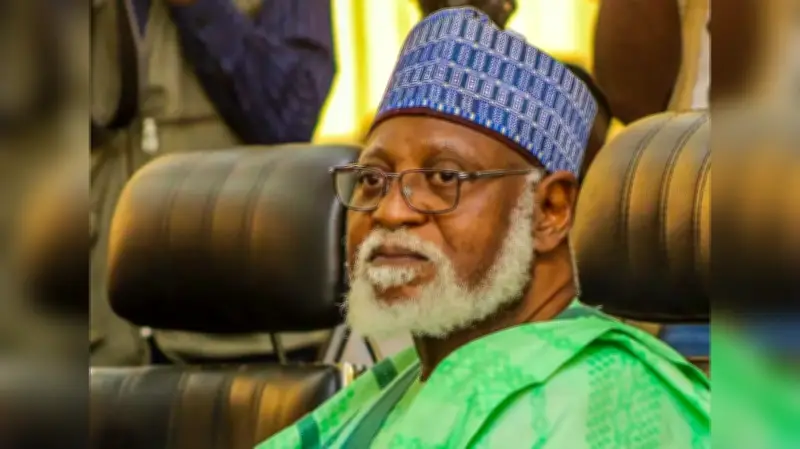
Former Head of State, General Abdulsalami Abubakar (retd), celebrated his 84th birthday on Saturday at the Presidential Villa in Abuja, where he also launched his autobiography, Call of Duty. The event drew political leaders, former presidents, diplomats, and elder statesmen, offering fresh insights into Nigeria's return to democracy in 1999.
Pressure to Extend Military Rule
Major General Aliyu Abdulrasheed (retd), chairman of the event's organizing committee, revealed that influential military figures urged Abdulsalami to extend his six-month transition program after assuming power following General Sani Abacha's death in 1998. Many considered the timetable too ambitious, but Abdulsalami refused, paving the way for the election of Olusegun Obasanjo and the handover to civilian rule on May 29, 1999.
MKO Abiola's Death: Natural Causes Confirmed
In Call of Duty, Abdulsalami rejects allegations that MKO Abiola was poisoned. He states that an autopsy requested by Abiola's family and conducted by Nigerian, American, British, and Canadian pathologists found no evidence of poisoning. The examination concluded that Abiola died of natural causes linked to pre-existing health conditions, including hypertension and heart ailments. Abdulsalami recounts how Abiola fell ill during a meeting with a U.S. delegation led by Tom Pickering and Susan Rice, and despite medical efforts, could not be revived.

Denial of $500 Million Allegation
Abdulsalami also dismissed claims that he received $500 million in cash after Abacha's death, calling the allegation entirely fictitious. "I want to put it on record that nobody gave me $500 million or any amount, bigger or smaller," he stated.
Legacy of Relinquishing Power
President Bola Tinubu, represented by Vice President Kashim Shettima, praised Abdulsalami for placing national interest above personal ambition. Former President Goodluck Jonathan credited him with laying the foundation for democratic stability by resisting pressure to remain in office. Obasanjo noted that Abdulsalami sustained the transition process despite enormous pressures.
The event underscored that Abdulsalami's enduring legacy is not the power he wielded, but the power he willingly surrendered. Nearly three decades after the Fourth Republic began, his decisions during the turbulent months of 1998 continue to shape Nigeria's democratic journey.