Supreme Court Decision Awaited Amid Opposition Party Turmoil
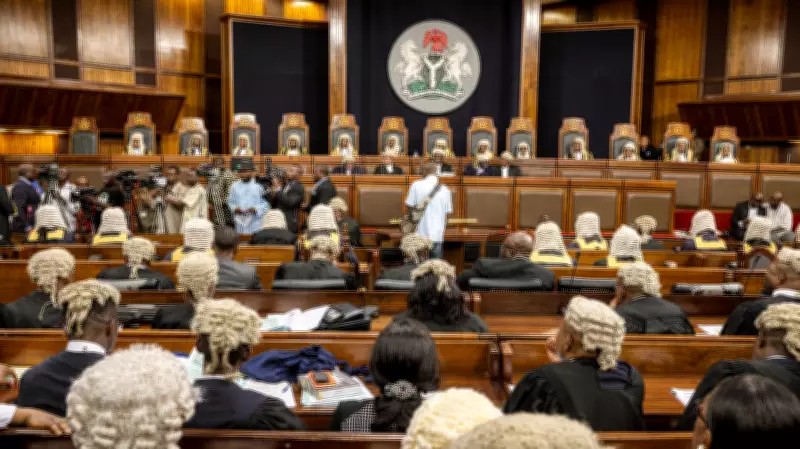
The political landscape in Nigeria is tense as the Supreme Court prepares to deliver rulings on appeals filed by factions of the Peoples Democratic Party (PDP) and the African Democratic Congress (ADC). These cases, brought by Kabiru Turaki and David Mark-led National Working Committees against Court of Appeal judgments, could significantly impact the future of these opposition parties. The outcomes are particularly critical as preparations for the 2027 general elections intensify, with concerns rising about potential moves toward a one-party system in the country.
ADC Forges Ahead with National Convention Despite Obstacles
Despite facing significant logistical challenges, the ADC has resolved to proceed with its planned National Convention today. The party encountered difficulties securing a venue, with the Federal Capital Territory (FCT) management allegedly obstructing its efforts to use Eagle Square, a traditional site for high-profile events. According to Bolaji Abdullahi, the ADC's National Publicity Secretary, even attempts to utilize the Moshood Abiola National Stadium Velodrome as an alternative were unsuccessful. Consequently, the convention will be held at the Rainbow Events Centre, where preparations are underway, including decorations and setup supervised by former Cross Rivers State Governor Liyel Imoke.
Abdullahi criticized the Federal Government's actions as an assault on democracy, emphasizing that Eagle Square has historically been accessible to all political parties, not just the ruling All Progressives Congress (APC). He expressed relief that earlier ward, local government, and state congresses were conducted successfully but condemned what he perceives as an attempt to impose one-party rule in Nigeria.

Internal Strife Deepens with Adamawa State Suspensions
Compounding the ADC's challenges, a faction in Adamawa State has suspended former Vice President Atiku Abubakar and former Secretary to the Government of the Federation (SGF) Babachir Lawal. Raji Sulaiman Zumo, chairman of this faction, announced the suspensions on Monday evening, citing ongoing leadership disputes. However, Babachir Lawal dismissed the action, referring to the group as "Indian hemp smokers" and asserting that Raji lacks the authority to speak for the party. Shehu Yohanna, the Adamawa State Chairman of ADC, supported this view, stating that Raji had previously left the party and his claims are baseless.
This internal conflict is further complicated by a court order from Justice Ahmed Isa of the Yola High Court, which suspended ADC congresses in Adamawa State until a case is resolved, with hearings set to continue on April 15, 2026. The state chapter has been embroiled in crisis for over a year, resulting in three distinct factions vying for control.
Leadership Battles and Coalition Dynamics
The ADC's leadership struggles extend beyond Adamawa, with Nafiu Bala Gombe claiming the position of national chairman, leading the Independent National Electoral Commission (INEC) to derecognize the David Mark-led leadership. An ally of Bala revealed that after a case was filed in Federal High Court, Atiku Abubakar urged Bala to withdraw the suit. However, Bala reportedly received assurances of support from senior officials in President Bola Tinubu's administration, prompting him to continue the legal battle. Other former members, such as Dumebi Kachukwu, have joined this effort, heightening tensions within the party.
At the ADC national convention, key agenda items include affirming the National Working Committee led by David Mark and Rauf Aregbesola, as well as approving a reviewed party constitution and manifesto. The convention committee features prominent figures like former Imo State Governor Emeka Ihedioha and former Nigerian Bar Association President Olumide Akpata, indicating broad coalition support.
Broader Implications for Nigerian Democracy
The Supreme Court's rulings are anticipated to provide clarity for opposition parties as they navigate these crises. If the court directs parties back to the Federal High Court, it could hinder ADC's ability to adhere to INEC's election timetable. Additionally, the PDP faces its own appeals, marked SC/CV/166/2026 and SC/CV/164/2026, challenging recent Court of Appeal judgments related to leadership disputes.

Amid these developments, Sunday Dare, Special Adviser to the President on Media and Communication, has disputed allegations of a move toward a one-party state. In a television interview, he emphasized that Nigeria's political space remains open, with 20 registered parties, and rejected claims that the APC-led government is shrinking democratic opportunities. He accused opposition parties of focusing on sentiment rather than building robust political structures to challenge the ruling party.
As the Supreme Court convenes today, its decisions will not only shape the immediate future of the ADC and PDP but also influence the broader democratic landscape in Nigeria, with significant ramifications for the upcoming 2027 general elections.