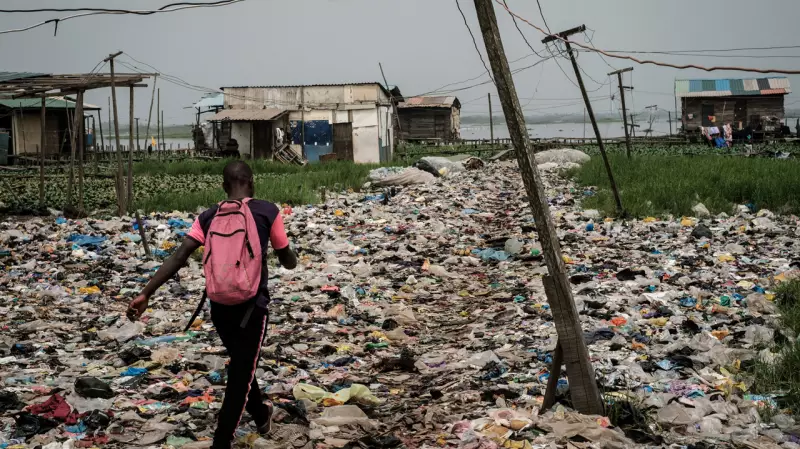
Lagos, Nigeria's bustling commercial capital, is buckling under an escalating waste management crisis. Heaps of uncollected refuse are now a common sight across numerous neighbourhoods, sparking deep concerns among residents about an impending and avoidable health disaster.
Citywide Crisis: From Surulere to Ikorodu, Refuse Takes Over
The scale of the problem is vast. Major roads, streets, and junctions from Surulere to Ikorodu, Alimosho to Kosofe, Mushin to Agege, Itire to Oshodi are littered with mounting piles of garbage. Blocked drains and the pervasive stench of rotting waste have become an unwelcome feature of daily life for many Lagosians.
The situation has deteriorated due to irregular waste collection by official operators, turning an occasional nuisance into a constant emergency. Along the busy Apapa-Oshodi Expressway, refuse pileups are visible at multiple locations including Cele, Ijesha, Sanya, Coker, Second Rainbow, and Mile 2. Ironically, along this same route, groups of cart pushers are frequently seen transporting waste to an illegal dumpsite within the Signal Barrack area.

In Surulere, resident Samuel Oluwshola expressed his frustration, noting that refuse on road medians is a permanent fixture. "Even if LAWMA clears it, two days later, people start dumping again," he said. He voiced serious worries for children constantly exposed to the unhealthy environment, highlighting the high cost of healthcare in Nigeria.
Residents Adapt as Official Systems Fail
The story is repeated in Ikorodu. A massive heap of waste beside the BRT terminal at Ikorodu garage grew so large it became a local landmark before its recent clearance. Resident Abosede Aremu stated that waste collectors rarely enter inner streets, forcing people to dump refuse on main roads. "It's not rocket science. People dump on the road because nobody is coming to collect it," she explained.
Ayomide Balogun, living in Igbogbo, Ikorodu, claims he has not seen an official LAWMA truck since moving there in 2021. This vacuum has been filled by unregulated informal collectors, but residents fear this waste often ends up in canals, bushes, or on highways.
The Guardian observed that across Mushin, Ikotun, Agege, Okota, Ojota, Abule Egba, and Berger, wastes are scattered on roadsides, drains are clogged, and dumpsites overflow. At Oshodi market, Iyana-Iba, an overflowing container spilled refuse onto the expressway, assaulting traders and commuters with foul odours.
Imminent Health Catastrophe and Governance Gaps
Public health specialists are sounding the alarm. Dr. Adebayo Akintayo warned that decaying organic waste attracts flies and rodents, which are vectors for bacteria and infectious agents. "Once the rains return, the danger intensifies. Runoff carries waste into water channels," he said. This significantly raises the risk of diseases like cholera, typhoid, and Lassa fever. Stagnant wastewater also breeds mosquitoes that can spread malaria, Zika, and dengue fever.
The risks extend beyond infections. Toxic gases from decomposing waste worsen Lagos's already poor air quality, and residents burning waste at night add to the toxic smoke. Mechanics now work beside refuse heaps, and children navigate paths carved between piles of garbage on their way to school.
Governance failures are central to the crisis. Dr. Akintayo cited weak enforcement, poor compliance monitoring, and lack of training for waste operators. He recommends urgent action to restore basic Health, Safety, and Environment (HSE) standards through strengthened community-led committees.
When contacted, the Lagos State Commissioner for Environment and Water Resources, Tokunbo Wahab, directed inquiries to the Managing Director/CEO of LAWMA, Dr. Muyiwa Gbadegesin, but calls to his line went unanswered. Commissioner Wahab has attributed the waste accumulation to the ongoing decommissioning of the Olusosun landfill, a process discussed for over five years.

However, residents like Akeem Odugbesan blame government failure, viewing official explanations as excuses. He pointed out the continued operation of banned cart pushers, whom residents see as a more reliable alternative to irregular PSP operators. "They will not come weekly or twice in a month... we cannot be carrying dustbin drum in and out anticipating the day the PSP operators will show up," he stated.
As adaptive but harmful practices like open burning increase, and with the rainy season looming, Lagos faces a race against time to address a sanitation crisis that threatens the health and well-being of millions of its inhabitants.