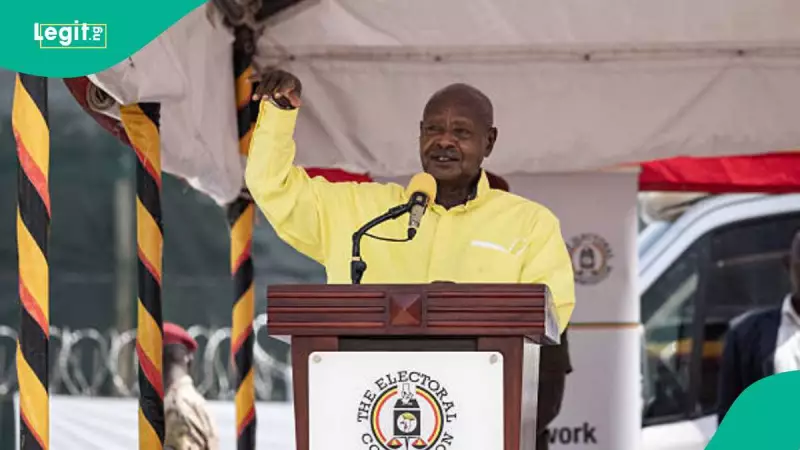
Uganda's long-serving President, Yoweri Museveni, is making a historic bid to extend his rule into a seventh term. At 81 years old, Museveni has been the nation's leader since 1986, a period spanning nearly four decades.
The Long Road to Power and Controversial Reforms
Yoweri Museveni first seized power in 1986 after a five-year guerrilla war. His early years were marked by economic growth and stability, which made him a favoured partner of Western nations. However, his stance on leadership tenure shifted dramatically over time.
Once a critic of African leaders who overstayed, Museveni later told the BBC, "We don't believe in presidential term limits." This philosophy translated into action. In 2005, constitutional changes removed presidential term limits. Then, in 2017, the age limit for candidates was scrapped, a move that sparked a physical brawl in parliament and cleared the path for his continued rule.

A Nation of Youth and Growing Opposition
A striking reality in Uganda is its demographic profile. For more than three-quarters of the population—those under 40—Museveni is the only president they have ever known. This generation is at the forefront of a growing opposition movement.
Figures like pop star-turned-politician Bobi Wine have galvanised youth support. Bobi Wine's presidential ambitions, however, have been met with severe crackdowns. In 2021, he was tear-gassed and shot at during protests. United Nations reports indicate security forces have used firearms and unmarked vans to disperse opposition activities regularly.
Another long-time critic, Kizza Besigye, has faced repeated arrests and harassment. Critics also accuse Museveni of weakening independent institutions, alleging the recruitment of "cadre judges" loyal to the state and stifling media freedom.
Stability, Growth, and the Spectre of a Dynasty
Despite the controversies, Museveni retains a solid base of support. Many Ugandans credit him with maintaining peace and fostering economic development after the turbulent eras of Milton Obote and the brutal Idi Amin, whose rule left an estimated 400,000 dead.
Under Museveni, Uganda has transformed from a net exporter of refugees to a host for over 1.7 million refugees. He has also cultivated key foreign relations with China, the UK, and the UAE, promoting a vision of a middle-income Uganda by 2040.
Yet, concerns over succession and a potential family dynasty are intensifying. His wife, Janet, serves as Education Minister. His son, General Muhoozi Kainerugaba, commands the country's army, and his grandson has recently joined the military ranks. Widespread speculation suggests Muhoozi is being groomed to succeed his father, a prospect that could redefine Uganda's political future.
As the next election approaches, Museveni remains defiantly confident. In a recent New Year's Eve address, he declared, "Uganda is secure. Go out and vote. The Ugandan NRM are unstoppable." For a nation where most citizens have known no other leader, the choice represents a critical juncture between entrenched continuity and a demand for change.