Peter Obi Opens Up on Political Party Switches in Detailed Interview
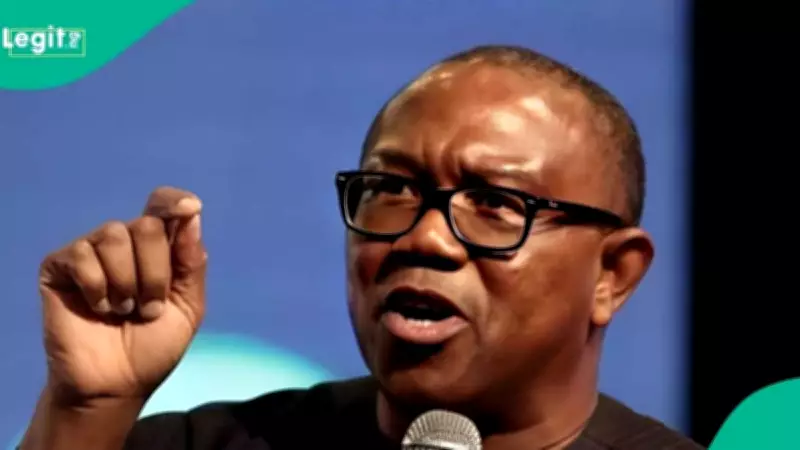
The 2023 Labour Party presidential candidate, Peter Obi, has provided a comprehensive explanation for his numerous political party switches as Nigeria approaches the 2027 general elections. In a revealing interview on Arise TV on Monday, April 13, 2026, Obi stated that he abandons political parties when their members disregard fundamental principles and instead focus on transactional politics and personal interests.
From APGA to PDP: Avoiding Destructive Conflict
Obi detailed his specific departure from the All Progressives Grand Alliance (APGA), explaining that he moved to the Peoples Democratic Party (PDP) primarily due to disputes with his successor, Willy Obiano. The former Anambra State governor emphasized that he chose to leave rather than allow the conflict to damage governance in the state.
"I moved from APGA to the PDP because of issues with my successor," Obi stated during the interview. "Rather than allow it to become destructive to governance, I moved out."

Disillusionment with PDP's Transactional Politics
However, Obi expressed significant disappointment with the PDP environment after his transition from APGA. He described the party as operating without adherence to established rules, where politics had been reduced to a system of favors and transactions.
"People were not playing by the rules. It was transactional. I cannot be part of a transactional system," Obi declared, highlighting his fundamental disagreement with the party's operational approach.
Openness to Multiple Party Changes for Reform
In a striking declaration, Obi revealed his willingness to change political parties numerous times if necessary to achieve genuine political reform ahead of the 2027 elections. According to Arise News reports, Obi stated he would move between parties up to twenty times to ensure he wasn't using outdated processes to build Nigeria's future.
"I cannot be talking about change and something new while still using the same process of yesterday to build the future," Obi explained, defending his unconventional political strategy.
Mixed Public Reactions to Obi's Strategy
The interview sparked diverse reactions across social media platforms, with Nigerians expressing contrasting views about Obi's party-switching approach:
- Some critics labeled Obi as lacking political ideology and structure, suggesting his frequent moves indicate an inability to build his own political platform
- Other commentators viewed his strategy as a clever method to maintain influence over party leadership through his substantial online following
- Several questioned how someone who cannot resolve conflicts within a political party could effectively govern a diverse nation like Nigeria
- Observers noted apparent contradictions in Obi's approach, questioning what had genuinely changed since his previous criticisms of transactional politics
Broader Political Context and Warnings
The discussion occurs within a broader political context where Abike Dabiri-Erewa, Chairman of the Nigerians in Diaspora Commission, previously warned that Obi's supporters, often called "Obidients," might jeopardize his 2027 presidential ambitions. Dabiri-Erewa described these supporters as potentially problematic in social media posts that generated significant controversy.
Meanwhile, religious figures like Reverend Solomon Emeka Eliyah have prophesied about Obi's potential in the 2027 elections, calling for prayers to ensure free, fair, and peaceful electoral processes in Africa's largest democracy. These developments highlight the complex political landscape surrounding Nigeria's upcoming electoral cycle and the ongoing debates about political strategies and party affiliations.