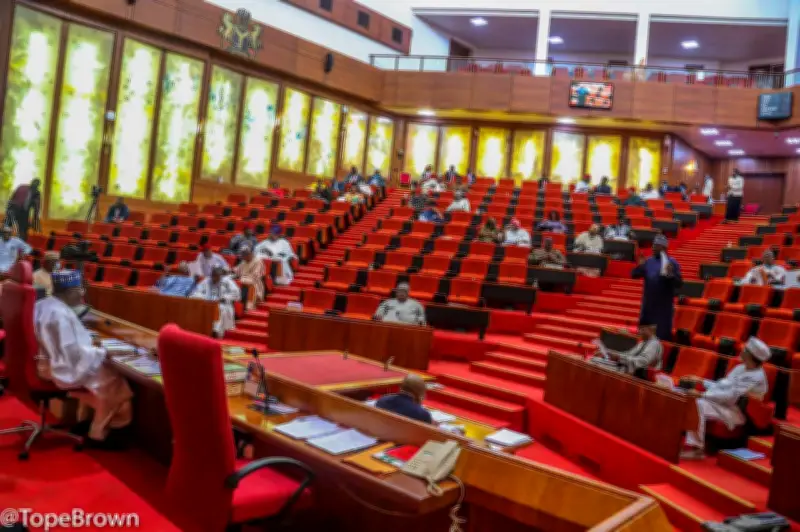
The Nigerian Senate on Wednesday passed a bill seeking to establish state police, marking a significant shift in the country's security architecture. The upper chamber approved the legislation after considering the report of its Committee on the Review of the Constitution, presented by Chairman Barau Jibrin. The bill's clauses were considered at the Committee of the Whole before its final passage. Senate President Godswill Akpabio announced the passage after more than two-thirds of senators voted in support via a manual raising of hands.
Senate Attendance and Voting Process
At the time debate began, 87 senators were in attendance, exceeding the constitutionally required two-thirds majority needed to pass such an amendment. Two-thirds of the Nigerian 109-seat Senate is 73. The debate was led by Senate Leader Opeyemi Bamidele before lawmakers proceeded to consider various clauses.
Key Provisions of the Bill
The legislation seeks to establish a state policing structure that operates concurrently with the existing federal police system. Clause 17 of the bill addresses appointment, command, direction, and tenure. It provides that while the Federal Police Service shall be headed by the Inspector-General of Police, the State Police Service shall be headed by a Commissioner of Police appointed by the state governor, subject to confirmation by the state's House of Assembly.

Section 17(6) states that a state governor may give lawful written directives of a general policy nature to the Commissioner of Police on matters relating to public safety and public order. Section 17(7) further provides that the Commissioner of Police shall not arrest, detain, investigate, or deploy force against any person, political party, or group for criticizing the government except in accordance with the law. This provision is intended to prevent misuse of state police against political opponents or critics.
Section 17(8) allows the Inspector-General of Police or a state Commissioner of Police to request the appropriate Police Service Commission to review any directive considered unlawful or inconsistent with national minimum standards. The provision states that nothing in the section shall oust the jurisdiction of the courts. Section 17(10) provides that a state Commissioner of Police shall not be suspended or removed except for a stated cause, in accordance with fair hearing principles, on the recommendation of the National Police Council, and subject to approval by a resolution supported by not less than two-thirds of all members of the state's House of Assembly.
Next Steps for the Bill
With the Senate's passage, the bill will now be transmitted to the House of Representatives for concurrence. If approved by the lower chamber, it will be forwarded to the 36 State Houses of Assembly for ratification. For the constitutional amendment to take effect, it must be approved by at least two-thirds of the states, which translates to 24 state assemblies.
Observers and Attendees
According to Premium Times, Ogun State Governor Dapo Abiodun and his counterparts from Ondo and Kaduna states, Lucky Aiyedatiwa and Uba Sani respectively, were present in the Senate chamber to observe the voting exercise. Also in attendance were the Chief of Staff to the President, Femi Gbajabiamila; the Director-General of the Nigeria Governors' Forum (NGF), Lateef Shittu; and attorneys-general of some states.
Impact on Existing Security Outfits
In the absence of a formal state policing structure, several regions have established local security outfits, including Amotekun in the South-west, Ebube Agu in the South-east, and Hisbah in parts of the North. However, Section 25(5) of the bill provides that no existing local security outfit shall be transformed into a State Police Service or exercise policing powers. The provision also prohibits such outfits from bearing firearms. "No existing state, local, community, vigilante, neighbourhood, traffic or other security outfits shall, by reason only of this Act, become a State Police Service or exercise police powers or bear firearms unless authorised in accordance with this Constitution and an Act of the National Assembly," the section states. This means that outfits like Amotekun, Ebube Agu, and Hisbah cannot automatically become state police agencies and will not be permitted to carry firearms under the proposed law.

Federal Intervention in State Police Operations
Section 15(10) of the bill provides that the Federal Police Service may temporarily intervene in the internal security affairs of a state and assume specified operational responsibilities, including temporary operational command of a State Police Service. Federal intervention may occur where there is an actual or imminent breakdown of public order or public safety that the State Police Service is unable or unwilling to contain. Other grounds include: the governor requests federal intervention; the State Police Service is unable to function due to serious administrative, financial, or operational incapacity creating a threat to public safety; substantial evidence that the State Police Service is being used for egregious violations of fundamental rights, partisan intimidation, ethnic persecution, or unlawful obstruction of the constitution or court orders; or a substantial threat to national security or public safety across state boundaries.
Section 15(11) states that any such intervention shall be temporary, necessary, proportionate, and limited to the territory, functions, and duration required. Section 15(12) requires the intervention to be authorized by the president, who shall specify the grounds, territorial scope, functions, and duration. Notice must be given to the governor of the affected state, the Speaker of the State House of Assembly, the National Police Council, and the National Assembly within 48 hours of commencement. Section 15(14) provides that the legality, scope, duration, and conduct of any intervention shall be subject to judicial review, and no intervention shall dissolve a State Police Service or suspend elected institutions except in accordance with the Constitution.
Creation of State Police Service Commission
Section 22 of the bill empowers the establishment of a State Police Service Commission, headed by a chairman. The commission is empowered to recommend qualified persons to the National Police Council for appointment as Commissioner of Police of a state. It also authorizes the commission to appoint persons to offices in the State Police Service, except for the Commissioner of Police. Additionally, the commission is empowered to promote, transfer, dismiss, and exercise disciplinary control over officers of the State Police Service, excluding the Commissioner. The commission is also mandated to perform oversight, complaints, and accountability functions relating to the State Police Service in accordance with the Constitution, Acts of the National Assembly, and state laws.