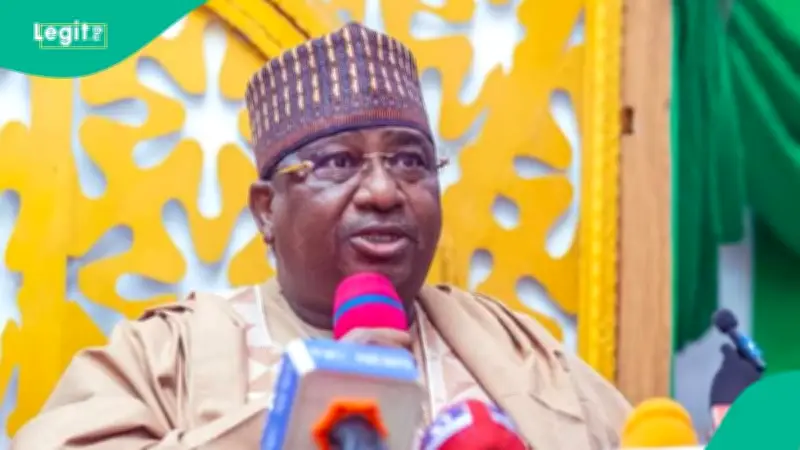
Governor Nasir Idris of Kebbi State has assured teachers that his administration remains committed to improving their welfare and ensuring the full implementation of the minimum wage. He stressed that fairness will be upheld in the process.
Labour stakeholders in Nigeria have emphasised that the minimum wage is a key legal safeguard against the disturbing poverty rate and the alleged exploitation of workers.
Committee to Investigate Partial Implementation
Governor Idris has set up a committee to investigate the partial implementation of the N75,000 minimum wage for primary school teachers in the state. The decision, reported on Tuesday, June 2, 2026, by Channels Television, followed a series of complaints from teachers across the state. Many alleged that their salaries were merely adjusted rather than reflecting the full implementation of the new minimum wage.

The Punch also noted that Governor Idris announced the establishment of the committee shortly after a meeting with local government chairmen, education secretaries, directors of finance, headmasters, and teachers from the 21 local government areas of the state.
Background on Minimum Wage Increase
In July 2024, the minimum wage rose from N30,000 to N70,000 a month after Nigeria's two biggest union federations, the Nigeria Labour Congress (NLC) and the Trade Union Congress (TUC), argued that soaring prices and a weakening currency caused by reforms instituted by President Bola Tinubu were hitting workers hard. Africa's most populous nation is grappling with the worst cost-of-living crisis in a generation, igniting constant complaints from government critics.
During the meeting in Kebbi on Tuesday, June 2, Governor Idris first allowed the aggrieved teachers to present their grievances. He then invited the local government chairmen to explain the salary structure before and after the implementation of the N75,000 minimum wage.
The local government chairmen and education secretaries explained that the shortfall in the implementation resulted from the previous administration’s failure to fully implement the N30,000 minimum wage and related grade-level adjustments. According to them, when the N75,000 minimum wage was approved, certain salary adjustments were made, which reduced the visible impact of the new wage on some teachers’ salaries.
Governor's Assurance and Welfare Plans
After listening to all parties, Governor Idris assured the teachers that his administration would thoroughly examine the matter and address any challenges. He stated that a committee, headed by a respected educationist and a person of proven integrity, would be constituted and given 30 days to complete its assignment.
The governor also pledged to implement the committee’s recommendations once its report is submitted. He assured teachers that plans for motorcycle loan schemes and other welfare packages for teachers are currently underway. He stated: “This government belongs to you because I am one of you. I am still a teacher, and it was your support and votes that brought me to this position. I will not allow anyone to cheat you.”
He added: “We are also working on programmes that will provide teachers with car loans, motorcycle loans and housing loans so that they can enjoy a greater sense of belonging and improve their living conditions.”
Labour stakeholders in Nigeria say the minimum wage is a key safeguard against poverty and worker exploitation.
Labour Push for Annual Minimum Wage Review
Earlier, Legit.ng reported that Festus Osifo, president of the TUC, said that organised labour is pushing for an annual increase in the national minimum wage paid to workers in Nigeria. The TUC boss stated that members of the organisation, as well as their colleagues in the NLC, have begun talks on the issue.
Tags: NLC, Minimum Wage, Kebbi State