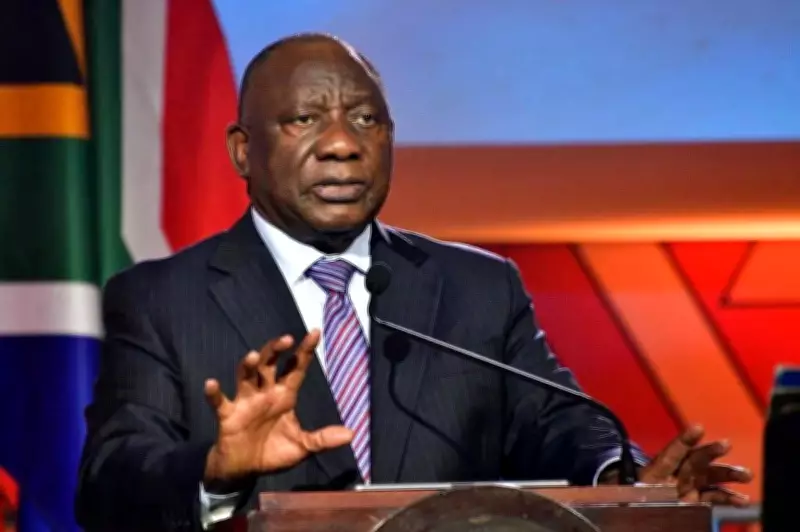
South African President Cyril Ramaphosa has condemned recent violent protests and criminal acts targeting foreign nationals in parts of South Africa, warning that no individual or group has the right to take the law into their own hands. In his weekly newsletter to the nation on Monday, May 11, 2026, Ramaphosa stated that the attacks and intimidation of foreign nationals do not represent the views of South Africa's people nor reflect the government's policy.
He described those behind the unrest as opportunists exploiting the frustrations of poor communities under the guise of activism. While condemning xenophobic violence, the president acknowledged growing public concern over undocumented migration, saying illegal immigration poses risks to social stability, governance, and national security. He noted that undocumented migration places severe pressure on healthcare, housing, and municipal services, especially in struggling communities, while also distorting the labor market.
Ramaphosa said the government is intensifying efforts to secure South Africa's borders and enforce immigration and labor laws. He praised the Border Management Authority for intercepting around 450,000 people attempting to enter the country illegally during the last financial year. The president also reiterated plans announced during the State of the Nation Address to recruit up to 10,000 labor inspectors to clamp down on employers who hire undocumented foreign nationals illegally.

At the same time, Ramaphosa warned South Africans against contributing to illegal activities linked to undocumented migration, including fake marriages, corruption, and the illegal sale of state-subsidized housing. He stressed that South Africa remains committed to African solidarity, regional integration, and human rights, saying isolated criminal acts should not damage the country's international standing.
In his newsletter, Ramaphosa wrote: "Dear Fellow South African, the recent violent protests and criminal acts directed at foreign nationals in parts of our country do not represent the views of South Africa's people nor reflect our government's policy. These are the acts of opportunists who are exploiting the legitimate grievances, particularly those of the poor, under the false guise of 'community activism.' Some of these people are assuming functions that only state officials are permitted to perform, including stopping people to check identification and conducting searches of private property. Such lawlessness will not be tolerated, regardless of who the perpetrators or victims are."
He continued: "At the same time, as a society, we need to deal decisively – and within the law – with the challenge of illegal immigration, which risks our social stability, governance, and national security. Undocumented migration places strain on healthcare, housing, and municipal services, particularly in poor communities. It distorts the labor market. In a country with high unemployment, some employers are exploiting undocumented, cheaper foreign labor over hiring citizens and paying them legal wages. Not only is this fueling social tension, it is actively undermining our labor protection regime and eroding the hard-won rights of workers."
Ramaphosa emphasized that in tackling illegal migration, the government is balancing constitutional and international obligations with safeguarding national security. The Border Management Authority and the Defence Force are strengthening border security and combating illicit cross-border activity. He commended the BMA for intercepting some 450,000 people trying to enter South Africa illegally in the past financial year. As borders are strengthened, the government continues to reform the migration and citizenship framework.
Workplace enforcement is being stepped up against employers who hire undocumented foreign nationals in violation of labor and immigration laws. The president reiterated the plan to hire up to 10,000 inspectors through the Department of Labour and Employment to ensure compliance. He added that the government continues to arrest and deport undocumented foreign nationals in accordance with the law, while fighting corruption within the immigration system.

Ramaphosa called on South African citizens to stop colluding with undocumented foreign nationals in fake marriages, the illegal sale of state-subsidised housing, or accepting bribes to facilitate access to social services. He urged the private sector and government to play constructive roles in addressing this society-wide challenge.
The president stressed that South Africa must reject attempts to damage its international reputation and undermine the solidarity that has defined its relations with the rest of Africa since the dawn of democracy. Since 1994, the country has actively advanced a culture of human rights while deepening African integration, cooperation, and solidarity. South Africa has a strong refugee protection framework that prioritizes integration of persons displaced by conflict, war, and persecution. Refugees are not confined to camps; they can live in communities, participate in the economy, and access services like healthcare and education.
South Africa continues to play its part in deepening regional economic integration and travel. Last year alone, visitors from African countries accounted for just over 8 million of a total of 10.5 million tourist arrivals. The country invests significantly in strengthening academic, cultural, and institutional ties with the rest of Africa through hosting students and academics from Africa in universities, through people-to-people exchanges, and through hosting the Pan-African Parliament.
Ramaphosa concluded: "Our demonstrated commitment to deepening African integration and solidarity should not be undermined by isolated acts of criminality. South Africa is not unique in confronting the pressures associated with undocumented migration. Many countries across the world, including in Africa, are themselves grappling with similar tensions. This calls for cooperation and understanding between countries on the continent and further afield. Like every other country in the world, we will continue asserting our sovereign right to regulate migration, secure our borders, and enforce our laws. We must make it clear that there is no place in South Africa for xenophobia, ethnic mobilisation, intolerance, or violence. Everyone in South Africa is bound by the same laws and we are committed to ensure that they are respected and upheld by citizen and foreign national alike."