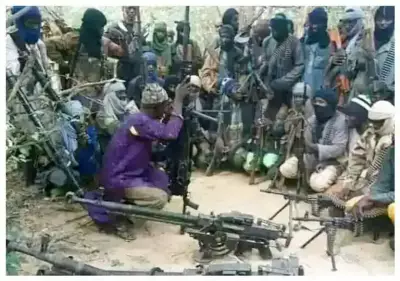
In a significant counter-terrorism breakthrough, troops of Operation Hadin Kai (OPHK) have apprehended two suspected suicide bombers and disrupted critical logistics networks used by Boko Haram terrorists in Nigeria's North-East.
Arrests and Foiled Attacks
The operations led to the arrest of one suspect in Banki town, Borno State, and another in Damaturu, Yobe State. The Damaturu suspect, identified as Ibrahim, is directly linked to the devastating December 24 suicide bomb attack at the Gamboru Market Mosque in Maiduguri, which killed five worshippers and injured 32 others.
According to security analyst Zagazola Makama, the attack was part of coordinated plans by factions of Jama’atu Ahlis Sunna Lidda’awati wal-Jihad (JAS), Ansaru, and Jama’at Nusrat al-Islam wal-Muslimin (JNIM) to execute suicide bombings and IED attacks across the region.

Unraveling the Terror Plot
Investigations revealed that a Boko Haram team, led by notorious IED expert Munzir Abu Ziyadah, prepared up to 10 person-borne improvised explosive devices (PBIEDs) from the Ali Ngulde camp axis. The terrorists reportedly moved through the Ngoshe Mountains towards communities in Borno State ahead of planned attacks.
During interrogation, suspect Ibrahim confessed that he planted a bomb in a bag at the entrance of the Gamboru Market Mosque on December 24. His accomplice, Adamu, who is now deceased, entered the mosque wearing a suicide vest that was detonated inside.
Ibrahim further disclosed that six suicide bombers were deployed to Maiduguri under the coordination of a terror kingpin. He named three bombers—Salisu, Yusuf, and Adamu—as residents of Maiduguri, while the remaining three—another Adamu, Yusuf, and Abdullahi—allegedly came from Michika Local Government Area in Adamawa State.
Strategic Shift and Further Interceptions
Following the Maiduguri blast, the Theatre Commander of Joint Task Force North East Operation HADIN KAI, Major General Abdulsalam Abubakar, ordered a strategic shift to aggressive hunter-killer and pre-emptive operations. This included a reconfiguration of forces with emphasis on intelligence-led missions and tighter security around worship centers and markets.
This new approach yielded results on December 29 at about 5:40 p.m., when troops at Banki Central Mosque intercepted a suspected suicide bomber with primed IED materials. In a related operation, troops at the Cameroon-Nigeria border intercepted a Peugeot vehicle carrying six bags of urea fertilizer, a key component for manufacturing IEDs. The driver and the dealer were arrested, leading to the recovery of an additional six bags.
These arrests and seizures underscore the sustained, intelligence-driven efforts of Operation Hadin Kai to dismantle suicide bombing cells, cut off IED supply chains, and prevent further attacks on civilian and religious targets in Borno State and across the North-East.