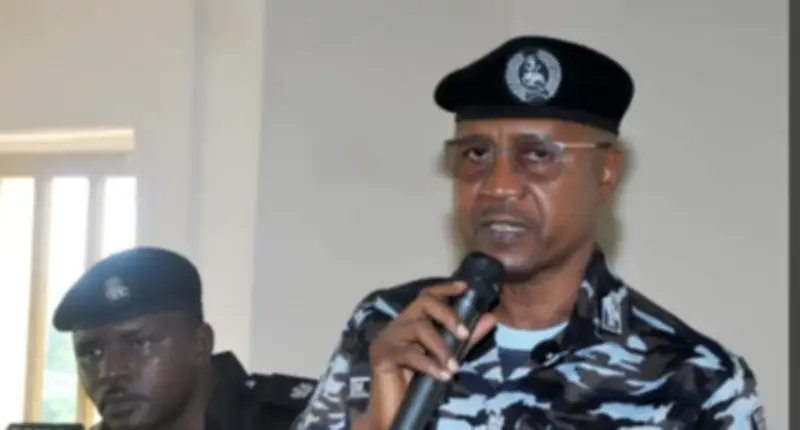
The Nigeria Police Force has firmly stated that repentant terrorists and former criminals will not be admitted into its ranks, with a senior official warning community leaders against endorsing such individuals for recruitment. Deputy Inspector General of Police (DIG) Isyaku Mohammed made this position clear during a stakeholders' meeting in Ilorin, Kwara State, which included traditional rulers, religious leaders, transport unions, and police personnel.
DIG Warns Against Endorsing Criminals
Mohammed specifically urged traditional rulers, community leaders, religious heads, and Divisional Police Officers (DPOs) to refrain from issuing recommendation letters for individuals with criminal backgrounds. He stressed that the police would not allow such persons into the force, regardless of claims of repentance. “Traditional rulers and DPOs do sign for those people. And I don’t think they’ll recommend anybody who has been engaged in criminality in the name of ‘I’ve repented’,” he said.
The DIG recalled his experience serving in the North East, where the military accepted deradicalised Boko Haram members and reintegrated them into society. However, he noted that communities often rejected these individuals. “There’s a town hall meeting that I attended. When I was DC operation in Yobe. They came to sensitise the community and told the people to accept the deradicalized people because they’ve repented. But all members of the community rejected them. They said they should take them to another community where they don’t know them,” Mohammed recounted.

Community Rejection of Repentant Criminals
Mohammed highlighted the emotional pain of victims, saying, “They said, I cannot see somebody who killed my parents, coming back with empowerment, while my parents, whose businesses he destroyed, are still there without assistance. So, it becomes a subject of discussion. But this is a federal government decision, and the police cannot do anything about it.” He added that the police would protect their own territory by ensuring repentant criminals do not enter the force. “The only thing we can do is to protect our own territory and ensure that such repentant people do not find their way into the Nigeria Police. And we are doing everything possible to ensure that not just repented criminals, but also bad boys, we don’t allow them to find their way into the Nigeria Police. So, you, our stakeholders, community heads, etc, don’t sign for them, identify them, or expose them. We will not allow them into the system. And if you do, after training, we’re sending them back to you to come and police your places. So, you take the consequences.”
Joint Border Patrol to Combat Cross-Border Crime
The DIG also announced plans to inaugurate a joint border patrol to tackle cross-border crimes in Kwara State, citing its strategic location. “Kwara state borders states like Ekiti, Oyo, Kogi, Niger, and Benin Republic. So, the joint border patrol would be done across its border corridors to prevent criminality and criminals,” he said. This initiative aims to strengthen security along the state's borders and curb illegal activities.
Community Policing and Youth Engagement
Mohammed explained that the Inspector General of Police had directed all Deputy Inspectors General to tour states within their respective zones to engage stakeholders, assess the security situation firsthand, and identify operational challenges facing police commands. He advocated community policing as a key strategy for crime prevention, emphasizing that security is more effective when local communities take ownership of policing efforts. “Here, community takes ownership of security strategy,” he said, urging stakeholders to embrace the concept.
The police chief further stressed the importance of timely intelligence sharing and encouraged greater youth engagement. He noted that creating productive opportunities for young people would contribute to improved security across the country. The meeting in Ilorin underscored the police's commitment to maintaining integrity within its ranks and collaborating with communities to enhance safety.