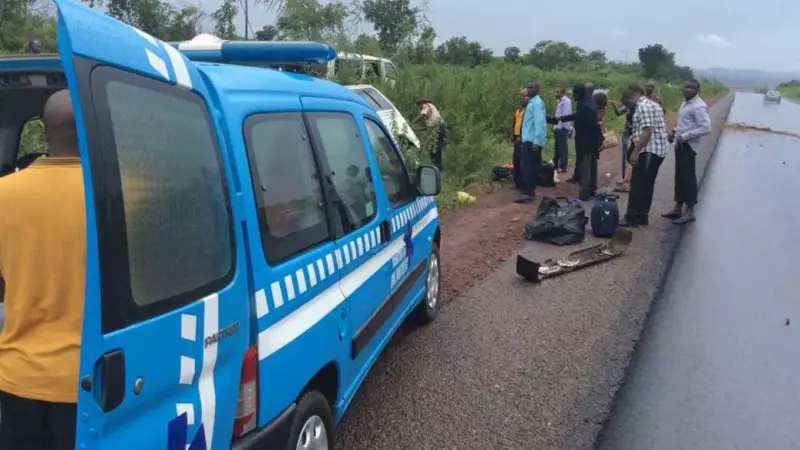
The festive season of December 2025, often a period of celebration, turned into a time of profound grief for countless Nigerian families. The nation's roads witnessed a horrifying surge in fatal crashes, from Jigawa to Abakaliki, Omu-Ekiti, and Itu in Akwa Ibom State, claiming lives indiscriminately. The grim statistics from the Federal Road Safety Corps (FRSC) paint a chilling picture of a national emergency that demands an urgent and decisive response.
The Alarming Scale of a National Tragedy
Preliminary data from the FRSC is deeply troubling. Between January and September 2025 alone, 6,858 road crashes occurred nationwide, resulting in 3,433 deaths and 22,162 injuries. These figures were expected to rise sharply with the inclusion of December's 'Ember months' fatalities, a period notorious for increased travel and accidents. While the crash involving global boxing champion Anthony Joshua, which claimed his two friends, captured headlines, it was merely one of hundreds of similar tragedies that left families shattered.
Nigeria's position in global road safety rankings is a national disgrace. The country holds the unenviable title of having the second-highest road accident record in the world and the highest in Africa. With a road injury death rate of 52.4 per 100,000 people, Nigeria's fatality rate is more than 15 times higher than that of countries like Sweden, the UK, and the Netherlands. The World Health Organisation (WHO) has previously noted that one out of every four road accidents in Africa originates from Nigeria, with a survival rate of just 52%.

Root Causes: Human Error Reigns Supreme
The primary culprits behind these preventable deaths are no mystery. Human error accounts for over 90% of road crashes in Nigeria, mirroring global trends. The FRSC consistently identifies speeding violations as the top factor, contributing to over 50% of incidents. Other major causes include:
- Distracted driving (e.g., phone use)
- Drunk or impaired driving
- Driver fatigue
- Reckless overtaking and dangerous driving
- Overloading of vehicles
Vehicle-related factors, such as tyre bursts (up to 54%) and faulty brakes (around 22.5%), also play a significant role, often exacerbated by poor maintenance and lax roadworthiness certification. The menace of unstrapped containers on trailers and their unrestricted movement in metropolises has also been flagged as a major hazard.
A Path Forward: From Campaigns to Concrete Action
Corps Marshal Shehu Mohammed of the FRSC has repeatedly emphasized that most crashes are preventable if drivers adhere to safety rules. The Corps's annual 'Ember Months' campaign involves personnel deployment, free vehicle checks, and stakeholder engagements. However, the persistent high death toll indicates that these measures are insufficient.
Experts propose a multi-faceted, stringent approach:
- Strict Driver Licensing and Testing: Implementing rigorous, European-style testing for license issuance and renewal based on driving history.
- Technology-Enabled Enforcement: Deploying speed cameras and conducting random alcohol tests on highways with severe penalties for offenders.
- Infrastructure Remediation: Federal and state governments must systematically identify and repair accident-prone spots. Standby emergency services should be stationed at notorious locations like the Otedola bridge in Lagos.
- Cultural Shift in Passenger Responsibility: Passengers must move from being passive commuters to active safety advocates. They should caution reckless drivers, report them, and refuse to board unfit vehicles.
- Adopting the 'Vision Zero' Model: Learning from Sweden's policy, which aims for zero road fatalities through safer road design, strict law enforcement, and sustained public education year-round, not just in December.
The bloodshed on Nigerian roads is a preventable crisis. It requires moving beyond seasonal campaigns to a permanent, unwavering commitment from government agencies, transport unions, drivers, and every commuter. The cost of inaction, measured in lost lives and economic damage, is far too high to bear. The time for decisive, sustained action is now.