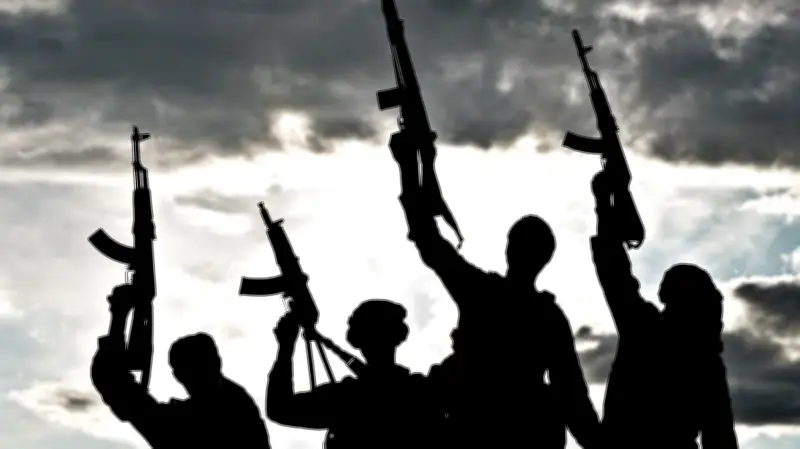
Senate Minority Leader Abba Moro has raised alarm over worsening insecurity in Benue South Senatorial District following the killing of a public health worker, Ojama Emie, by suspected armed herdsmen in Apa Local Council. The incident occurred on June 8, 2026, at the Ugbobi Road Junction along the Ikobi–Ugbokpo axis, a route Moro described as increasingly unsafe for commuters and rural dwellers.
Moro, speaking under Order 42 (Personal Explanation) on the Senate floor, disclosed that Emie was ambushed and beheaded, with his severed head taken by the attackers, leaving the community in shock and fear. He lamented that the attack is part of a disturbing pattern of violence across Benue South, affecting communities in Apa, Agatu, Otukpo, Ohimini, and Ogbadibo local councils, where residents have repeatedly reported attacks, displacement, and insecurity on farmlands and roads.
The senator expressed concern over weak preventive security presence in rural areas, noting that while federal security agencies respond to incidents in cities, rural communities remain exposed due to limited proactive deployment. He also drew attention to the continued detention of Silas Oloche, a youth leader in Agatu held for over a year on allegations of illegal possession of firearms, which he said weakens community-level security coordination amid ongoing attacks. Moro urged the Senate leadership and federal authorities to urgently intervene in the escalating violence and review cases involving community security actors.

Duke Accuses Political Class of State Capture
Meanwhile, the presidential candidate of the Peoples Redemption Party (PRP), Donald Duke, accused Nigeria’s political class of capturing the country and weaponizing poverty for electoral gains. Speaking during the presentation of certificates of return and party flags to PRP candidates ahead of the 2027 general elections in Abuja, Duke declared that political gangsters and highwaymen have laid siege to the nation.
Stressing that Nigeria faces an existential crisis from years of poor leadership, corruption, insecurity, and economic mismanagement, Duke said, “The truth is that we have lost focus. Political gangsters and highwaymen have laid siege to and appropriated our land, ruling with impunity. They have weaponized the poverty they created, and every four years they return seeking a so-called mandate, loading further burdens upon our already weary shoulders.” He noted that insecurity has deteriorated to the point where criminal groups now exercise authority over citizens in parts of the country.
PRP National Chairman Dr. Hakeem Baba-Ahmed said the party offers Nigerians an alternative to decades of failed leadership and abuse of democratic institutions, accusing successive leaders of converting collective wealth into private assets and exploiting ethnic and religious differences for political advantage.
INEC Restores 22 State Constituencies
In a related development, the Independent National Electoral Commission (INEC) restored 22 state constituencies across Benue, Delta, Jigawa, and Kogi states, following court judgments that directed the commission to reinstate constituencies that had been suppressed for years. The restoration enables affected communities to elect representatives into their respective Houses of Assembly.
INEC Information and Voter Education Committee Chairman Mohammed Haruna stated that the commission acted in line with constitutional provisions and the Electoral Act, 2026. The restored constituencies include Nyamatsor, Ukum Afia, Konshisha III (Shangev-Tiev), Makurdi III (South-East), and Gboko III in Benue State; Aniocha North II, Ika North East II, Sapele II, Ethiope West II, Warri South-West II, and Warri North II in Delta State; Aujara in Jigawa State; and Adavi East, Eika, Ajaokuta North, Bassa-Komu, Dekina Town and District, Ijumu II, Kabba-Bunu II, Koton Karfe II, Igalaogwa, and Ogugu in Kogi State. INEC fixed June 16 to 25, 2026, for political parties to conduct primaries ahead of the 2027 general elections.

Uzodimma: 2027 Polls a Referendum on Tinubu Reforms
Chairman of the Progressive Governors’ Forum (PGF), Governor Hope Uzodimma of Imo State, declared that the 2027 general election would serve as a referendum on President Bola Tinubu’s reforms. Speaking at the Renewed Hope Ambassadors (RHA) Retreat on National Mobilisation in Abuja, Uzodimma urged supporters of the administration to embark on aggressive grassroots mobilisation to secure public backing for the government’s policies.
He framed the forthcoming election as a verdict on the sweeping reforms introduced by the Tinubu administration since May 2023, saying, “The 2027 polls will be a referendum on a single question: Does Nigeria stay on this hard but necessary road of reform, stability and shared prosperity, or turn back?” He emphasised that Nigerians face a defining choice between sustaining the administration’s economic and governance reforms or returning to what he described as failed policies of the past.