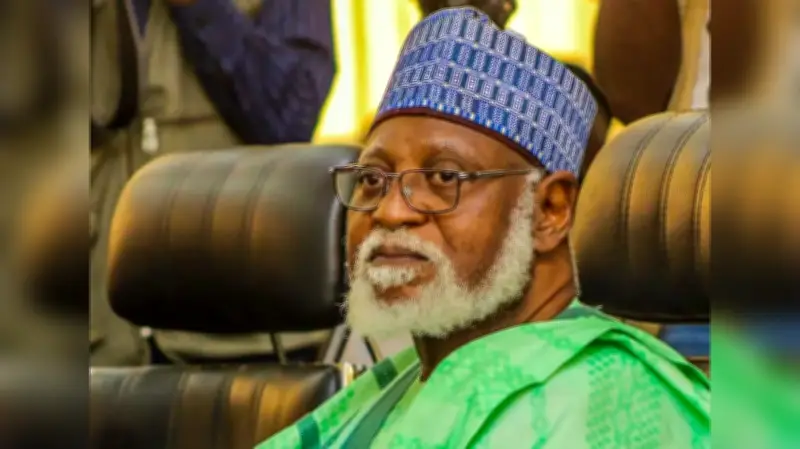
Former Head of State, General Abdulsalami Abubakar (retd), has disclosed that some leaders of the pro-democracy movement, including members of the National Democratic Coalition (NADECO), privately urged him to extend military rule after becoming convinced that he genuinely intended to hand over power to a civilian government in 1999.
A Surprising Twist in Nigeria's Democratic Transition
In a striking twist to Nigeria's democratic transition story, Abubakar revealed that the same coalition which fiercely opposed military rule under the late General Sani Abacha later sought additional time for the transition process. According to him, they realized they were politically unprepared for the return to democratic governance.
The former military ruler made this disclosure in his autobiography, unveiled on Saturday during activities marking his 84th birthday at the Presidential Villa, Abuja. He explained that many NADECO leaders were initially skeptical of his transition programme, having witnessed repeated broken promises by previous military administrations. However, once they became convinced that his government was committed to relinquishing power on schedule, some approached him seeking an extension.

NADECO's Request for Extension
“Two to three months into my administration, some NADECO members realized that I was sincere about the handover date,” Abubakar recalled. “They felt they had missed the train and wanted more time to organize themselves politically. They came to me as a group and requested that the transition programme be extended.”
Abubakar said he turned down the request, insisting that he had already made a commitment to Nigerians and the international community to return the country to democratic rule within the stipulated timeframe. To test the sincerity of their demand, he challenged the NADECO leaders to publicly own it.
“I told them that if they wrote to me and publicly announced that they had requested an extension, I would grant it. But they never did. I knew they would not,” he said.
Pressure from Foreign Leaders and Military Officers
The former Head of State disclosed that pressure to prolong military rule also came from some foreign leaders who believed his administration had restored stability following Abacha's death and the easing of political tensions and international sanctions. However, he maintained that he never considered extending his stay in office because Nigeria had reached a critical point where a return to democratic rule had become inevitable.
“For me, I was not in any way tempted to stay longer in office. By the time I took over, the country was on the edge. There was extreme pressure from NADECO, the G-34 and other political groups for the military to go. Nigeria was at a breaking point,” he said.
Abubakar also revealed that some senior military officers opposed the transfer of power to civilians, but his administration remained determined to honor its pledge to Nigerians. He argued that prolonged military involvement in governance had weakened professionalism within the armed forces, diverted some of its best officers into political administration, and eroded discipline within the ranks.
Military as the Greatest Loser
According to him, military rule had also created distortions in command structures and fostered unhealthy divisions along ethnic, religious, and regional lines. “The military needed to relinquish power. Many people did not realize that the military was the greatest loser in the whole enterprise because most of our best brains were deployed to administer the country while the profession was neglected.
“We needed to go back to where we belong and reprofessionalize the armed forces. The military truly lost out by getting involved in politics,” he said.
Reflections on the Transition Process
Reflecting on the transition process, Abubakar acknowledged that there were challenges, including the decision by South-West political leaders and pro-democracy groups to establish the Alliance for Democracy (AD) rather than join broader national political platforms. Nevertheless, he maintained that sincerity of purpose and an unwavering commitment to the handover timetable enabled the successful transition that ushered in Nigeria's Fourth Republic on May 29, 1999.