Islamic Scholar Condemns Unfair Blaming of Muslims for Nigeria's Security Challenges
An esteemed Islamic scholar, Professor Akeem Akanni, has strongly criticized what he describes as the unjust characterization of Islam and Muslims as the principal instigators of various conflicts plaguing Nigeria. The chief imam of Olabisi Onabanjo University in Ago Iwoye, Ogun State, delivered his remarks during the 33rd Ramadan lecture organized by the University of Ibadan Muslim Community.
Addressing Scapegoatism at University of Ibadan Event
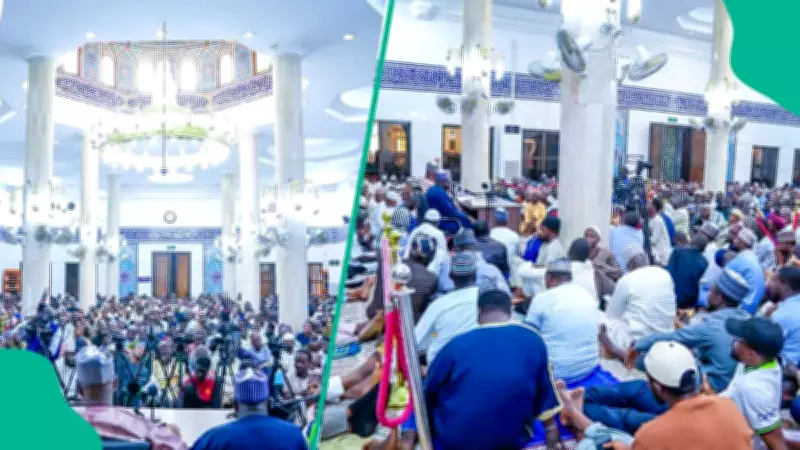
The significant gathering took place on Saturday, February 28, 2026, at the Professor Musa Abdul Civic Centre located within the university mosque premises in Ibadan, Oyo State. Professor Akanni presented a lecture titled 'Between Scapegoatism and Responsibility: Muslims’ Roles in, and Islam’s Response to Security Concerns in Nigeria,' where he argued that attributing Nigeria's problems to any single group constitutes a grave injustice.
"Scapegoating occurs when a particular group is unfairly blamed for issues that actually stem from broader structural failures," explained Professor Akanni, emphasizing that this practice undermines fundamental principles of fairness and justice in society.

Multifaceted Nature of Nigeria's Security Crisis
The scholar provided a comprehensive analysis of Nigeria's security landscape, asserting that the challenges are multifaceted and cannot be reduced solely to religious factors. He pointed out that portraying Nigerian Muslims as the root cause of violence ignores substantial empirical evidence demonstrating that insecurity arises from complex, interconnected causes.
"In the context of insecurity in Nigeria, this would mean portraying Nigerian Muslims as the root cause of violence, even when empirical evidence shows that insecurity is complex and multi-causal," Professor Akanni stated during his presentation.
He identified several critical drivers of conflict that extend beyond religious dimensions:
- Government failure and governance deficiencies
- Proliferation of small arms and light weapons
- Climate change-induced resource scarcity
- Widespread poverty and unemployment
- Ethno-communal land disputes
"Structural drivers such as poverty, climate change, governance failure, and resource scarcity are central to understanding why many violent actors emerge from certain communities," the professor elaborated, highlighting the systemic nature of Nigeria's security challenges.
Boko Haram's Contradiction of Islamic Principles
Addressing claims by Boko Haram and the Islamic State West Africa Province (ISWAP) that they are fighting for Islam, Professor Akanni described such assertions as fundamentally contradictory to Islamic teachings. He emphasized that these groups' actions directly oppose Islam's core principles of peaceful coexistence and respect for human life.
"Boko Haram and ISWAP self-identify with Islamist narratives and recruit largely from Muslim communities in northern Nigeria. However, their actions are antithetical to Islam’s teachings on peaceful coexistence," the scholar clarified.
Professor Akanni further stressed that Muslims constitute the overwhelming majority of victims in Nigeria's insurgency and banditry conflicts, particularly since these violent activities are concentrated in Muslim-majority regions of the country.
Call for Unity and Proper Upbringing
The Islamic scholar urged religious leaders, parents, and guardians to prioritize the proper moral and religious upbringing of young Muslims to prevent their recruitment by extremist groups and bandits. He emphasized that education and guidance are crucial tools in combating radicalization.
Other prominent figures at the event echoed similar sentiments. Engineer Ishaq Folorunso, the event chairman, cautioned Muslims against internal disunity and warned against supporting scapegoating practices or unfounded labeling of religious groups.

Professor Daud Noibi, pioneer executive secretary of the Muslim Ummah of the Southwest of Nigeria (MUSWEN), and Emeritus Professor Musiliu Onilude, president of the UI Muslim Community, both condemned the persistent violence in Nigeria. They called on all stakeholders, regardless of religious or political affiliations, to work collaboratively toward sustainable peace rather than attributing conflicts to any particular religion or ethnic group.
Broader Context of Security Training Overhaul
The Ramadan lecture occurred against the backdrop of recent security developments in Nigeria. President Bola Tinubu had previously declared an emergency on security training institutions across the country, following assessments of training facilities for the Nigeria Security and Civil Defence Corps, Nigeria Police Force, and other internal security agencies.
This comprehensive approach to addressing security challenges reflects the complex, systemic nature of Nigeria's crisis that Professor Akanni highlighted in his lecture. The event served as both a religious observance and a platform for critical dialogue about one of Nigeria's most pressing national issues.