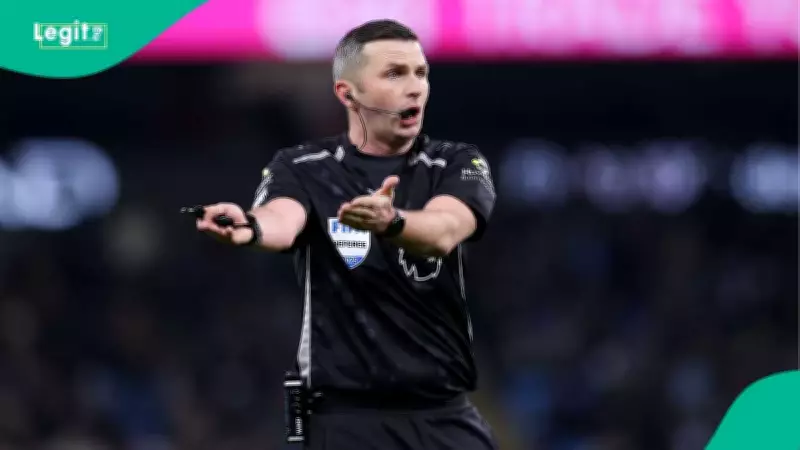
Premier League Referee Michael Oliver Reveals Officiating Restrictions
English Premier League referee Michael Oliver has provided detailed explanations regarding his inability to officiate matches involving two specific Premier League clubs. The experienced official recently handled the high-profile encounter between Manchester United and Tottenham Hotspur at Old Trafford, where the Red Devils secured a 2-0 victory through goals from Bryan Mbeumo and Bruno Fernandes.
Oliver's Premier League Match Appointment Protocol
The 40-year-old referee, who has officiated over 400 top-flight matches and holds a FIFA badge, explained that Premier League match appointments strictly comply with established rules and regulations. Oliver, who grew up supporting Newcastle United, revealed that he is prohibited from officiating any matches involving the Magpies due to his childhood allegiance to the club.
"I never referee Newcastle games," Oliver stated. "We have to declare if we have an allegiance to any club or if a family member works at a club. You can't do any match involving that team, and I can't do Sunderland either, for obvious reasons."

Practical Implications of the Restrictions
The restrictions have significant practical implications during crucial stages of the Premier League season. Oliver explained that when Newcastle United are involved in relegation battles during March or April, he cannot referee matches involving any teams competing with them near the bottom of the table.
"Because Newcastle are invariably involved in a relegation battle, when you get to March or April, it means I can't referee anyone around them towards the bottom three," Oliver elaborated. "If Newcastle needed a point to survive and the team they were fighting to get above was say Villa, I couldn't referee Villa's game either. I wouldn't want to. It's not worth the hassle."
Recent Match Performance and Decisions
During the Manchester United versus Tottenham match on Saturday, February 7, Oliver demonstrated his authority by issuing a red card to Spurs captain Cristian Romero in the 29th minute. The decision came following a serious foul on Brazilian midfielder Casemiro, showcasing Oliver's commitment to maintaining match discipline according to established regulations.
Considered one of England's most experienced officials alongside Anthony Taylor, Oliver has officiated in numerous prestigious tournaments including the FIFA World Cup. His career spans multiple seasons of Premier League football, where he has developed a reputation for consistency and adherence to officiating protocols.
Nigerian Referee Provides Expert Analysis on Officiating Ethics
Eyere Ekuta's Perspective on Conflict of Interest
National women's grade 1 referee Eyere Ekuta from Nigeria has provided valuable insight into the ethical considerations surrounding Oliver's situation. In exclusive comments, Ekuta explained the fundamental principles that govern officiating decisions at the highest levels of football.
"It is against the ethics of officiating to handle a club you've previously sworn allegiance to," Ekuta emphasized. "You'll have no choice but to favour the club in one way or the other. The conflict of interest becomes inevitable when personal history intersects with professional responsibilities."
Global Officiating Standards and Nigerian Context
Ekuta's analysis highlights how officiating standards maintain consistency across different football jurisdictions. The Nigerian referee's perspective demonstrates how ethical considerations in officiating transcend geographical boundaries and apply universally to maintain the integrity of the sport.
The discussion around Oliver's restrictions comes at a time when officiating standards are under increased scrutiny globally. Recent incidents in African football, including controversial decisions during CAF Confederation Cup matches, have brought additional attention to how referees manage potential conflicts of interest and maintain impartiality.

Broader Implications for Football Governance
The transparency demonstrated by Oliver in explaining his officiating restrictions represents a positive development for football governance. By openly discussing the protocols that prevent him from officiating certain matches, Oliver contributes to greater understanding of how officiating appointments maintain fairness and integrity in competitive football.
This case study provides valuable lessons for football associations worldwide, including Nigeria's football governing bodies, about establishing clear protocols for managing potential conflicts of interest among match officials. The principles demonstrated in Oliver's situation can inform officiating policies across various levels of competitive football.