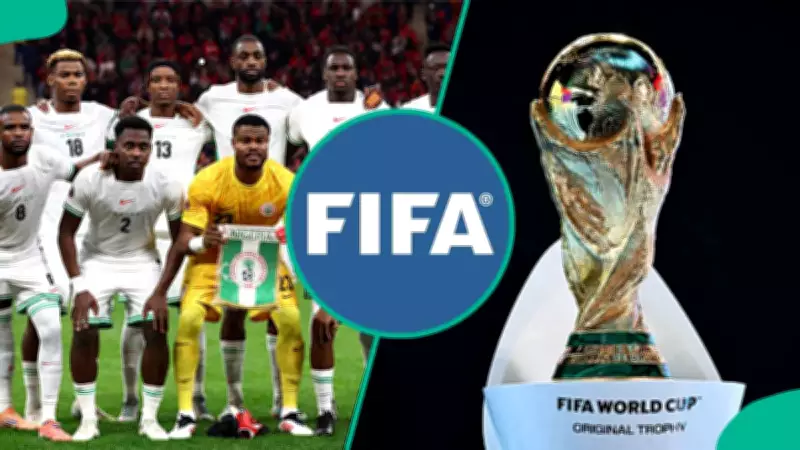
Nigeria's World Cup Dreams and $10.5 Million at Stake in FIFA Petition Decision
The Nigeria Football Federation's petition against the Democratic Republic of Congo has placed the Super Eagles' 2026 FIFA World Cup participation in serious jeopardy, with both sporting glory and substantial financial rewards hanging in the balance. Should FIFA rule against Nigeria's complaint regarding allegedly ineligible Congolese players, the country faces exclusion from the expanded 48-team tournament alongside the loss of guaranteed FIFA prize money exceeding ten million dollars.
The Controversial Petition That Could Reshape African Qualification
Following Nigeria's heartbreaking penalty shootout elimination against DR Congo during the African playoffs last November, the NFF launched a formal complaint alleging that the Congolese team violated eligibility regulations. According to reports from BBC Sport, DR Congo fielded players who were not eligible under Congolese law, which reportedly does not recognize dual citizenship. Among the players specifically mentioned in the petition are Aaron Wan-Bissaka and Axel Tuanzebe, both of whom previously represented England at youth international levels before switching their football allegiance.
FIFA has officially confirmed receiving the NFF's petition and acknowledged that the matter remains under active review. However, the world football governing body has not provided any specific timeline for when a final ruling might be issued, leaving Nigerian football authorities and supporters in a state of anxious uncertainty. The NFF has strongly pushed back against circulating rumors suggesting the petition has already been dismissed, maintaining that their case remains active and under consideration.

The Financial Stakes Extend Far Beyond Sporting Pride
The financial implications of FIFA's impending decision carry enormous significance for Nigerian football development. According to FIFA's official financial framework established for the 2026 World Cup, each qualified team will receive substantial guaranteed payments regardless of their tournament performance.
The financial breakdown reveals:
- $1.5 million in preparation funding allocated to every qualified nation
- Minimum guaranteed participation payment of $10.5 million for all competing teams
- Additional performance-based prize money for advancing through group stages and knockout rounds
For a football-loving nation like Nigeria, these funds represent critical resources that could transform various aspects of the sport. The potential $10.5 million minimum payment could support grassroots football initiatives, improve deteriorating football infrastructure, settle outstanding bonuses owed to players and technical staff, and fund comprehensive youth development programs across the country.
Mixed Reactions Among Nigerian Football Community
The ongoing petition has created a complex emotional landscape among Nigerian football supporters, who find themselves torn between competing perspectives. Some fans maintain hope that FIFA will rule in Nigeria's favor, potentially granting the Super Eagles an unexpected lifeline to the global tournament. Others express reservations about qualifying through legal appeals rather than on-field performance, suggesting such qualification might feel hollow or undeserved despite the potential benefits.
This uncertainty has generated a peculiar mixture of cautious optimism and mounting frustration throughout Nigeria's football community. Supporters find themselves simultaneously hoping for administrative justice while psychologically preparing for another painful World Cup absence, should the petition ultimately fail.
What a Negative Verdict Would Mean for Nigerian Football
A ruling against the NFF would represent more than just a legal defeat; it would trigger profound questions about the current direction and future trajectory of Nigerian football. The Super Eagles, traditionally regarded as one of Africa's strongest and most consistent football nations, would miss an expanded World Cup for the second consecutive tournament cycle.

- The elimination would intensify scrutiny on Nigeria's entire qualification campaign
- Tactical decisions, squad management, and administrative handling of disputes would face renewed criticism
- The financial loss would occur during a period when Nigerian football faces mounting pressure to implement comprehensive reforms and modernization
Conversely, a successful petition would dramatically reopen Nigeria's pathway to global football's premier event, offering both substantial prestige and significant financial profit. The Super Eagles would advance to face either New Caledonia or Jamaica in March's intercontinental playoff, with the winner securing qualification and placement in Group K alongside Portugal, Uzbekistan, and Colombia.
Additional Complications in DR Congo's Preparation
In a separate development that adds further complexity to the situation, DR Congo's World Cup preparations have reportedly encountered unexpected obstacles. According to recent reports, the Congolese national team faces potential travel complications as they have yet to secure necessary visas for their players nearly three weeks before their scheduled intercontinental playoff match in Mexico on March 31, 2026.
This administrative challenge creates additional uncertainty surrounding the entire qualification process, though it remains unclear whether these logistical issues might influence FIFA's consideration of the broader eligibility petition submitted by Nigerian football authorities.
As the football world awaits FIFA's definitive ruling, the Super Eagles remain suspended in competitive limbo, caught between renewed hope and potential heartbreak, with both their World Cup dreams and millions of dollars in development funding hanging precariously in the balance.