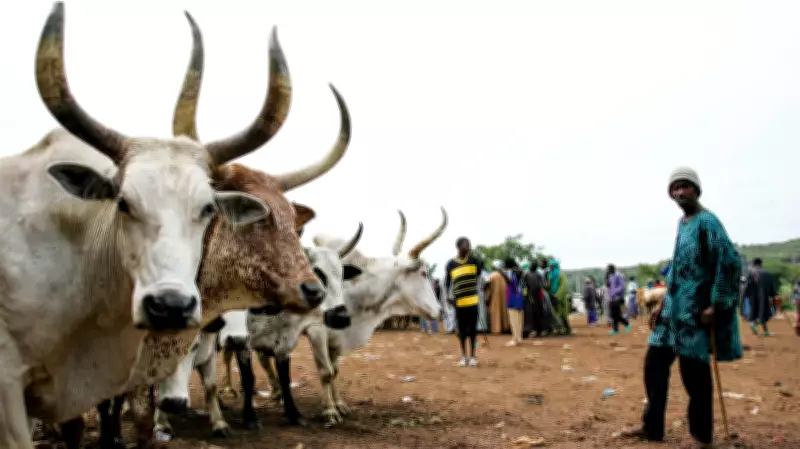
Raising Awareness of Animal African Trypanosomiasis in Cattle: A Kaduna Encounter
By Hafsat Suleiman Mohammed
My daily commute along Sultan Road in Kaduna often involves witnessing herds of cattle crossing majestically, a common sight in the mornings and evenings. However, one day took an unexpected turn when a cow struck and shattered my side mirror while I was driving. Frustrated, I muttered to myself about the urgent need for designated grazing areas in Nigeria to prevent such incidents.
A Surprising Conversation with a Herder
I pulled over and approached the herder, who wore a sleeveless kaftan over a long-sleeve shirt and trousers, topped with a straw hat and holding a thick stick. As I neared, he said, "Ayi hakuri" in a slightly shaky voice, revealing he was not Fulani as I had assumed, but a young Hausa man. He handed me the broken pieces of my mirror, and I seized the moment to address a deeper concern.

Angrily, I asked if he was aware that his cattle could cause serious accidents and spread diseases like "Sammore" to other animals and even humans. He repeated, "Sammore?" with puzzlement, prompting me to clarify: "Trypanosomiasis in cattle." Still confused, he admitted, "Ma'am, you'll have to educate me. I don't know much about cattle diseases, especially Sammore. Actually, these cows belong to my master. I'm just helping out."
Educating on Animal African Trypanosomiasis
We sat together on a culvert by a gate, taking advantage of the cool mid-July weather. I began explaining that Animal African trypanosomiasis is a disease affecting domestic and wild animals, known as "Nagana" in Zulu or "Sammore" in Fulfulde. It is caused by blood protozoan parasites called trypanosomes, transmitted through the bites of tsetse flies, referred to as "kudan tsando" in Hausa or "Binade" in Fulfulde.
This debilitating and wasting disease can lead to death if untreated and also poses a risk to humans if bitten by an infected tsetse fly. The herder exclaimed with fear, urging me to tell him more.
Symptoms and Socio-Economic Impacts
I detailed the symptoms in cattle, which include miscarriages, anemia, loss of appetite, poor growth, weight loss, swollen lymph nodes, lethargy, edema, eye and nasal discharge, and hair loss. In advanced stages, neurological symptoms like padding movement and incoordination may occur, eventually leading to death.
The socio-economic impacts are severe, encompassing decreased milk and meat production, reduced fertility, lower hides and skin production, and increased treatment costs. Alarmingly, a large number of cattle across all agro-ecological zones in Nigeria are at risk of contracting this disease.
Lack of Awareness and Treatment Challenges
The herder lamented, "Wallahi, I didn't know. I only take them to graze around and back safely. Nobody has ever told me about this disease." I emphasized that this lack of awareness is a critical issue, highlighting the need for better education not just for herders, but for everyone.
When asked about treatment, I explained that drugs like diminazene, diaceturate, and isometamidium chloride are available, but their efficacy has diminished due to parasite resistance. Additionally, there is no vaccine yet, making tsetse fly control the most viable option for disease management.
Prevention and Control Measures
Prevention is key, involving methods such as using traps, insecticide sprays, bush clearing, and avoiding tsetse-infested areas. I stressed that establishing designated grazing areas could prevent cattle from roaming major roads, reduce disease spread, and avoid incidents like the one we experienced.
The herder anxiously inquired how to get more information, and I directed him to the Nigerian Institute for Trypanosomiasis Research (NITR) in Kaduna, where I work. Our veterinary clinic is open for consultations, and we have zonal and state liaison offices across all six geo-political zones in Nigeria, mandated to research trypanosomiasis in both humans and animals.
This encounter underscores the urgent need for widespread awareness and proactive measures to combat Animal African trypanosomiasis in Nigeria.