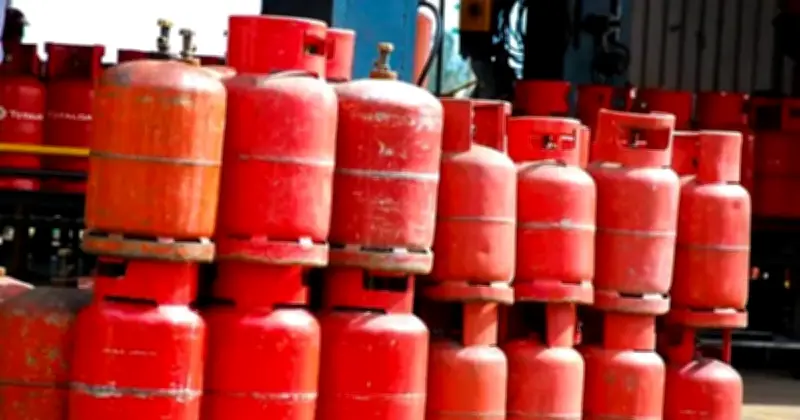
Cooking gas prices in Nigeria have dropped to between ₦1,100 and ₦1,500 per kilogramme in major cities, offering relief to households after weeks of soaring costs. The decline follows improved supply, lower depot prices, and government interventions aimed at stabilising the Liquefied Petroleum Gas (LPG) market.
Price reduction driven by improved supply and lower depot prices
The President of the Nigerian Association of Liquefied Petroleum Gas Marketers (NALPGAM), Edu Inyang, attributed the decline to increased product availability and a drop in depot prices. “Retail cooking gas prices have started easing in some markets. The reduction is gradual because transportation costs and retailer margins differ from one location to another, but supply has improved significantly,” Inyang said.
He added that increased local production, imports, and stronger market competition have helped stabilise prices. The national retail price now ranges between ₦1,100 and ₦1,650 per kilogramme, with most major cities within the ₦1,100 to ₦1,500 range.

New cooking gas prices across Nigerian cities
Current market prices show variations by region:
- Lagos, Ibadan and Abeokuta: ₦1,100–₦1,350/kg
- Benin City, Port Harcourt and Warri: ₦1,150–₦1,400/kg
- Onitsha and Enugu: ₦1,200–₦1,450/kg
- Abuja: ₦1,250–₦1,500/kg
- Kano and Kaduna: ₦1,300–₦1,550/kg
- Maiduguri and parts of the North-East: ₦1,350–₦1,650/kg, reflecting higher transportation and logistics costs.
Based on these retail prices, consumers can expect to pay ₦5,500–₦8,250 to refill a 5kg cylinder, ₦6,600–₦9,900 for a 6kg cylinder, and ₦13,750–₦20,625 for a standard 12.5kg cylinder, depending on location and retailer.
Government interventions help stabilise LPG market
The price decline follows recent interventions by the Federal Government after cooking gas surged to as high as ₦2,400 per kilogramme in some locations due to supply shortages, rising depot prices, and logistics challenges. Last week, the government convened an emergency meeting with regulators, security agencies, and industry stakeholders to tackle hoarding, speculative storage, and supply disruptions.
The Chief Executive of the Nigerian Midstream and Downstream Petroleum Regulatory Authority (NMDPRA), Farouk Ahmed, said the regulator had introduced measures to improve LPG availability. According to Ahmed, national LPG supply sufficiency has increased from 11 days to 22 days, while average daily supply rose from 4,262 metric tonnes in May to 5,040 metric tonnes in June. “These interventions are already yielding positive results, with improved supply across the LPG value chain,” he said during a stakeholders' meeting on cooking gas affordability.
Impact on households and small businesses
The price drop eases the cost-of-living burden on Nigerian households and small businesses that rely on cooking gas. NALPGAM noted that the disappearance of panic buying and hoarding, along with stronger competition among marketers, contributed to the decline. However, the reduction has not been uniform nationwide due to transportation costs, distance from supply depots, and retailer margins.