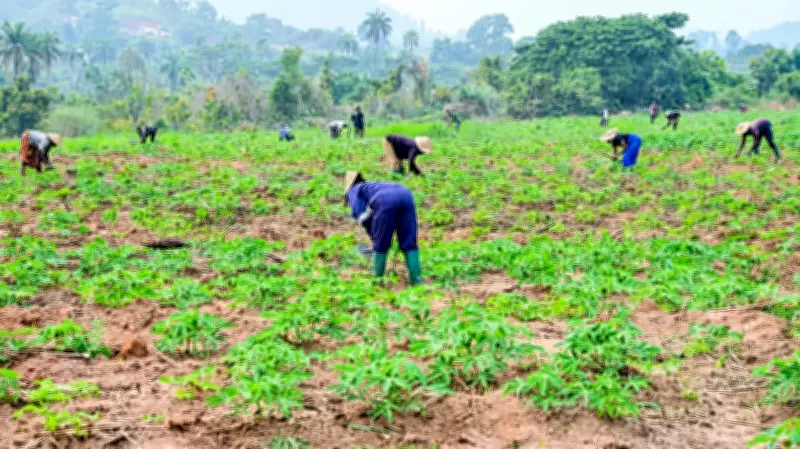
Cashew farmers under the aegis of the National Cashew Association of Nigeria (NCAN) have raised concerns over plans by vested international interests to impose policies on the Nigerian cashew industry. The National President of NCAN, Dr. Ojo Ajanaku, made the allegations during a press briefing after the extraordinary general meeting of the Association held yesterday at the conference room of the Federal Ministry of Industry, Trade and Investment in Abuja.
He alleged that foreign actors are trying to create a leadership crisis in the association following his resistance to their attempts to impose policies that could negatively affect local farmers. He warned against their attempts to make the government ban the export of raw cashew nuts, saying such a policy would harm livelihoods and destabilise the sector.
According to him, most Nigerian cashew farmers operate on less than one hectare of land and already face high production and logistics costs, leaving them with limited profit margins. “Our farmers cannot be made to subsidise processing in disguise. The only incentive for production is price. If you shut them out from accessing competitive markets, you are reducing their earnings,” he said.

He recalled that a drop in cashew prices in 2017 led many farmers to cut down their trees, a trend the association had to reverse through sustained interventions. He warned that similar policy missteps could push the sector backwards again. Nigeria was once a global leader in cashew production, recording about 700,000 metric tonnes annually, but output has since declined to between 350,000 and 400,000 metric tonnes, while countries like Côte d’Ivoire have surged ahead with over one million metric tonnes.
He emphasized that while value addition is necessary, it must translate into improved income for farmers and be implemented in a sustainable manner. He also highlighted challenges facing processors, including high interest rates on loans ranging between 25 and 35 per cent, as well as rising energy costs, which he said make profitability difficult.
Ajanaku called on the Federal Government to provide incentives, including low-interest agro-processing loans of between three and five per cent, to support processors and enhance competitiveness without disadvantaging farmers. He added that the cashew industry currently employs over five million Nigerians, warning that restrictive policies could threaten these jobs while creating significantly fewer opportunities in processing.
On internal matters, Ajanaku dismissed claims of a leadership crisis within the association, attributing recent disputes to disagreements over policy directions. He confirmed the suspension of the Board Chairman, Sunday Ezendu Uzo-Echi, and the Board Secretary, Abraham Adeshida, while stating that another individual, Ademola Adesokan, remains expelled from the association following their plans to usurp powers from the leadership. He maintained that despite the disputes, the association remains stable and focused, noting that recent policy interventions, including a cashew procurement framework in Kogi State, have helped stabilize prices and curb market manipulation by foreign interests.