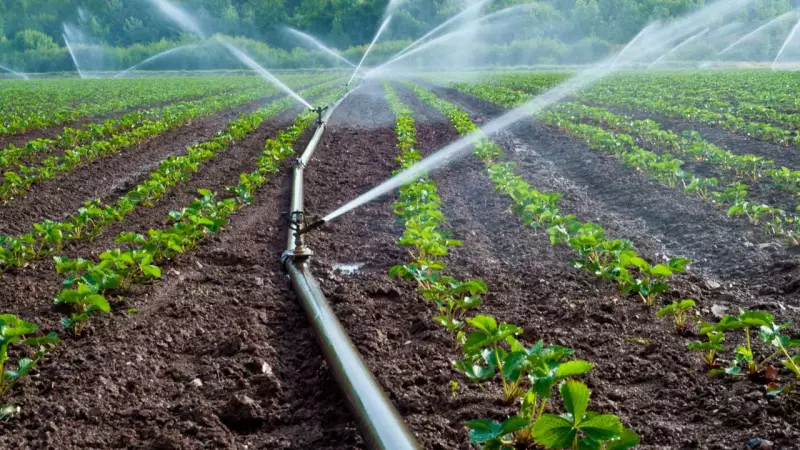
Nigerian smallholder farmers are urgently calling on the Federal Government to introduce subsidies for solar-powered irrigation systems. This appeal aims to combat the severe impacts of climate change on agriculture and secure the nation's food supply.
Groundbreaking Study Reveals High Awareness, Low Adoption
The push for action follows a revealing research initiative by the YELF Climate Trust Foundation, a non-governmental organisation focused on climate issues. The study, made public on 16 January 2026, surveyed 10,500 smallholder farmers in Kebbi State. It found that while a staggering 99.51% of respondents are aware of Solar Powered Irrigation Systems (SPIS), fewer than 29.96% currently use the technology.
Ethel Okosuns, the Chief Executive Officer of YELF Climate Trust Foundation, explained that this research is part of a larger, in-depth effort across Nigeria's 19 northern states. Baseline studies are currently building a comprehensive database for five million smallholder farmers, with ongoing work in Bauchi, Kebbi, Niger, Sokoto, and Kano.

Proven Benefits vs. Daunting Barriers
The data from Kebbi's Argungu and Augie Local Government Areas paints a clear picture of SPIS advantages. A significant 70.24% of users reported a major income increase. This boost is driven by higher crop yields, experienced by 74.07% of users, and lower operational costs, noted by 33.89%. Furthermore, 76.23% saw increased savings compared to other methods.
The positive ripple effects are substantial:
- 57.37% of farmers used extra income to expand their farming operations.
- 40.47% invested surplus earnings in their children's education, hinting at potential improvements in school enrolment.
- SPIS users recorded crop yields 31.53% higher than non-users.
- 16.6% of adopters now engage in year-round farming.
However, the report identifies a critical hurdle: cost. 79.57% of respondents cited high upfront investment as the main barrier, and 39.29% highlighted limited access to financing. This underscores the severe credit challenges smallholder farmers face.
A Climate-Smart Solution Backed by Farmer Experience
The study also measured climate change awareness. A majority of farmers (62.28%) have observed rising temperatures, and 50.98% reported increased flooding. An overwhelming 93.71% believe SPIS supports climate adaptation by providing reliable water and reducing dependence on unpredictable rainfall.
In contrast, knowledge of other climate-smart practices remains low, with only about 15% aware of adaptation approaches or crop rotation. This makes SPIS a uniquely recognised and effective tool. The survey shows farmers strongly prioritise financial help, with 88.2% expressing keen interest in government subsidies.
The report concludes that with targeted subsidies, better financing, and deliberate climate-smart policies, smallholder farmers could dramatically increase food production. This would enhance prosperity, strengthen Nigeria's food security, and reduce the country's heavy reliance on expensive food imports.