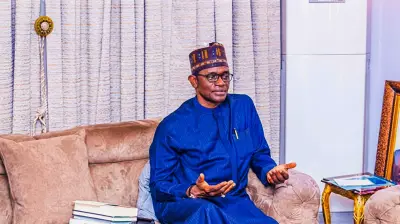
Aliko Dangote has announced a ₦550 million hostel project alongside a ₦25 million donation to students of the Federal University of Technology Owerri (FUTO). While many media outlets framed this as philanthropy, the move carries a deeper strategic message about Nigeria's economic future.
Infrastructure and Industrial Vision
Nigerian universities are currently struggling with overstretched infrastructure, particularly student accommodation. The proposed hostel will ease immediate pressure at FUTO, but Dangote's presence and message point to something more consequential than bricks and mortar. His engagement with students consistently emphasised that Nigeria cannot industrialise by relying on imports. Drawing from his own journey, he challenged the long-standing dependence on foreign goods, arguing that importing finished products ultimately exports jobs, wealth, and economic stability.
This perspective reframes his donation not just as support for education but as an investment in mindset. By addressing students at a technology-driven institution, he positioned them as future drivers of a manufacturing economy rather than participants in a consumption-driven one. His emphasis on backward integration—a strategy that transformed his business empire—underscores a model he believes Nigeria must replicate at scale. The idea is simple but demanding: produce what you consume, build capacity locally, and reduce reliance on external economies.

Domestic Responsibility and Talent Retention
What stands out in his message is the deliberate shift from waiting for foreign investors to taking domestic responsibility. Referencing the rise of Asian economies, he highlighted how internal investment, rather than external dependence, played a defining role in their industrial success. For Nigeria, this presents both a challenge and an opportunity—one that places the burden of transformation on its own citizens.
The ₦25 million donation to students, though modest compared to the hostel project, carries symbolic weight. It reflects an understanding that beyond infrastructure, young people need immediate support, encouragement, and validation. More importantly, it reinforces the idea that investment in human capital must go hand in hand with physical development.
Dangote's remarks also touched on a growing but often overlooked trend—the migration of Nigerian talent. By noting how locally trained engineers are being absorbed into international markets, he indirectly raised concerns about the sustainability of Nigeria's talent pipeline if local industries do not expand fast enough to retain them.
A Call to Build
In this light, the FUTO engagement becomes more than a campus event. It is a microcosm of a larger national conversation about productivity, self-reliance, and economic direction. Nigeria stands at a crossroads where its youthful population can either deepen dependence on imports or redefine the country's industrial identity. Dangote's intervention, both financial and ideological, suggests that the path forward may not lie in waiting for change but in building it—locally, deliberately, and consistently.
For the students who listened, the takeaway may extend beyond the promise of a new hostel. It is an invitation to see themselves not just as job seekers but as builders of an economy that has long waited to be reimagined.