The Federal Government has secured Nigeria's fertiliser supply for the 2026 wet season through early procurement measures, delivering an estimated $43.99 million or N61.58 billion in savings and ensuring uninterrupted input supply for farmers nationwide amid global market disruptions.
A statement signed by the Executive Director, Portfolio, Tajudeen Datti Ahmed, Ministry of Finance Incorporated (MOFI), said the intervention, executed through PFI NPK Limited, is part of the Presidential Fertiliser Initiative. He added that the initiative is positioned as a key stabiliser of Nigeria's agricultural production system amid rising global fertiliser prices and constrained shipping routes.
According to official procurement and shipment records for Q1 2026, the Federal Government secured fertiliser inputs months before global price escalations triggered by disruptions to international shipping routes. The disruptions have pushed up global costs of key fertiliser inputs, including Granular Ammonium Sulphate (GAS), Diammonium Phosphate (DAP), and Muriate of Potash (MOP), creating shortages across several African markets.

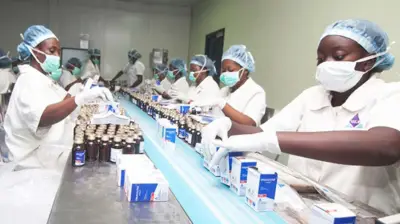
Datti stated that Nigeria's early positioning ensured price stability and supply continuity. Datti confirmed that the government locked in supply through nine vessels carrying 407,304 metric tonnes, bringing total available raw materials for 2026 production to 534,219 metric tonnes, including opening balances. This stock is being processed across 94 FEPSAN-registered blending plants nationwide, supporting domestic fertiliser production and strengthening local agro-industrial capacity.
Distribution data shows strong early-season deployment as 323,109.24 metric tonnes, approximately 6.5 million 50kg bags, have already been released to blending plants, while 198,264.41 metric tonnes, approximately four million 50kg bags, have been offtaken. These indicate active nationwide supply circulation ahead of the peak planting season, reducing the risk of seasonal shortages that often disrupt agricultural output.
Financial analysis of procurement records shows that the Federal Government's forward-buying strategy significantly reduced exposure to global price volatility. GAS was secured at $228 per metric tonne, compared to the current market price of $343; DAP was locked in at $775 per tonne, compared to $950; and MOP at $400 per tonne, compared to $430. The combined effect of these price differentials generated $43.99 million in savings, resources that would otherwise have been absorbed by external price shocks and which can now be redirected to broader development priorities.
MOFI stressed that agriculture remains central to Nigeria's economic diversification agenda, contributing significantly to rural employment, GDP growth, and food price stability. Fertiliser availability directly influences crop yield per hectare, national food supply stability, inflationary pressure on food prices, and foreign exchange exposure from food imports.
In 2025, PFI NPK delivered 648,000 metric tonnes of fertiliser raw materials into the domestic blending system. Available data show that for 2026, operations are significantly scaled up to 1.52 million metric tonnes, reflecting a strategic push to deepen agricultural productivity and expand national food security coverage.
The statement said the intervention demonstrates how early procurement and structured commodity management can reduce Nigeria's vulnerability to global shocks while strengthening domestic production systems. At the core of the strategy are food security and stability through guaranteed fertiliser access, foreign exchange savings through reduced import exposure, and industrial growth via domestic blending and value addition.
Beyond immediate supply gains, the statement insisted that the Federal Government is advancing long-term reforms, including government-to-government fertiliser sourcing partnerships, a digital tracking system for real-time monitoring of procurement and distribution, and expanded transparency across the fertiliser value chain.